
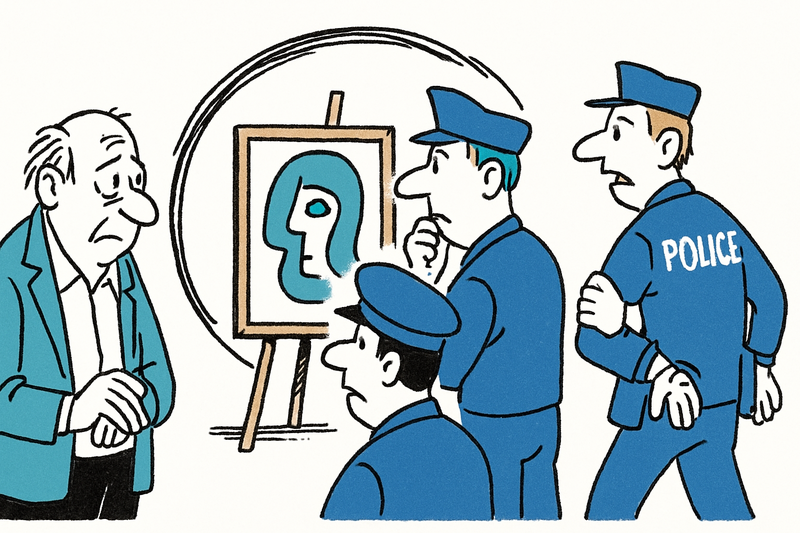
When Pictures Lie: Why Mallorca's Art Market Must Rethink Now
An arrested gallerist, questionable certificates of authenticity and the question: How safe are art purchases on Mallorca really? A behind-the-scenes look — quiet but thorough.
A suspicion — and the island listens more closely
The cry of the seagulls over the harbor mixes with the noise of construction on the Passeig del Born, yet behind Palma's everyday soundscape a crime story has begun: the Spanish National Police are investigating a gallerist on suspicion of having forged works by a well-known Mallorcan painter and sold them with manipulated certificates of authenticity, as reported in Forgery Scandal in Palma: Gallerist Arrested — Trust in Mallorca's Art Market Shaken. The news is fueling conversations in the cafés of Santa Catalina and in the white stairwells of Portixol.
The key question
How secure are art purchases on Mallorca — and who protects the island's cultural heritage? This question has suddenly arisen because the case does not concern a single isolated offense, but rather calls into question the trust between artists, gallerists and collectors.
From small trade to major complaint
Everything began, according to investigators, quite unspectacularly: the alleged perpetrator bought two genuine works by the artist and received the usual certificates of authenticity. Shortly afterwards, however, more paintings appeared on the market attributed to the same name — without the customary provenance. The artist's family became suspicious when they were asked for new certificates. The matter then led to the police, detailed in Forgery Scandal in Palma: Who Protects the Life's Work of Our Artists?. The accused was arrested and later released under conditions; allegations such as fraud, forgery of documents and violations of copyright are at stake.
What the discussion often overlooks
The public debate rarely leaves room for the less spectacular but decisive questions: How do such gaps in documentation arise? What role do tourist purchases, online distribution and often opaque intermediaries play? In Mallorca the clocks tick differently than in large metropolises: many galleries are small, family-run and part of a neighborhood — that creates trust, but also vulnerability.
Another problem: the identity of works is often secured through handwriting, old invoices or verbal agreements. That is no longer sufficient in a time when art is traded worldwide, offered digitally and shipped in packages across continents.
Concrete weaknesses illustrated by the case
The investigations reveal typical weaknesses: poor archiving, lack of independent expert opinions before a sale, and sometimes the temptation not to curb demand — especially in the high season, when visitor flows and buyer enthusiasm increase. Added to this is a market in which both local collectors and international buyers make quick and often emotional decisions.
What could help now
In order to prevent Mallorca from gaining a reputation as a vulnerable art location, more is needed than individual legal cases. Concrete proposals:
- Central artwork database: An island-wide, publicly accessible database for significant works by local artists, maintained by an independent body.
- Mandatory expert reports: For sales above a set value, independent forensic examinations should be required.
- Standardized certificates: A uniform format for certificates of authenticity with a clear liability chain.
- Strengthening artist associations: Artists should have easier access to legal advice when their work is questioned.
- Transparency in online sales: Platforms should require proof of origin before listing works.
Politics, police and cultural actors must act
The National Police have taken over the legal part; nevertheless, political action and cooperation among cultural actors on Mallorca are needed. The island administration, galleries, auction houses and artist associations must negotiate standards that provide protection beyond single complaints. Only in this way can trust in Mallorca's art market be restored.
A pragmatic outlook
It would be naïve to believe that forgeries can be eradicated completely. But we can make life harder for those who rely on deception: better archiving, more verification procedures and greater awareness among buyers. For Mallorca this means: not a hardening of the market, but an upgrade — in quality, transparency and reputation. If the island uses this momentum, the narrow alleys of Palma could soon be valued for their authenticity as much as for their chorus of voices, wind and light.
Until the courts decide and any further participants come to light, the issue will occupy the cultural community. Already, conversations in studios and at counters show: many people want fewer scandals and clearer rules. This is not a romantic wish, but a practical necessity — for the artists, the collectors and for Mallorca itself.
Frequently asked questions
How can you tell if an artwork in Mallorca is authentic?
Why are certificates of authenticity so important when buying art in Mallorca?
Is Mallorca a safe place to buy art?
What should I ask before buying artwork in Palma?
Why do art forgeries cause such concern on Mallorca?
What role do galleries in Santa Catalina and other Palma neighborhoods play in art sales?
What can Mallorca do to prevent art forgery in the future?
Should I be more careful buying art online in Mallorca?
Similar News
Nighttime Vandalism in Alcúdia: Who Pays for the Damage, Who Learns the Lessons?
Five youths broke into a golf course in Alcúdia, stole two buggies, devastated turf and caused an accident. A case with ...
Ready to go — but what does Palma's second ring road really mean for Coll d'en Rabassa?
Work on Palma's second bypass appears set to begin in 2026. Numbers, plans and everyday life in Coll d'en Rabassa raise ...
Overflowing garbage piles at Consell–Alaró station: Who is actually cleaning up here?
Sacks, bottles and packaging have been piling up around Consell–Alaró station for months. Missing cameras, full parking ...
Agromart opens large market in Inca: 500 m², terrace and café as a meeting place
On 17 September a new Agromart branch opens in Inca with around 500 m² of sales area, a butcher's, a fresh-food kitchen ...
The End of the Cheap Ride? Why Mallorca Is Hit Harder by the Fuel-Price Shock
Gasoline and diesel average close to two euros per liter. What this means for commuters, supply chains and renters in Ma...
More to explore
Discover more interesting content

Can Cap de Bou

Townhouse Lleo 72
