
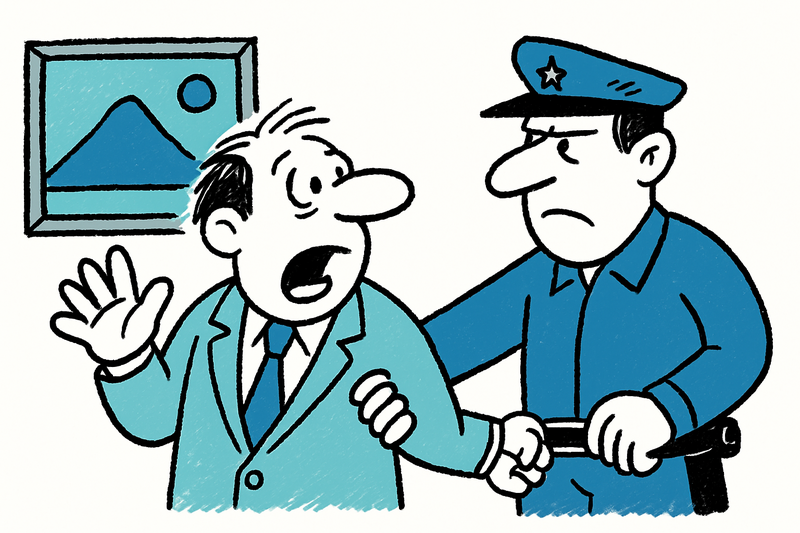
Forgery Scandal in Palma: Gallerist Arrested — Trust in Mallorca's Art Market Shaken
A well-known gallerist in Palma was arrested: the allegation — forged works by a Mallorcan artist were to be sold internationally. The arrest raises questions about transparency and gaps in the art market.
Arrest in Palma: A shadow over the island's art
In the early morning, while seagulls cried over the harbour and the first cafés on Passeig des Born opened, the National Police moved into a gallery in Palma. The news spread quickly: Forgery Scandal in Palma: Who Protects the Life's Work of Our Artists? — a respected gallerist was arrested on suspicion of art fraud. The case concerns allegedly forged works by a well-known Mallorcan artist that were to be introduced to the international market.
For many people at the Plaça de la Reina and in the narrow streets around La Lonja, the report came as a blow. Art is everyday life here — paintings on house walls, sketches in small studios, discussions in bars. Suddenly it was not the art but its trade that was in the spotlight. The key question now circulating through the scene is: how could such a system of forgery go unnoticed?
How the case began
It was family members of the affected artist who triggered the investigation (Sospecha de falsificación de arte causa revuelo en Palma). They noticed inconsistencies: several requests for certificates of authenticity, works with unfamiliar techniques and a signature that did not match the known style on the documents. Two original paintings had been legally sold to the gallery years ago. But when suddenly more certificates appeared, the family raised the alarm.
At an initial inspection in a small flat in Santa Catalina it was immediately noticeable: the brushwork did not match, the paint layer was different, and the smell of the paint was more reminiscent of industrial screen prints than hand-painted oil studies. Photos sent to the family from abroad confirmed the suspicion — several screen prints had been presented as "originals".
Not an isolated case
Investigators now speak of more than a single forgery (When Pictures Lie: Why Mallorca's Art Market Must Rethink Now). They found evidence that the works were being intentionally fitted with forged certificates of authenticity and were to be passed on to auction houses and foreign galleries. There appears to be a network of contacts connecting local dealers and international buyers.
That makes the matter dangerous: it's not just about individual fraudulent pieces but about deliberately undermining an artist's reputation and monetizing a name. For Mallorca’s cultural sector this is a serious problem. Not only the artist and their heirs suffer — buyers, small galleries and the established scene also lose trust.
What is overlooked in public discussion
Often it remains unexamined how vulnerable artists' heirs and small studios are. They do not have elaborate archives or lab-based authenticity testing. Many archive works informally — in family rooms, in cupboards at the back of the workshop. Official forensic documentation would have prevented much in this case (Certificate of authenticity).
Little attention is also paid to the role of smaller auctions and online platforms. They sometimes have less strict verification mechanisms than the major houses. In a time when tourism additionally fuels the market — buyers from around the world stroll through Palma's streets and take art home as souvenirs — gaps appear that fraudsters can exploit.
Concrete steps against new forgery networks
The good news: there are practical measures the island could take. Some proposals now on the desks of the cultural administration and the collector community:
1. Central provenance database: A digital platform for Mallorca's artists, their works and certificates of authenticity (Provenance (art)). A publicly accessible register would make shadow operations and dubious documents significantly harder.
2. Supported forensics: A small laboratory for material analysis on the island or financial support to send samples to certified institutes on the mainland. Pigment analysis, fiber dating of canvases and chemical tests create clarity.
3. Certificates through artist foundations: Artists or their estates can issue official, hard-to-forge certificates. Digital signatures and blockchain-based proofs are no panacea but an additional safety net.
4. Buyer awareness: Workshops in galleries and the Mercat community; buyers should learn to ask questions: origin, signature experts, previous exhibitions.
Looking ahead
It would be too easy to place all the responsibility on the trade alone. Cultural policy in Mallorca is called upon — with clear rules, more transparency and close cooperation between artists, heirs, galleries and the police. In the coming weeks the investigation will reveal how large the network really is.
For now there remains a bitter realization: creativity and commerce are closely intertwined on the island. The bells of Palma's cathedral may continue to ring and the boats in the harbour glint in the evening light, but for some there is a taste of distrust. If the scene takes this crisis seriously, it can emerge stronger — with better protective mechanisms, greater awareness and more support for those who preserve Mallorca’s cultural heritage.
The hope: that the case will be dealt with not only legally but as a wake-up call — for more care, more transparency and a sustainable coexistence of art and market on our island.
Frequently asked questions
What happened in the Palma art forgery case?
How can buyers avoid art forgery in Mallorca?
Why are certificates of authenticity so important for art in Mallorca?
What signs can suggest that a painting in Palma may be fake?
What should families do if they suspect forged art by a Mallorcan artist?
Is Palma's art market affected by this forgery scandal?
What places in Palma were mentioned in connection with the art forgery case?
What anti-forgery measures could help Mallorca's art scene?
Similar News
Suspicion of Date-Rape Drugs in Palma: Trial, Questions and the Gaps in the Protection System
A German man is on trial at the Palma court accused of rape; prosecutors suspect date-rape drugs were involved. What is ...
Raid at Playa de Palma: When Homemade Bars Become a Problem
Between September 11 and 13 police at Playa de Palma seized 18 speakers and issued 24 charges. Who draws the line betwee...
Burglary in Llubí: Arrest Raises Questions About Security in Mallorca's Countryside
A 21-year-old was arrested in connection with a burglary in Llubí. Cash, jewelry and electronics worth around €40,000 we...
Lost Trust: How a Phone Theft in Peguera Exposes Police Responsibilities
A 90-year-old holidaymaker is robbed in broad daylight in Peguera. His passage through police stations and taxi receipts...
When many security screeners suddenly fell ill: Who protects the passenger?
Short-notice sick reports at a large security company led to long queues at Cologne/Bonn airport. A reality check for tr...
More to explore
Discover more interesting content

Can Cap de Bou

Townhouse Lleo 72
