
Faster Than Expected: Terreno Barrio Hotel Opens in May – Opportunity for El Terreno or Another Push for Gentrification?
Faster Than Expected: Terreno Barrio Hotel Opens in May – Opportunity for El Terreno or Another Push for Gentrification?
A new four-star hotel at Joan Miró 73/75 is set to open in May. 21 rooms, publicly accessible spaces and a gym for residents sound promising — but what does this mean for El Terreno, where rents are already rising?
Faster Than Expected: Terreno Barrio Hotel Opens in May – Opportunity for El Terreno or Another Push for Gentrification?
Key question: Will the new four-star hotel in El Terreno truly engage in neighborhood work — or will it increase displacement pressure?
In May a new hotel is scheduled to open at Joan Miró 73/75: the Terreno Barrio Hotel, operated by the Piñero Group. It will have 21 rooms, be classified as a four-star establishment, and remain open year-round. The group mentions several rooms that are intended to be accessible to the public — including a fitness room with offerings for local residents, a concert hall, a soundproofed bar, and an open-air cinema using headphone technology. The investment in renovation and a new build amounted to around €1.6 million; the buildings were already acquired in 2019.
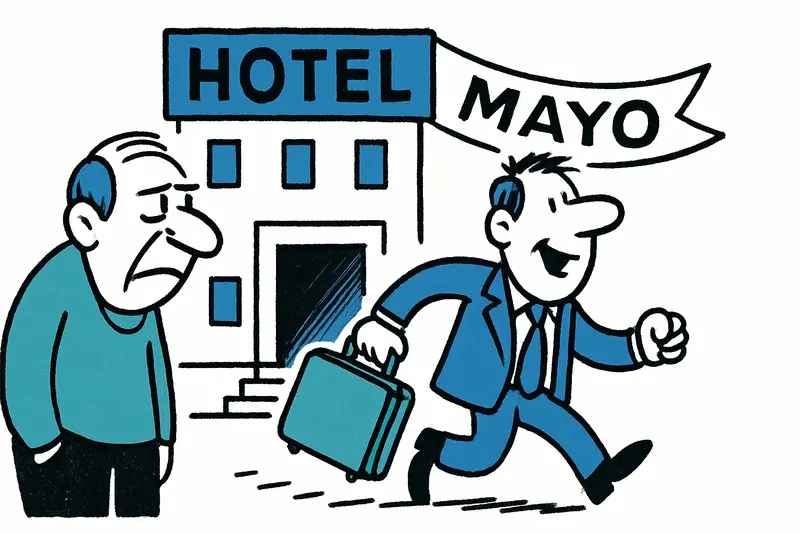
Sounds like a neighborhood project. In reality, El Terreno is not neutral: the neighborhood atmosphere west of the city, with views toward Bellver Castle, has been changing in recent years. In the cafés along the street you more often see construction workers next to long-term residents; rental prices have noticeably risen, and the number of second homes is growing, a trend noted in Three New Luxury Addresses in Mallorca – Opportunities, Conflicts and Some Practical Proposals. A banner at the construction site already announces the May opening — on sunny mornings it flutters over the sidewalk, passersby drink café con leche, dogs are walked, and tradespeople carry boxes up the stairs.
Critical analysis: A hotel with 21 rooms is not a large operation, but it has leverage. Privileged access to cultural offerings, targeted marketing to Germany and the United Kingdom via distribution partners like HBX Group and Expedia, and the year-round offering for conference tourism can increase demand for services and housing. If private operators preferentially use commercial spaces for guests — coworking, events, paid sports classes — little remains for long-established neighbors. The headphone solution for the cinema shows that noise is being considered; what is missing, however, is a clear commitment on how often and under what conditions these spaces will be open to the neighborhood.
What is missing from the public debate, despite the city's investment plan in El Terreno, is concrete assurances about jobs for locals, pricing for neighborhood access, and specific measures against rising rents. So far there are no public figures on how many permanent jobs the hotel will create, whether staff housing will be provided, or whether there will be tiers for local access to events. Nor is there documentation of participation by the city council or the neighborhood representation in shaping public uses.
Concrete proposals for how the hotel could truly integrate into the neighborhood: First, a rental and employment plan that bindingly allocates at least a portion of the newly created jobs to residents of Palma. Second, discounted or free time slots for local groups in the concert hall and at the open-air cinema. Third, a reduced gym membership for residents, with a clear cap on paid guest classes. Fourth, a residents' council that meets regularly with hotel management to coordinate on noise, events, and safety issues. Finally, a share of tourist revenue should be reinvested in local infrastructure — for example in public green spaces or cultural offerings in El Terreno.
Everyday scene: On a late winter afternoon the cleaning crew rattles along Joan Miró, children throw gravel at the edge of a small park, an older woman claims her usual bench, and the announced banner hangs on the scaffolding in front of number 73. The sounds of the workshops mix with a tram-like rumble, and residents say: “We have never seen so many builders here before.”
Why the proposals are realistic: With only 21 rooms, the Terreno Barrio Hotel is a manageable size — that is both an opportunity and an obligation. With goodwill, local offerings can be tied down without ruining the business case. The reasonable demand is: if a business claims to create community, then that community must be concrete, measurable and controllable.
Conclusion: The opening in May can bring an upgrade with real neighborhood benefits — or it can become another piece in the mosaic of gentrification in El Terreno. The decision is made not only in the hotel office; it is made in council meetings, in rent negotiations and in the daily use of public spaces, as the city's recent El Terreno upgrade shows in Palma Invests More in El Terreno: What the Renovation Will Actually Deliver. Those who now demand clear rules and real forms of participation help ensure that the banner over Joan Miró is not just advertising, but a promise.
What is missing from the public debate, despite the city's investment plan in El Terreno, is concrete assurances about jobs for locals, pricing for neighborhood access, and specific measures against rising rents. So far there are no public figures on how many permanent jobs the hotel will create, whether staff housing will be provided, or whether there will be tiers for local access to events. Nor is there documentation of participation by the city council or the neighborhood representation in shaping public uses.
Frequently asked questions
What is the Terreno Barrio Hotel in El Terreno, Mallorca?
Will the new hotel in El Terreno be open to local residents too?
Could the Terreno Barrio Hotel add more pressure on rents in Mallorca?
What kind of jobs could the new hotel create in Palma?
Is El Terreno in Mallorca changing because of tourism and new development?
What can residents near Joan Miró in Palma expect from the new hotel?
What has been said about the hotel’s public use spaces in Mallorca?
How could the Terreno Barrio Hotel benefit the El Terreno neighbourhood in Mallorca?
Similar News

Fewer Airlines, Fewer Destinations: What Palma's Winter Flight Schedule Means for Mallorca
Analysis shows: Winter at Son Sant Joan Airport will be quieter, with significantly fewer airlines and destinations. Who...

German tourist dies in Sa Calobra – a reality check for emergencies on Mallorca's beaches
A 40-year-old tourist died at the Torrent de Pareis. The emergency call, a doctor who happened to be present, a defibril...

Deadly Tractor Accident in Bunyola: What Needs to Be Done Now
In a work accident on an estate near Bunyola, a roughly 40-year-old man lost his life. His wife and a small child were o...
Head-first dive into the shallow part of Cala Fonoll: An accident and the unresolved question of responsibility
A young tourist dove into Cala Fonoll and was seriously injured. Key question: Why are clear warning signs missing at da...

Mistaken identity with fatal consequences: Brutal assault in S'Aranjassa — what's missing in the follow-up?
At S'Aranjassa a visitor to a finca was tied up, beaten and thrown out of a van. Three men have been arrested, including...
More to explore
Discover more interesting content

Can Cap de Bou

Townhouse Lleo 72
