
Father and Son Missing in the Tramuntana: Why Hikers Keep Getting Lost in the Mountains
Father and Son Missing in the Tramuntana: Why Hikers Keep Getting Lost in the Mountains
Since Monday evening, mountain rescue teams around Escorca have been searching for a father and son who got lost in the Tramuntana mountains. A reality check: what is going wrong — and what can be improved locally?
Father and Son Missing in the Tramuntana: Why Hikers Keep Getting Lost in the Mountains
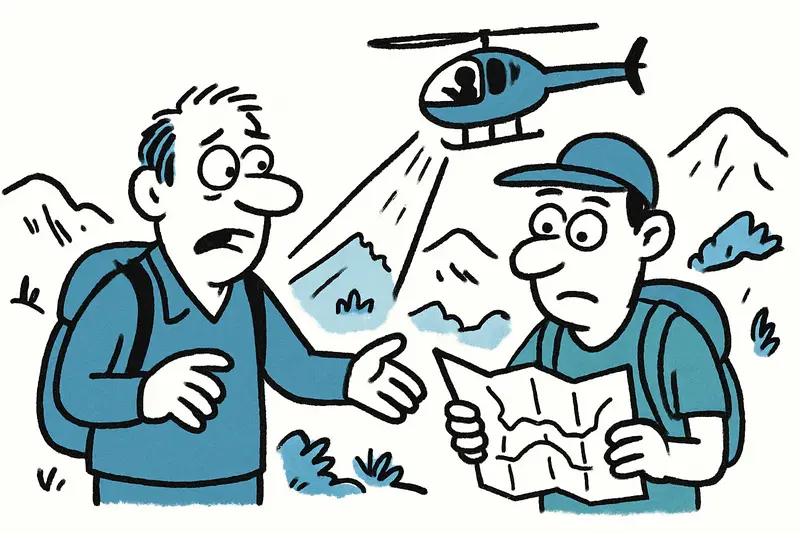
Late on Monday evening a search began that people in the valleys around Escorca will not forget quickly: the local mountain rescue team of the fire brigade launched the operation after a father and his son called the emergency number and reported that they had lost their bearings. The noise of helicopters mixed with the whistle of the wind through the pines, searchlights danced across rugged slopes — and on the MA-10 a few cars still passed slowly by the roadblocks.
Key question: Why do such cases keep happening in Mallorca?
The short version: the mountains are tougher than the postcards suggest. Those who set out with sturdy footwear, a map or GPS and respect have a good chance of getting back down safely. The longer answer is more complicated. Day tourists mix with local walkers, paths are not consistently marked, weather can change quickly — and the expectation that any route can be done "quickly" leads to misjudgements, as seen in Nighttime Misadventure in the Torrent de Mortitx: What the Mountain Rescuers' Operation Reveals.
That the emergency call this time came from the people affected is a good sign. It shows that people ask for help when they need it. At the same time, it highlights the problem: once orientation and light fade, the risks increase. On Monday the rescuers were busy elsewhere too: a woman in the east of the island (Atalaia de Son Jaumell area) had to be airlifted by rescue helicopter; in the Cavall Bernat area teams from Inca and Sóller assisted a youth group where two minors could not continue their hike. And in the southwest a holidaymaker collapsed during a section between Camp de Mar and Port d'Andratx. The incidents came in quick succession, and similar rescues have included Nighttime Wrong Turn at Puig Major: Why a Harmless Walk Can Quickly Turn Dangerous.
This forms a clear pattern: underestimated routes, partly difficult descents and incidents when fitness or orientation are lacking. Added to this are technical limitations: no signal on parts of the route, dead batteries, lack of warm clothing, incorrect estimates of daylight.
What is often missing in the public debate
Much is talked about, some things are kept quiet: for example how unreliable some hiking trails are marked. Or that many hotels and landlords do not systematically inform guests about current weather warnings or difficult sections. A clear, easily accessible information point is missing at parking lots: a sign with difficulty level, estimated duration, water stops and instructions about the 112 emergency number. And yes — language barriers also play a role: an English or German route description helps little if the last mile runs over scree.
Moreover, responsibility among outfitters is rarely discussed openly: rental car companies handing out trail maps, or tour operators downplaying routes, contribute to the problem. In conversations at the Sóller market you often hear: "People read photos, not terrain."
Concrete proposals for Mallorca
Small, concrete steps could achieve a lot. Suggestions from everyday island life that would work without major investment:
1. Clearer information at starting points: A simple, multilingual sign at popular parking areas showing route length, difficulty level, alternative routes and a QR code linking to an up-to-date GPX file and AEMET weather data.
2. Promote mobile preparedness: Landlords and rental agencies could routinely hand out a checklist: sufficient water, power bank, headlamp, sturdy shoes, emergency contact. Not an appeal, but a handout — like a small reminder at check-in.
3. Use technology sensibly: Rescue teams already work well with helicopters and local groups. It would be even better to promote the "share live location" function in common messengers for emergencies, combined with simple instructions at trailheads.
4. Courses and awareness: Municipalities, hiking clubs and mountain guides could offer short orientation courses or information days — on weekends when trails are busiest. A practical course can achieve more than a flyer.
Everyday scene
Imagine the bar in Escorca early in the morning: an old man wipes oil stains from the counter, a hiker drinks quick coffee and spreads out a creased map, next to him a family with backpacks still looking tired. Such images show that infrastructure and people's habits often pass each other by. A few extra minutes of information could save lives here.
The mountain rescue teams work extremely hard on days like these, undertaking operations such as Dramatic Helicopter Rescue at Puig Major: Lessons from an Afternoon in the Tramuntana. But in the long term more is needed than emergency responses: reliable information, better preparation of people, and a little humility toward the terrain are required.
Conclusion: Rescue teams must not become a permanent stopgap solution. If we mark routes more sensibly, provide useful information at starting points and guide visitors toward basic self-preparation, the number of missions will fall — and helicopters can return to routine flights, not island alarm calls.
If you go into the Tramuntana: check the AEMET forecast before you set off, share your location with trusted contacts and report any unusual situations in time. The mountains do not take plans into account.
Frequently asked questions
Why do hikers get lost in the Tramuntana mountains in Mallorca?
What should I pack for a hike in Mallorca’s mountains?
Is it safe to hike in Mallorca if the weather changes quickly?
What should I do if I get lost while hiking in Mallorca?
Are the hiking trails in Mallorca always well marked?
What happened near Escorca in the Tramuntana when hikers called for help?
Why is the MA-10 area in Mallorca often linked to hiking rescues?
What are the most practical safety tips for hiking in Mallorca’s Tramuntana?
Similar News

Fewer Airlines, Fewer Destinations: What Palma's Winter Flight Schedule Means for Mallorca
Analysis shows: Winter at Son Sant Joan Airport will be quieter, with significantly fewer airlines and destinations. Who...
German tourist dies in Sa Calobra – a reality check for emergencies on Mallorca's beaches
A 40-year-old tourist died at the Torrent de Pareis. The emergency call, a doctor who happened to be present, a defibril...
Deadly Tractor Accident in Bunyola: What Needs to Be Done Now
In a work accident on an estate near Bunyola, a roughly 40-year-old man lost his life. His wife and a small child were o...
Head-first dive into the shallow part of Cala Fonoll: An accident and the unresolved question of responsibility
A young tourist dove into Cala Fonoll and was seriously injured. Key question: Why are clear warning signs missing at da...
Mistaken identity with fatal consequences: Brutal assault in S'Aranjassa — what's missing in the follow-up?
At S'Aranjassa a visitor to a finca was tied up, beaten and thrown out of a van. Three men have been arrested, including...
More to explore
Discover more interesting content

Can Cap de Bou

Townhouse Lleo 72
