
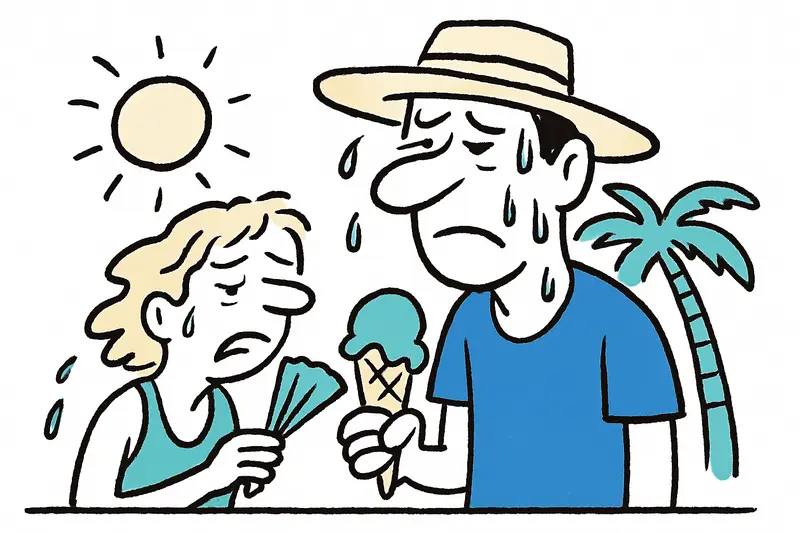
It's not summer yet — and Mallorca is already sweating: A reality check on the heat warning
Aemet reports the first heat warning of the year for the island interior: up to 36 °C. We ask: How well is Mallorca prepared for early heat waves — and what is missing from the debate?
It's not summer yet — and Mallorca is already sweating: a reality check on the heat warning
Key question: How well is Mallorca prepared for early heat waves — Heat alert on Mallorca: How well is the island prepared for infernal heat days? — and which measures are missing so that the heat does not become a health and infrastructure crisis?
What is happening today: the facts at a glance
The national weather agency Aemet has issued a heat warning for the island interior for Friday: locally up to 36 °C are expected between about 1 pm and 6 pm. For comparison: around 25 °C would be normal for this time of year. The cause is a warm air mass from the peninsula hitting the island; skies are expected to be clear to slightly cloudy, with a weak west wind and light breezes on the coast. The sea has already warmed noticeably — at the west coast (measurement point near Dragonera) around 24.7 °C was recently measured. For Saturday a small drop to about 32 °C is expected, Sunday will be similar, and a slight easing is forecast for the following week. Similar warnings are discussed in 40 Degrees This Weekend: Mallorca Faces a Heat Test – What Matters Now.
Critical analysis: Why this warning is more than a weather report
A single report of high temperatures is uncomfortable but not surprising. What matters is how the island community responds; this has been examined in When Mallorca Cooks: How Prepared Is the Island for the Next Heatwave?. When the air shimmers over Palma at midday, shutters on Carrer de Sant Miquel are half-closed and there are hardly any pedestrians on the Passeig Mallorca, that's not just a summer picture — it's an everyday experience that primarily affects the elderly, children and workers. Heat hits unequally: those who live in well-insulated apartments or can cool off by the sea have advantages; people in old buildings without air conditioning, construction workers, market traders and the homeless have little protection.
What's missing in the public discourse
First: concrete protection plans for at-risk groups. Warnings that it will be warm are not enough. Coordinated opening hours for cool public spaces (libraries, sports halls), mobile drinking water stations and a clear communication scheme from municipalities to care facilities are lacking. Second: urban infrastructure. Street trees are being planted, but are often weakened by long watering gaps. Shade canopies at stops, more drinking fountains and heat-resistant materials in road construction hardly appear on the agenda. Third: adjustments to labor regulations. Construction and landscaping work still continue in the blazing sun — flexible shifts or mandatory siesta periods would be possible but are rarely implemented.
Everyday scene in Mallorca
Today at 2 pm: Plaça de Cort lies quiet, market traders at Mercat de l’Olivar pull the blinds halfway down, a delivery van parks in the cathedral's shade, cicadas sing tirelessly. There are fewer cars on Avinguda Jaume III; on the Cala Major promenade only a few people sit in the shade of the palms. Heat has its own sound: the faint cracking of hot asphalt, the distant hum of air conditioners and the clinking of ice bowls in cafés. Scenes like this are detailed in Nearly 40 °C: Mallorca's Daily Life Under Heat Stress — How the Island Can Respond.
Concrete solutions — immediately implementable
1) Municipal cooling points: municipalities should open spaces (libraries, town halls, sports halls) as official cooling oases for hours on hot days and communicate this widely. 2) Drinking water infrastructure: temporary water stations at markets, beaches and bus stops as well as free refill points for water bottles. 3) Occupational safety: local regulations that restrict heavy work between 12 and 17 or mandate shade breaks. 4) Intensify green care: additional watering plans for street trees in the first hot weeks so young trees do not die. 5) Health communication: simple, multilingual leaflets and SMS alerts with symptoms of heatstroke and tips for children and the elderly. 6) Tourism management: inform accommodation providers so that pools and common rooms serve as first contact points for heat-stressed guests. 7) Long term: building regulations for passive cooling, subsidy programs for façade greening and more urban shaded areas.
Who pays for all this?
Many measures are cheap to affordable: extended opening hours for libraries, water fountains and SMS alerts cost little but bring quick relief. Other steps — street-tree irrigation systems, façade greening, adjustments to building regulations — require planning and budgets. EU climate and resilience funds, regional grant programs and private partnerships are available here. It is important to view the cost-benefit calculation also in terms of health costs and lost working hours.
Pointed conclusion
A heat warning is not a natural event you can simply sit out. It is an early warning of gaps in action. Mallorca has the know-how and the means for pragmatic measures — what is often missing is the political will to implement them quickly. If we do not just let summer arrive but plan it with small, concrete steps, the streets remain usable, markets stay lively and, above all, fewer people will suffer from the heat.
Frequently asked questions
What is the weather like in Mallorca in the spring?
Can you swim in the sea in Mallorca outside summer?
What should I pack for a trip to Mallorca in the shoulder season?
Is Mallorca a good place to visit in the off-season?
What is Palma like in spring?
Is Alcúdia a good base for a Mallorca holiday?
What is Pollença like for visitors?
When is the best time to visit Mallorca for warm weather without peak-season crowds?
Similar News
No Identification Documents on the Steep Slope: Body near Tolleric Raises Questions
The body of an elderly man was found over the weekend in a wooded area near the cliffs of Tolleric. He had no identifica...
Arrest at the Port: Three Suspected Pickpockets Left Mallorca After Series of Thefts
The National Police stopped three men at Palma harbour who are accused of several thefts at the airport. How could the g...
Palma's Rental Bike Boom: More Bikes, More People, More City Life
Since Bicipalma was opened to non-residents, the system has noticeably grown. Students, residents and tourists bring lif...

Palma–Lyon in Winter: Two Weekly Flights Bring Fresh Momentum
From October Transavia France will connect Palma and Lyon in winter as well: Wednesdays and Saturdays, around 17,000 sea...

Budget holidays in Mallorca: What thriftier tourists really mean
Visitors are spending less: shorter stays, fewer restaurant visits, fewer excursions. A reality check for Mallorca's eco...
More to explore
Discover more interesting content

Boat Tour with BBQ along Es Trenc Beach

Private transfer from Mallorca Airport (PMI) to Pollensa
