
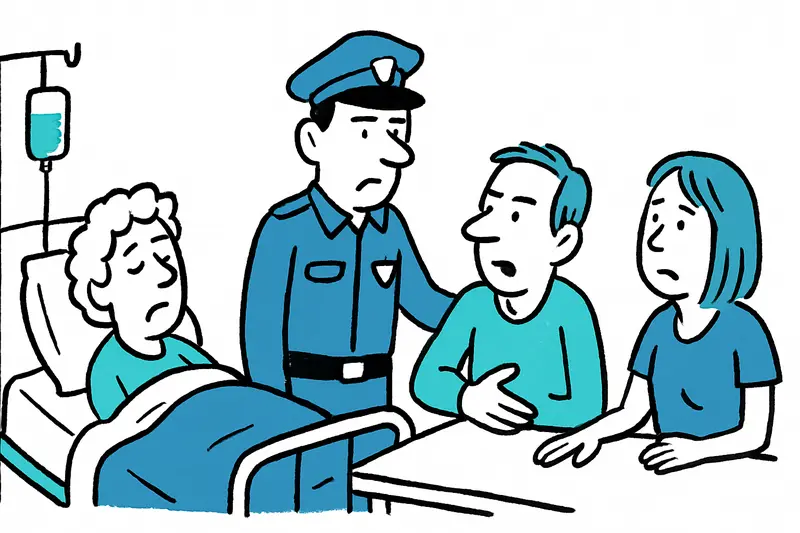
Death in Pere Garau: Remand Order After Dispute – a Family, a Neighborhood and Many Open Questions
Death in Pere Garau: Remand Order After Dispute – a Family, a Neighborhood and Many Open Questions
A 73-year-old woman has died in Palma. The 36-year-old suspect is in Son Espases hospital for psychiatric reasons; a judge has ordered pre-trial detention. A reality check: what do the facts say, what is missing from the public debate, and how can Pere Garau be better protected?
Death in Pere Garau: Remand Order After Dispute – a Family, a Neighborhood and Many Open Questions
Key question: How can domestic conflicts in Palma be prevented from ending in death?
On Monday a dispute in an apartment in the Pere Garau neighborhood escalated and ended with the death of a 73-year-old woman. Similar incidents in the area, such as Arrest after knife attack in Pere Garau: How safe is Palma's neighborhood?, have raised concerns. A 36-year-old woman is suspected of having killed the senior. The accused is currently being treated at Son Espases hospital for psychiatric reasons and is under police guard there. A judge has ordered pre-trial detention; once she is discharged from the hospital she is to be sent to prison without bail.
The accused has told investigators that she acted in self-defence. That statement is currently part of the investigation. Little is known about the exact sequence of events, motives and circumstances. The court bases its decisions on files, assessments and investigations — not on rumors from the neighborhood.
Critical analysis: More than an isolated case?
A fatal outcome after a domestic dispute is always a warning sign. Publicly available facts in this case are sparse. What we know: the victim's age, the suspect's age, the location in Pere Garau, the placement in Son Espases hospital for psychiatric reasons, police guard and the court's decision for pre-trial detention. What we do not know: the history of earlier conflicts in the family, possible prior convictions, whether there were previous police or social services interventions, and which support offers were known to those affected (earlier cases such as Fatal Discovery in Son Macià: A Case Raising Questions about Protecting Older People highlight these gaps).
The legal response — psychiatric assessment, police guard, pre-trial detention — is to be expected. But it does not answer the question of whether prevention failed. In Palma, in densely built neighborhoods like Pere Garau, you often meet older neighbors, small shops and hear delivery vans in the street. These neighborhoods are lively; they are also places where family problems can remain hidden for a long time.
What is missing from the public discourse?
First: concrete information about support services for older people and families in acute crisis. Second: data on police and social services interventions in such households so patterns can be identified. Third: attention to the connection between mental illness and domestic violence — both are often considered separately, even though together they can be dangerous.
When we talk openly about prevention, the neighborhood perspective is often missing. On one of the small balconies on Carrer d’es Fossar you hear the bakery in the morning, voices, buses on the avenue — the normal sound. None of us wants to intervene for fear of escalation or legal consequences. Past instances where deaths went unnoticed, for example Hallazgo de cadáver en Santa Catalina: hijo liberado — las preguntas abiertas, underscore the need for vigilance. Yet this is exactly where early help can start.
Concrete solutions for Palma and Pere Garau
1) Create local prevention teams: joint deployments of social work, rapid psychological assessment and police to reach families in acute conflict more effectively. 2) Expand geriatric home visits: social care workers should be able to visit older residents regularly, especially in densely populated districts. 3) Strengthen psychiatric aftercare: shorter pathways between emergency departments, outpatient psychiatry and community services. 4) Anonymous reporting channels in neighborhoods: easily accessible hotlines, notices in health centers and pharmacies. 5) Neighborhood training: short workshops in community halls on how neighbors can de-escalate situations without putting themselves at risk.
Everyday scene as a reminder
Walking through Pere Garau on a weekday, you see vendors with crates of fruit, hear the rattling of buses and smell fresh coffee. The houses are close together. Generations often live here in small flats. This proximity is both an opportunity and a risk: it enables quick neighborhood contact — and allows conflicts to fester beneath the surface.
Concise conclusion
The death in Pere Garau is not just a criminal case; it is an indication that prevention, care and neighborhood routines do not automatically function. The judiciary is doing its part; the question is whether the city and communities can intervene more strongly on the ground before a dispute turns deadly. Whoever drinks a cup of café con leche on the plaza in the morning should not have to read later that someone was left alone behind closed doors. In short: investigations are necessary. But prevention must become louder.
Frequently asked questions
When is the best time to visit Mallorca for good weather?
What should I pack for a trip to Mallorca?
Can you swim in Mallorca in spring or autumn?
What is Mallorca like in late autumn?
Is Alcúdia a good place to stay in Mallorca?
What is Sóller known for in Mallorca?
Is Palma a good base for a first trip to Mallorca?
What kind of activities work well in Mallorca if it’s not beach weather?
Similar News
Magaluf: Watchtower Alarm – Lifeguards Pull Unconscious Beachgoer from the Water
After a drama in the late afternoon, two lifeguards at Magaluf beach rescued an unconscious 44-year-old man. He was stab...
Turquoise in the City: How dangerous is the color play of the Sa Riera?
The Sa Riera in Palma suddenly turned turquoise — a pretty motif, but behind the effect lies a discharge of saline waste...

Jeckliner at Sunnesching: Cologne spirit sets sail from Palma
In September 2027 the Mein Schiff 2 briefly becomes a floating carnival stage: four days with Cologne bands, comedy and ...
Finally Home: Mike and Leyla Heiter Buy Villa with Sea View in Mallorca
The reality TV couple Mike and Leyla Heiter have bought a house in Mallorca with a roof terrace and sea view. An Instagr...
Arrest after series in Palma: Who protects apartments from repeat offenders?
The National Police arrested a man in Palma who investigators say may have broken into several apartments. In one incide...
More to explore
Discover more interesting content

Can Cap de Bou

Townhouse Lleo 72
