
Body Found in Santa Catalina: When an Entire Neighborhood Didn't Notice
In the busy Santa Catalina district an elderly woman was found dead in her apartment. The release of her son raises questions — and reveals gaps in Palma's social safety net.
Body found in Santa Catalina and the quiet gaps of a loud neighborhood
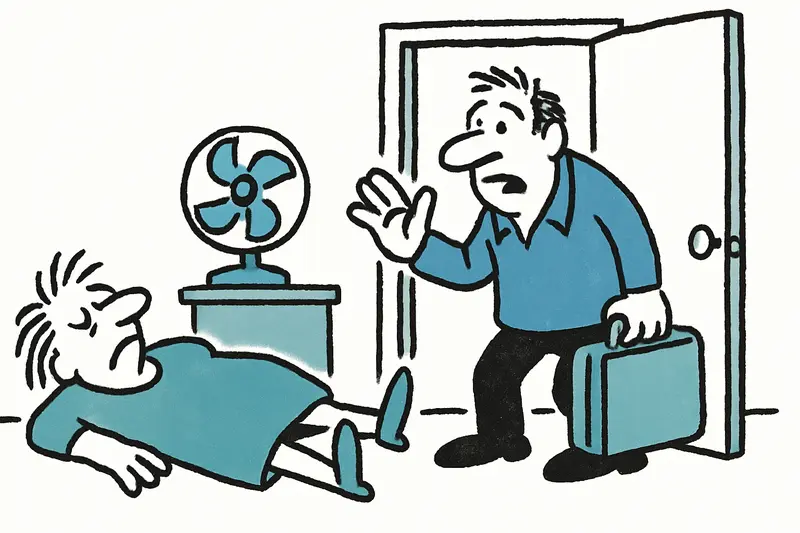
On a cool autumn afternoon, when vendors at the Mercat de Santa Catalina were packing up the last baskets of olives and the fryers in a bar were still humming, a neighbor came across something rarely discussed here: an elderly woman who had apparently been dead in her apartment for some time. The scene felt contradictory — a running fan, soft music from the radio, the locked door — and it is precisely this contradiction that makes the situation so unsettling.
Central question
How can a death remain undiscovered for weeks in a neighborhood where people meet every day at the market and the tapas bars? This question leads directly to broader issues: loneliness in the city, gaps in municipal checks, and the limits of what a neighborhood can provide.
What is known so far
A resident noticed the absence of the neighbor and alerted the police in early October, as covered in Hallazgo de cadáver en Santa Catalina: hijo liberado — las preguntas abiertas. Firefighters opened the apartment. According to investigators, there were marks on the neck that do not rule out a non-natural death. The son, who was initially detained, has since been released — the judge did not see grounds for detention for the time being, until the final autopsy report completes the picture.
The obvious procedures — and what is otherwise missing
The investigation documents appointments, forensic samples and evidence. In everyday reality, however, it is often banal details that explain how a person can be overlooked for so long: a running fan that simulates airing a room; music that masks the silence; mail that does not pile up unusually. Equally important are questions about the tenancy, who holds keys, and whether doctors or social services had recent contact.
Forensics and law — sober mechanics
Forensic medicine now bears the main responsibility: tissue analyses, insect activity, refrigerator contents, the condition of medicines and wounds together form a possible timeline. Only in this way can one verify whether the son's statements match the findings. The release legally means only that, for the time being, there are no concrete grounds for detention.
The quiet reasons behind loud Palma
Santa Catalina is a neighborhood full of sounds: market cries, clattering plates, mopeds, and the distant sound of the sea. And yet many residents here have thin social networks — long-standing neighbors, newcomers, seasonal workers. Those who are alone and have few steady contacts are more easily overlooked, a pattern reflected in local reporting such as Cadáver en Santa Catalina: ¿Cómo pudo pasar desapercibida una muerte durante semanas?. This is not the fault of individual bars or market stalls, but a societal failure.
What is too little considered: prevention as backward-looking investigative work
Investigations clarify the past. That is necessary. But we should also think forward: Which structures prevent people from remaining unnoticed for months? Some concrete proposals for Palma:
- Regular social checks: Municipal programs that purposefully visit older people living alone — not paternalistic, but consistent.
- Better cooperation: Sensitive interfaces between general practitioners, social services and municipal offices so that vulnerable cases are more likely to be noticed (data protection must be preserved).
- Strengthen neighborhood networks: Simple check-in lists for apartment buildings or digital services that raise an alert if someone does not respond for an extended period.
- Training for those near the door: Janitors, postal workers, delivery drivers and market staff are often the first to notice anomalies. Short awareness workshops could help.
Concrete opportunities for Palma
The Santa Catalina case is not unique, but a signal. Palma could develop a citywide approach: a register of voluntary contact persons, regular phone checks for particularly vulnerable households, linked with local volunteer groups. Such measures cost money — but they create closeness in a city that offers much bustle and yet can overlook individual people. Further coverage of the circumstances is available in Body in Santa Catalina: Why the death went unnoticed for weeks.
In conclusion
Investigations continue to focus on forensic facts. For the neighborhood, however, another quiet realization remains: a city can be loud and yet blind. Until forensic medicine provides clarity, the appeal to politics and society remains: we must find ways to listen better, to ask more often, and not to lose sight of the people in our buildings.
Santa Catalina, with its market noise and late tapas guests, asks quietly: How do we prevent a person from remaining unnoticed for so long again?
Frequently asked questions
Why can a death go unnoticed for weeks in a busy Mallorca neighbourhood?
What signs can indicate that someone in Mallorca has been dead in their home for some time?
What happens when police find a body in an apartment in Mallorca?
Why was the son released after the Santa Catalina death investigation?
How can neighbours in Santa Catalina help prevent someone from being overlooked?
What role do doctors and social services play in avoiding lonely deaths in Mallorca?
Is Santa Catalina in Palma a place where people live close to each other?
What should I do in Mallorca if I think a neighbour may be in danger?
Similar News
The End of the Cheap Ride? Why Mallorca Is Hit Harder by the Fuel-Price Shock
Gasoline and diesel average close to two euros per liter. What this means for commuters, supply chains and renters in Ma...
Relaxed liquid rules in Munich: What Mallorca travelers will notice
At Munich Airport the 100-milliliter rule will be lifted at all checkpoint lanes — thanks to new CT scanners passengers ...
For 45 Years on Mallorca — and Then This: How a Market Visit in Santa Ponsa Became a Lesson
A woman who has lived on the island for decades lost money and important documents at the Mercat Setmanal in Santa Ponsa...
10 percent surcharge on the beach: How legal and transparent is the extra charge at Playa de Muro?
A German part-time resident noticed days after a restaurant visit in Playa de Muro that the bill included a flat ten per...
Body near the Llevant Market: What this death says about our city
A man was found dead on Sunday afternoon near the Llevant Market. Police say the death appears natural. The scene raises...
More to explore
Discover more interesting content

Can Cap de Bou

Townhouse Lleo 72
