
Body in Santa Catalina: Why the death went unnoticed for weeks
In the bustling Santa Catalina neighborhood, an elderly woman was found dead in her apartment — apparently her death went unnoticed for weeks. A neighborhood analysis: What gaps do such cases reveal, and how can loneliness in cities be better prevented?
Body in Santa Catalina: Discovery amid market stalls and café chairs
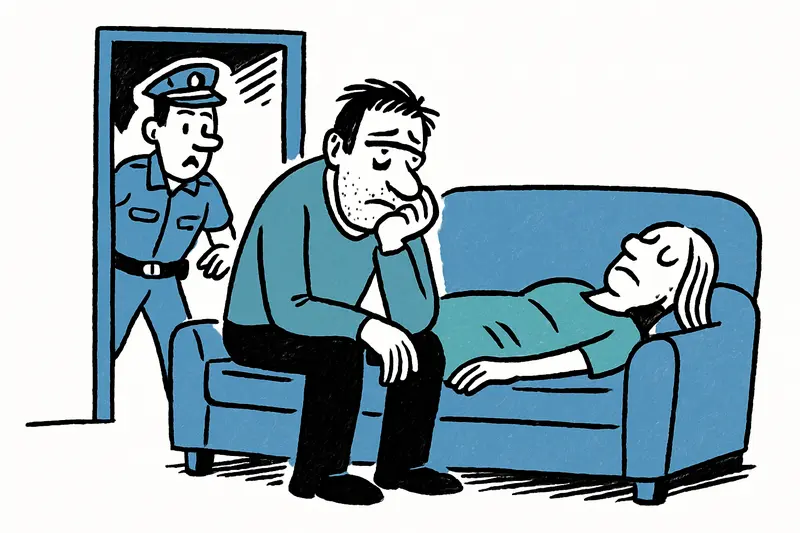
It was one of those mornings in Santa Catalina: market stalls, the clinking of coffee spoons, the murmurs of regulars at the bar, a light breeze from the harbor. Around 11:30 a.m. that mixture of sounds stopped on a small side street. A neighbor who normally delivers the newspaper stood there with a stunned look. A smell, unanswered knocks and then the sad certainty: relatives and neighbors found the body of an elderly woman in an apartment. The incident was later reported in Body Found in Santa Catalina: When an Entire Neighborhood Didn't Notice.
Initial investigation: No obvious signs of external violence
The Guardia Civil and the local police opened an investigation. According to initial reports there were no visible signs of external violence; an autopsy is now to determine the cause of death. Nevertheless, investigators and residents are puzzled by the central question: How could a death apparently remain undiscovered in an apartment for around a month?
Particularly puzzling for people in the neighborhood is the claim that the roughly 40-year-old son continued to live in the apartment during this time. He was found on site, questioned and medically examined, a situation covered in Santa Catalina: Man reportedly lived for a month with his dead mother – questions for the city. Neighbors describe him as withdrawn; mail piled up under the mailbox, garbage bags were left lying around — signs that alone were not enough to trigger an alarm.
The key question: Privacy or care — who looks in?
The silence in the stairwells raises a difficult but necessary issue: When does the right to privacy end and the duty to help begin? In a neighborhood that during the day is alive with voices, tourists and comings and goings, it sounds almost paradoxical that a cry for help could remain unheard for so long.
Analytical view: More than an isolated case
This case is not only a police puzzle — it is a mirror of structural gaps that are also visible elsewhere on Mallorca. First: social services and general practitioners often have too little capacity, and mobile care services are scarce. Second: neighborhood attention is fleeting. A full mailbox, an unpleasant smell — many interpret that as a short-term problem, not as a warning sign.
Third, the interfaces between police, health services and municipal departments are not always well coordinated. Information often reaches the right place too late. And fourth: urban rhythms play a role. In neighborhoods with many rental apartments, seasonal residents and changing guests, social patterns shift faster than support structures can keep up.
Overlooked aspects: work rhythms, anonymity, cultural reluctance
Less often considered is how modern working hours and anonymity change perception. Delivery drivers, couriers, postmen and waste collection crews often see things first — and yet they rarely report them because there are no simple reporting channels or training. Added to this is a cultural reluctance: nobody wants to meddle, be wrong or publicize private matters. This restraint can, in the worst case, cost lives.
Concrete opportunities and approaches
What can be done? In the short term, volunteer neighborhood checks, coordinated notices in multi-tenant buildings and awareness workshops for postal and waste workers help. Simple rules could make a big difference: if a caregiver is unreachable for two weeks, there should be a low-threshold reporting option to the social services.
At the municipal level, visible prevention teams could be conceivable — not as a control apparatus, but as a contact point for loneliness, advice and quick checks. Technical additions such as registered emergency contacts or regular phone calls for people living alone can help, but must not replace human observation.
Local meeting places also matter: the corner café, the fruit seller, the market stall — they can function as informal early warning systems if people are encouraged to respond to irregularities. Training and a simple reporting channel for workers who have daily contact with homes would be a pragmatic intermediate step.
Neighborhood as a protective space
Anyone who knows Santa Catalina — the clatter of cups, the calls of the vendors, the distant horn from the harbor — knows: these very sounds can fall silent without anyone immediately noticing. A few more anonymous glances, a phone call, a short knock at the door can be life-saving. The police have asked for information; the results of the autopsy should clarify whether criminal charges will follow.
This sad incident reminds us: looking is not an intrusion into privacy when it concerns life and death. A network of neighbors, volunteers, authorities and social services could in future prevent such tragedies from going unnoticed.
Frequently asked questions
How can a death in Mallorca go unnoticed for weeks?
What should neighbors in Mallorca do if they notice a strange smell or piled-up mail?
Why are cases like this more likely in Santa Catalina, Palma?
What signs can suggest that someone living alone in Mallorca may need help?
How do police investigate a suspected unattended death in Mallorca?
What role do social services play in Mallorca when an older person lives alone?
Can neighbours in Mallorca report a welfare concern anonymously?
What can apartment buildings in Mallorca do to prevent tragic cases from being missed?
Similar News

When coercive fines aren't enough: Could holiday rental owners soon face prosecution?
The island administration is stepping up action against unauthorized holiday rentals: high daily coercive fines up to €5...

Palma Airport on an Expansion Course — Who Decides How Much Growth the Island Needs?
Aena and Madrid are planning multi-million euro investments for Son Sant Joan and project higher capacities. Concern is ...
Who Gets Left Out? Why Overbookings Will Hit Many Mallorca Travelers This Summer
On hot check-in days at Son Sant Joan, frustrated travelers pile up. New figures from Reclamador.es show that a large sh...
When the Handyman Came: How an Engagement Ring Disappeared in Mallorca and What It Says About Trust
During a repair in Andratx a highly personal engagement ring went missing — a case that calls not only for punishment bu...
How Burglars Test Fincas in Mallorca — and What You Can Do About It
The Spanish National Police warn of a simple but effective trick: small markings on doors reveal whether a finca is occu...
More to explore
Discover more interesting content

Can Cap de Bou

Townhouse Lleo 72
