
V16 Warning Light: What Will Be Mandatory in the Glove Compartment in Majorca from 2026 — a Reality Check
V16 Warning Light: What Will Be Mandatory in the Glove Compartment in Majorca from 2026 — a Reality Check
From 2026 an 80-euro fine may be imposed in Majorca if the new V16 warning light is missing. A look at the rules, the counterfeit devices in the cheap segment and what you should practically do now.
V16 Warning Light: What Will Be Mandatory in the Glove Compartment in Majorca from 2026 — a Reality Check
Key question: Does the new requirement for connected V16 lights really make the roads safer — or does it create new uncertainties for drivers in Majorca?
On the streets of Palma, between the hum of cyclists along the Paseo Marítimo and the traffic lights by the cathedral, people are now talking about the yellow light that will soon belong in every glove compartment. One thing is clear: from next year onward, anyone who does not carry the prescribed V16 risks an 80-euro fine, as explained in V16 Mandatory in Mallorca: What Drivers Really Need to Know. The traffic authority DGT has set clear technical minimum requirements — and explicitly points out that many inexpensive devices from China, sold here for under 20 euros, will not be accepted by the police.
Critical analysis: The rules are sensible at their core. A visibility solution that offers 360-degree illumination and a connection to the DGT platform can improve emergency response times and reduce the risk of being endangered when exiting a vehicle on the roadway. But: the regulation brings practical problems that have so far been discussed too little. First: How can an officer at dusk immediately tell whether a device is actually certified or just a visually similar cheap copy? Second: Who checks the operational readiness — for example the battery expiry date or the active SIM — in everyday life? Third: What does the requirement mean for rental car drivers, taxi drivers and people who use their vehicle only rarely? This is particularly relevant given the discussion in New Taxi Rules in Mallorca: Caps, Ramps and the App — Will the Plan Match the Island's Rhythm?.
What's missing in the public debate: There is little discussion of how the transition phase will be regulated. Will landlords be required to provide certified devices? Are there clear inspection duties during the vehicle inspection? Nobody is loudly addressing privacy issues arising from a GPS chip and an integrated SIM: where are location data stored, for how long and who has access? On Majorca, where many holidaymakers drive short distances, these questions are practically relevant. Also unresolved is the question of reasonable disposal routes for decommissioned lights and batteries — collection points in Palma are already piling up with used batteries; for guidance on proper battery disposal, see EU guidance on batteries and accumulators.
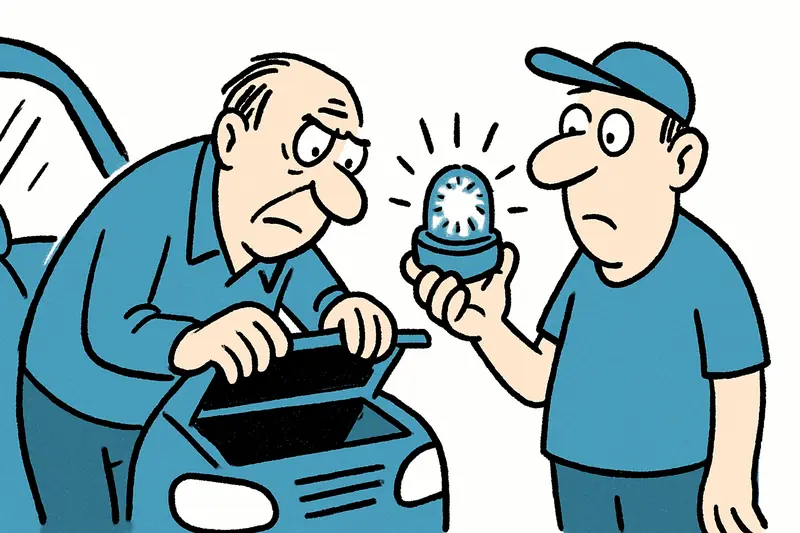
Everyday scene: A Tuesday morning at a petrol station in Son Gotleu. A retiree from Sa Pobla steps out, looks into the glove compartment, takes out the new light, reads the small serial number, frowns and says to me: 'Is this real?' The saleswoman pulls the packaging out, shows a CE mark and the promise of 30 minutes runtime. But a CE mark alone is no free pass here — the DGT list of certified models is the decisive criterion.
Practical solutions for drivers in Majorca:
1) Check before you buy: Visit the official DGT website and compare model numbers. Do not buy based only on price or packaging claims. Certified devices are more expensive, but the effort is worth it.
2) Pay attention to test marks and serial numbers: The light should carry a clear identification. Note the manufacturer, model and serial number and keep the purchase receipt in the vehicle — this can be helpful during a check.
3) Rental cars: If you rent a car, check in the handover protocol which V16 device is in the glove compartment. Renters can insist on receiving a certified model or record the point in writing.
4) Keep an eye on battery and service life: Check the manufacture date and the minimum service life of 18 months. Before longer trips, verify that the light blinks or charges.
5) Data protection and SIM: Find out how the manufacturer handles GPS data. The DGT platform receives location data — useful in emergencies — but transparency from manufacturers helps build trust.
6) Where to buy: Prefer established retailers in Palma, Inca or Manacor over market stalls. If in doubt, ask to see the EAN/serial number and compare it with the DGT list.
For the authorities, these measures would be helpful: clear information campaigns in multiple languages, mandatory proof for rental car companies, clearer police guidelines for quickly recognizing certified devices and collection points for used V16 lights, as seen after the Orange Alert in Mallorca: Are We Really Prepared?. These are not major bureaucratic steps, but they would increase acceptance and practical feasibility.
Bottom line: The new requirement can have benefits — but only if implementation does not fail on details. If you're driving in Majorca, now is not the time to cut corners: a certified V16 in the glove compartment is cheap compared with a dark night on the motorway and an 80-euro ticket. Authorities, retailers and landlords must now cooperate so that a good idea does not become an unnecessary hurdle.
Frequently asked questions
What is the V16 warning light and will it be required in Mallorca from 2026?
How can I tell if a V16 warning light is approved for use in Mallorca?
What should drivers in Mallorca check before buying a V16 light?
Do rental cars in Mallorca need to come with a certified V16 light?
How do I check if my V16 warning light still works before a trip in Mallorca?
What should I know about privacy and GPS data in a V16 light in Mallorca?
Where can I buy a certified V16 warning light in Mallorca?
What should I do with an old V16 light or used battery in Mallorca?
Similar News

Four Days Without Water: Collapse in Palma Raises Questions About Heat Relief
A 54-year-old collapsed in Palma after apparently not having eaten or drunk for four days. First helpers, including seve...
Impressioning in Mallorca: How burglars silently break into second homes — and what to do now
A new burglary technique called impressioning leaves locks intact and unsettles owners of second homes. A critical asses...

When a Flirt Turned Violent: What the Attack at Playa de Palma Says About Us
At Playa de Palma a young woman was brutally attacked after fending off advances. Three men have been arrested. Time for...

Sa Pobla convicted for concealing a drinking-water problem: What does the fine mean for the municipality?
The municipality of Sa Pobla must pay €67,284 because residents were not informed for months that tap water was not suit...
Impressioning on Mallorca: How Safe Are Holiday Homes Really?
A new burglary technique called "Impressioning" is making second‑home owners uneasy. A critical assessment: what do auth...
More to explore
Discover more interesting content

Boat Tour with BBQ along Es Trenc Beach

Private transfer from Mallorca Airport (PMI) to Pollensa
