
Who Owns Palma's Old Town? The Sale of Rialto Living and What's Missing Now
Who Owns Palma's Old Town? The Sale of Rialto Living and What's Missing Now
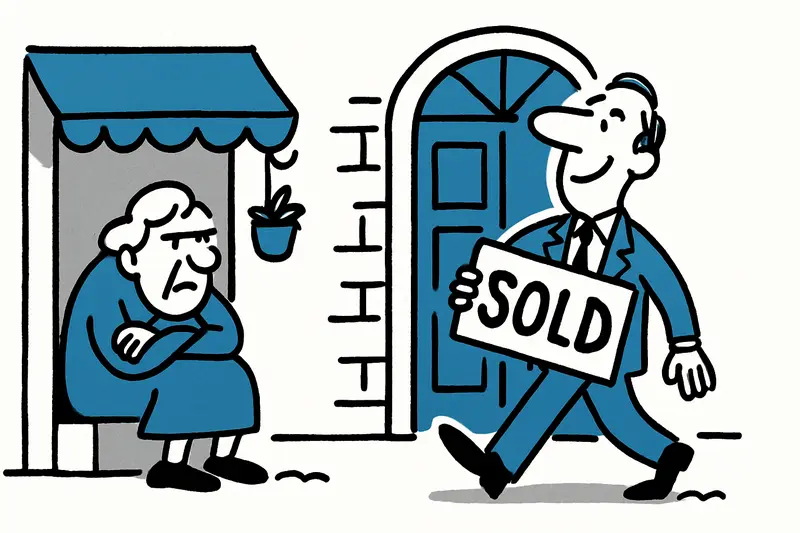
The cultural department store Rialto Living has changed ownership. The buyer is a well-known investor from the healthcare sector. The question is: will the old town remain a place for people or will it become a capital investment?
Who Owns Palma's Old Town? The Sale of Rialto Living and What's Missing Now
Early in the morning on the Passeig del Born you can hear the clatter of coffee grinders, the murmur of tourist groups and church bells in the distance. Right there, in the maze of narrow streets around the former Rialto cinema, a shop with its own aura has established itself in recent years: a place where fashion, art, home accessories and a café come together under historic ceilings. This ensemble was recently sold. The buyer is a prominent investor who is expanding his portfolio in Mallorca and whose background is the private healthcare sector.
Guiding question
Guiding question: Who should Palma's old town serve in the future — the people who live and work here, or primarily those who invest capital in protected historic spaces?
Critical analysis
The sale of such an iconic location is more than a real estate transaction. It is a symptom: historic buildings are increasingly traded as asset classes, a trend documented in Who Owns Palma? When Luxury Quietly Repaints the Working-Class Neighborhoods. On the one hand, the preservation of the fabric is often secured through investments. On the other hand, there are changed uses, rising rents and a changed range of goods that target paying visitors rather than neighbors, a pressure explored in When Rent Eats More Than Profit: Palma's Small Shops on the Brink. That the founders who shaped the shop for years will continue to run it for a few months softens the transition — but it is a temporary bridge, not a guarantee for lasting usage concepts.
What is missing from public discourse
The debate often concentrates on high purchase prices and prestige stories. Important questions remain underexposed: What conditions does the city impose on sales of historic ensembles? Is there transparency about the buyers' economic entanglements? Who monitors whether a cultural offering is preserved in the long term? And how does concentration of ownership in a few portfolios affect diversity in the neighborhood? Without these points, the discussion remains superficial.
Scene from everyday life
In the late afternoon, when the sun hangs low over the roofs of the Born, long-time residents sit on the steps in front of small shops, discussing the prices of bread and rent. An older woman from the florist on the corner says regular customers come by less often since the streets show more shop windows with luxury labels. Children still play between the tables, but the number of permanently inhabited apartments visibly shrinks.
Concrete solutions
• Transparency register: Public reporting of large real estate transactions and economic owners so that the city and neighborhood know who can set standards.
• Use clauses in monument sales: Contracts that require social or cultural uses for a certain period instead of exclusively touristic concepts.
• Municipal acquisition fund: A city or municipality-backed fund to buy key properties and convert them to uses that benefit the common good.
• Mixed quotas for retail space: Rules that a minimum share of shops must cover local services and creative projects.
• Tax incentives for long-term operators rather than pure capital returns: Reduced burdens for entrepreneurs who create local jobs and maintain cultural offerings.
Why these proposals are realistic
Many European cities have tried similar instruments. It is not about blocking investments but creating framework conditions that preserve the balance between conservation and economic use. In Mallorca, where tourist demand is high, such instruments would be particularly useful to protect the texture of neighborhoods.
Pithy conclusion
The sale of the shop ensemble in the old Rialto building is not an isolated case but part of a larger shift at Palma's core: historic fabric is increasingly becoming a plaything of global capital flows. If the city does not quickly develop clear rules and tools, the old town risks losing its rough, mixed character. The challenge is not to keep investors away but to ensure that their projects do not disenchant the place but continue to enliven it — for the people who live here, not just for those who buy.
Frequently asked questions
Why are historic shops in Palma's old town changing ownership so often?
What happens to a historic shop in Mallorca when a new investor buys it?
Can you still buy local, everyday things in Palma's old town?
What is missing from the debate about ownership in Palma's old town?
How can Palma protect historic buildings without pushing out local life?
Is Palma's old town still a place to live, or mostly a visitor area now?
What can the city do when a landmark property in Palma is sold?
Why do residents in Mallorca worry when a well-known old-town space changes hands?
Similar News
Reality check: Palma's "white" torrent — harmless salt or neglected warning sign?
White crusts on the Torrent de Sa Riera are causing a stir. Emaya describes them as salt deposits. Our reality check: wh...
When Ryanair's fleet grows: What Mallorca's travelers should know
Ryanair will soon receive 737 Max 10 jets. The larger aircraft offer potential savings — but also new risks for flight o...

Rising fuel and housing costs: Why Mallorca's overland buses are suddenly overcrowded
More and more people are leaving Palma — and boarding TIB buses: Between January and August 2026, the network recorded o...

Carriages Without Horses: Palma Plans E-Carriages – a Reality Check
Palma plans to switch to electric carriages in 2027. The prototype was shown near the cathedral. What is the technology ...

Record season, empty coffers: Who really benefits from the tourism boom?
Full hotels and more flights: the numbers sound impressive — yet many locals feel no benefit. A reality check with an ev...
More to explore
Discover more interesting content

Can Cap de Bou

Townhouse Lleo 72
