
Construction Sites Instead of Palm Romance: What Winter Works in Peguera, Canyamel and Colònia de Sant Jordi Really Mean
Construction Sites Instead of Palm Romance: What Winter Works in Peguera, Canyamel and Colònia de Sant Jordi Really Mean
350 metres torn up, trees planted, license plates under scrutiny: why the winter projects are useful — and where questions remain.
Construction Sites Instead of Palm Romance: What Winter Works in Peguera, Canyamel and Colònia de Sant Jordi Really Mean
Key question: Do the winter construction sites in Mallorca improve quality of life and safety — or are important questions about civil rights, the environment and everyday life simply being overlooked?
The situation: facts at a glance
In Peguera a stretch of the coastal road — near Torà Beach and the eatery Krümels Stadl — is currently torn up for roughly 350 metres. The works are part of the first of four winter phases planned by the municipality of Calvià; around three million euros are allocated for this section. Sidewalks are to be widened (approximately 2.90 to 4.20 metres), new trees will be planted, and cameras will in future record license plates to enforce driving rules. In Capdepera roughly two million euros flow into projects at Canyamel: a new cycle path, adjustment of a roundabout, improvements to Nuredduna Road and access to the beach. In Port d’Alcúdia the port authority is replacing damaged surfacing and planting about 50 trees, as reported in When Winter Brings the Excavator: Port d'Alcúdia and Colònia de Sant Jordi Under Renovation. In Colònia de Sant Jordi Gabriel Roca Street is being rebuilt; the package runs about four months and costs a little more than €400,000, sidewalks will be widened to roughly 2.25 metres and new streetlights installed. These local projects reflect a wider increase in work across the islands, as noted in Construction on the Balearic Islands: More Work in Sight — but What Challenges Remain?.
Critical analysis: good intentions, patchy follow-through
None of this is entirely new: Mallorca's municipalities make use of the quiet months for neighbour-friendly renovations. That makes sense — but: sensible for what exactly? Wider sidewalks and more greenery sound great, bringing pedestrian-friendliness and shade. Similar debates have arisen around the Playa de Palma and Bellver redevelopment. At the same time everyday concerns arise that rarely appear in official statements: How will residents and small businesses be relieved during the works? What rules apply to the new cameras — who stores licence plates, for how long, and for what purpose?
Technology before transparency is the wrong order. Cameras to monitor driving bans can help, but without clear rules they are a risk to privacy and trust. It also often remains unclear whether planted trees are actually suitable for the location and who will care for them once the construction company has left.
What's missing in the public discourse
There are three topics that are underrepresented: 1) data protection and control regarding licence plate cameras; see EU data protection rules; 2) long-term maintenance and follow-up costs for new infrastructure; 3) concrete compensation or support for businesses that lose customers due to closures. Public debate usually revolves around “beautifying” — too rarely about maintenance, access to camera data or accessibility details (for example the surface quality for wheelchairs).
A scene from everyday life
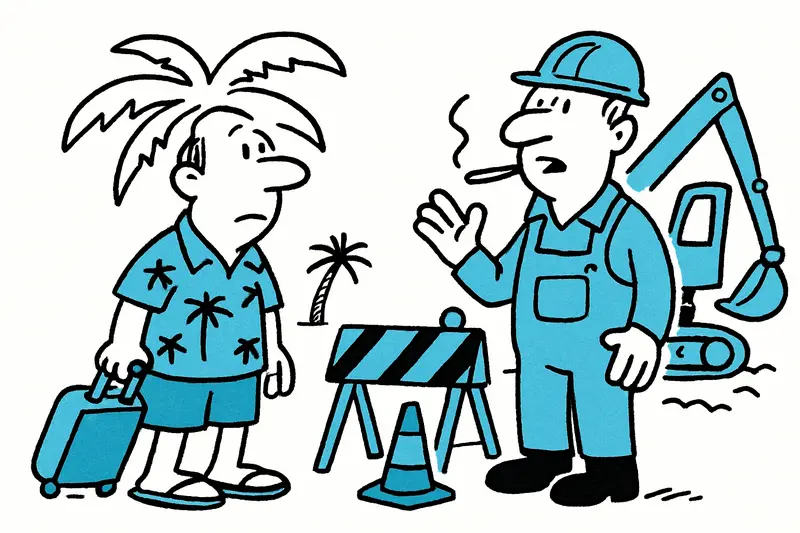
Anyone walking along Torà Beach can see it: a wire fence, the smell of diesel, workers with thermoses who briefly smoke, and tourists standing puzzled in front of a diversion. On Gavines Street diversion signs now shape the traffic flow; older residents carrying shopping struggle for space at makeshift crossings. Small cafés open earlier in the hope of redirecting pedestrian flows — not always with success.
Concrete solutions
- Transparency before technology: every camera installation needs a public data policy (purpose limitation, deletion deadlines, access rights). - Real-time info for residents: a simple online map with construction phases, closures and contact persons. - Support for businesses: temporary parking zones, delivery windows and signs pointing to alternative entrances. - Ecological requirements: only site-appropriate, native tree species (e.g. native pines, olive trees or carob), combined with irrigation plans and long-term maintenance agreements. - Plan for accessibility: pave sidewalks so that wheelchairs, strollers and older people are not hindered; maintain or add tactile guidance systems. - Noise-sensitive schedules: avoid work in the early morning hours and on weekends in residential areas where possible.
Conclusion: It's more than asphalt
The winter construction sites can make Mallorca more livable — if work is not only carried out quickly but planned and managed wisely. Whoever counts the trees, lays the cables and installs the cameras must also ensure that data is protected, maintenance is secured and business owners are not left alone. Otherwise in the end there will only be a pretty boulevard — and a pile of unresolved questions.
Frequently asked questions
Why are there so many roadworks in Mallorca during winter?
Are the winter construction works in Mallorca meant to improve daily life?
What should residents and visitors expect during roadworks in Mallorca?
Are licence plate cameras in Mallorca road projects a privacy issue?
Is Peguera getting wider sidewalks and new trees?
What is being built in Canyamel, Mallorca?
What changes are planned for Gabriel Roca Street in Colònia de Sant Jordi?
How can Mallorca make construction works less disruptive for local businesses?
Similar News

Near-miss on Lanzarote: Landing Ryanair Jet and Iberia Takeoff — what really went wrong
On Lanzarote there was a dangerous incident: A Ryanair flight (FR5910) from Dublin landed on runway 03 while an Iberia E...

Eurowings introduces new Premium Business seats on Mallorca routes
From December 1, selected Eurowings flights to Palma and other destinations will feature eight particularly generous sea...
Car on MA-13 near Inca in flames – a safety check for the island
A vehicle caught fire on the MA-13 towards Alcúdia on Tuesday afternoon. The driver was uninjured, the car was destroyed...

Real Estate in Mallorca: Fewer Buyers, Higher Prices — What's Behind It?
Sales on Mallorca are falling, yet prices continue to climb. Why fewer transactions do not equal relief — and what shoul...
Just Bought — Already Trouble: Water Damage in the Heiters' Villa and What Owners in Mallorca Should Know Now
A newly purchased sea-view property — and within days a water damage. What risks lurk in new properties in Mallorca, and...
More to explore
Discover more interesting content

Can Cap de Bou

Townhouse Lleo 72
