
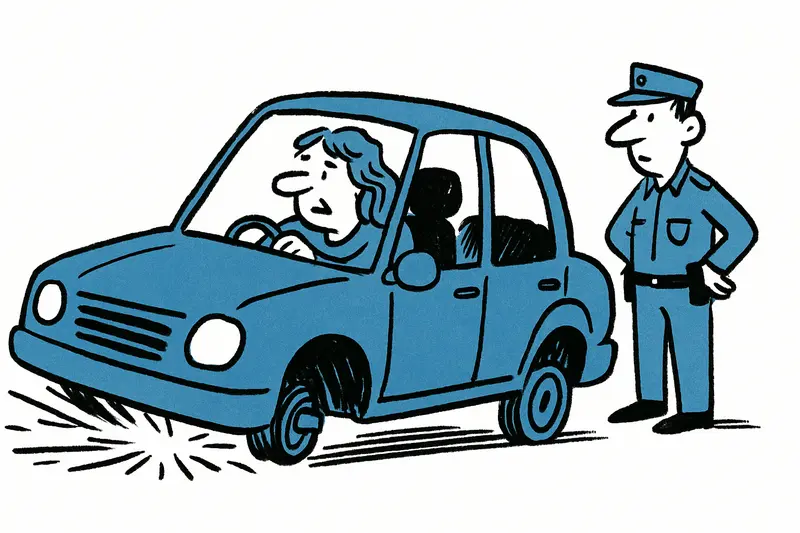
Sparks on the Autopista: 14 Kilometres Without Tires – Suspected Alcohol Use Shakes Commuters
On the route between Inca and Palma a woman drove 14 kilometres in the morning even though both tires were missing on one side. An alcohol test was positive. Why did she continue for so long, and what does this say about road safety in Mallorca?
Sparks on the Autopista: A Dangerous Drive Shakes an Island
It was one of those bright mornings when the highway between Inca and Palma is already accompanied early on by the rumble of lorries and the chirping of cicadas. But instead of the usual soundscape another noise blended in: the scraping of metal on asphalt, sparks trailing behind a car like little shooting stars. Eyewitnesses pulled over, engines slowed, and for a moment the question hung in the air: how long can something like this go on without serious consequences?
The scene that leaves many questions unanswered
According to commuters, the vehicle continued for about 14 kilometres on the highway even though both tires on the left side were missing. Smoke rose, metal flashed, and truck drivers had to brake to avoid collisions. An older man who stopped briefly at an exit described the situation as follows: 'The sparks were visible in the rearview mirror, it sounded terrible. At first I thought there had been an accident.' Fortunately no one was injured — but with heavy traffic and large trucks, that was only a matter of luck.
The Guardia Civil stopped the vehicle, and an alcohol test was positive; local reporting provides more details: Con solo dos neumáticos 14 km en la autopista: conductora bajo sospecha de alcohol al volante The woman is therefore suspected of driving under the influence; authorities are also checking whether technical defects were known or whether she drove on despite an obvious fault. The vehicle was seized and investigations are ongoing.
Main question: Why did she drive on for 14 kilometres?
This is the central question occupying many people. Was it panic, lack of knowledge, hope of reaching a nearby workshop, or the desire to finish the journey at home? Or did alcohol impair her assessment of the danger? These motives are not merely psychological footnotes — they are important to prevent similar incidents in the future.
Often overlooked: the role of road conditions and signage. On some stretches of the island the hard shoulder is narrow, access points are rare, and safe pull-off bays are lacking. Someone in a panic instinctively looks for the next supposedly safe spot — and keeps driving until nerves or traffic force a stop.
More than an isolated case: Examining systemic problems
The incident shows that road safety in Mallorca is not only a matter of individual errors. Three aspects are particularly important:
1. Visibility of technical defects: Regular checks and greater awareness of tyre and suspension condition could reduce many risks, as recommended by DGT advice on vehicle tyres and safety. Many cars here show seasonal wear — salt, heat, long journeys — that gradually cause damage.
2. Emergency infrastructure: More and larger lay-bys, clearer signage and better access to mobile breakdown services would be simple measures. A suitable towing service or a breakdown alert via app could prevent drivers from 'just carrying on', and for infrastructure guidelines see European Commission guidance on road infrastructure and safety.
3. Prevention against drunk driving: Checks, education and low-threshold offers like free rides home after events or increased traffic controls at critical times are practical approaches that can have an impact; local examples include taxi interventions that helped prevent worse outcomes: Conductora ebria detenida en el Paseo Marítimo: taxistas evitaron lo peor.
What awaits the driver — and what can we learn?
Legally, she faces charges for driving under the influence and for endangering road traffic. Fines, driving bans or even criminal consequences are possible. Even more important, however, is the preventive perspective: such cases must not be dismissed merely as sensational social media clips.
The circulation of a video quickly spread the incident. Such recordings document events but can also fuel rumours; similar local coverage has raised many questions in other cases: Accidente nocturno en el Paseo Marítimo: alcohol, punto de tropiezo y muchas preguntas Authorities ask for patience and official information — and the island community should use this time to discuss responsibility behind the wheel, not just sensationalism.
Concrete opportunities for Mallorca
Concern can turn into opportunity: targeted campaigns for tyre and vehicle checks before the holiday season, cooperation with workshops along main routes and more Guardia Civil presence during peak times. Local radio stations and municipalities could also provide preventive information next season — short, practical and with a Mallorcan focus.
In the end, a sober appeal remains: anyone travelling on the island must know that short distances, narrow exits and heavy lorries require special caution. A defective vehicle is not a nuisance to be 'just ignored' — it is a risk to everyone on the road.
Investigations continue. For the commuters who stopped that morning, the memory of the shower of sparks remains — and the quiet question of whether we as a community are doing enough to prevent a recurrence.
Frequently asked questions
What should you do if your car has a serious tyre problem on Mallorca's roads?
Can alcohol make a driver keep going even when a car is badly damaged?
Is it legal to drive in Mallorca with missing tyres or major vehicle damage?
What are the safest places to pull over on Mallorca's highways if something goes wrong?
What should drivers check before long trips on Mallorca, especially in hot weather?
Why is driving on Mallorca's autopista more risky when traffic is heavy?
What happened on the Inca to Palma road in Mallorca when a car was seen driving with sparks?
What can Mallorca do to reduce drunk driving and unsafe vehicles on main roads?
Similar News

Release after bloody attack in Palma: Why the court's decision raises questions
An 18-year-old who allegedly inflicted a serious neck injury on a man at Plaza Gomila using a wristwatch wrapped around ...
Kidnappings in Inca: Three young men forced into car trunks and abused in the forest – a reality check
In Inca, three 18-year-old men were forced into car trunks by masked assailants at the Plaça des Bestiar, taken to a for...
Spreading Massification: The Brake That Still Has Much Work to Do
Marga Prohens announces limits on volume tourism. The measures sound harsh — but are they enough to save everyday life, ...

Through the Keyhole onto the Party Yacht: How Daniela Katzenberger Is Planning Her 40th on Mallorca
Daniela Katzenberger turns 40 and wants to celebrate it on the island — likely with a boat, cake and her mother. A relax...
By Boat Instead of the Road: Palma's Water Bus — a Reality Check
The 'Bus Nàutic' launches in two stages — but questions remain over interim operations, fares and environmental requirem...
More to explore
Discover more interesting content

Can Cap de Bou

Townhouse Lleo 72
