
Workplace Becomes Crisis Site: Woman in Cala Major Collapses and Dies – What’s Missing in an Emergency?
Workplace Becomes Crisis Site: Woman in Cala Major Collapses and Dies – What’s Missing in an Emergency?
A 61-year-old woman collapsed in Cala Major in the afternoon; resuscitation attempts lasted nearly an hour. The circumstances raise questions about first aid, working conditions and public equipment.
Workplace Becomes Crisis Site: Woman in Cala Major Collapses and Dies – What’s Missing in an Emergency?
Key question: Could better preparation in a small fast-food outlet have saved a life?
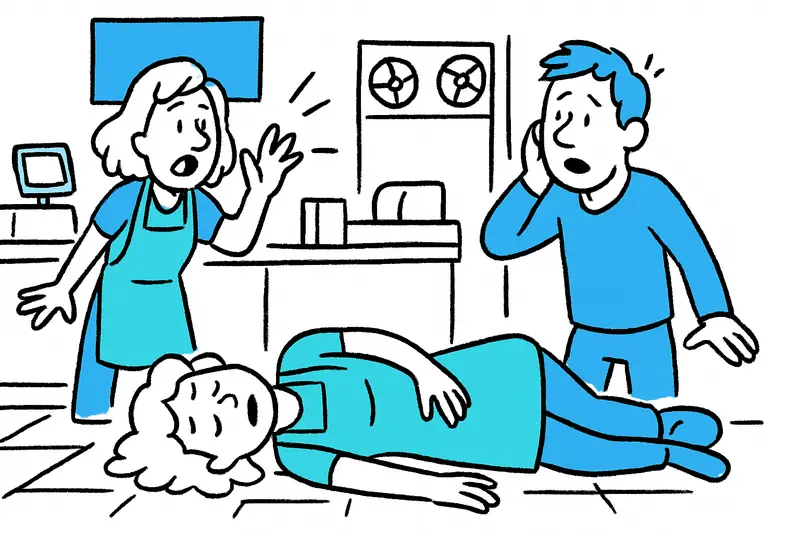
On Sunday afternoon, around 4:15 p.m., a sudden collapse occurred on one of the busier streets of Cala Major: a 61-year-old woman from Bulgaria who had been staying in Mallorca to work in a fast-food restaurant felt unwell inside the venue and collapsed. Colleagues immediately called emergency services. A SAMU 061 vehicle equipped for basic care arrived first; shortly after, a fully equipped ambulance was requested. Responders began resuscitation measures, which, according to the incident report, lasted almost an hour. Despite all efforts, the woman could not be saved.
I stood that day near the Cala promenade, tourists moved by in colorful clothes, buses rattled, and the sizzle of the fryers came from the kitchens – a typical high-summer scene. Such scenes are routine here, and precisely for that reason the shock is great when a human emergency occurs in the middle of everyday life.
Critical analysis: The facts are brief but sharp. A person suddenly becomes critically ill. Rescue teams react professionally; the resuscitation efforts are intensive and long. The basic question remains: what happened in the minutes before the ambulance arrived? Was there a functioning first-aid protocol, was an automated external defibrillator (AED) within reach, were employees trained and did they have enough time until the professionals arrived?
In Cala Major, as in many tourist centers, people from different countries often work in small businesses with few staff. Language barriers, missing employment contracts or uncertain residency status can lead to health issues being kept private. No one in the kitchen has to be a doctor, but a trained first aider and an accessible AED are not luxury extras – they can be life-saving.
What is often missing from public discourse: concrete figures on the availability of defibrillators in commercial areas, mandatory first-aid training for employees in businesses with public access, and reliable data on emergency response times during summer months when the island is under intense heat and heavy activity. The topic of occupational health for seasonal workers also remains underexposed: when was the last medical check-up, who talks with employees about cardiovascular risks, and how are complaints taken seriously?
Everyday scene: an employee wipes behind the counter, heat hangs in the room, the air conditioning pumps, outside the shouting of children and the clinking from ice-cream parlors. These qualities of summer encourage the assumption that help is available at any moment. But minutes count, and often it is the first ten minutes that decide between life and death.
Concrete solutions that could work here and now:
- AED requirement for businesses with public access: Small regulations, for example for food service establishments with more than X employees or certain opening hours, would significantly improve coverage.
- Free, accessible first-aid courses: Regular, multilingual courses funded by the municipality or island government so that seasonal workers are also familiar with basic measures.
- Uniform emergency plans and signage: Every venue should have a clearly visible plan (who calls, who performs chest compressions, where the AED is), ideally in several languages.
- Public AED maps and fast app integration: Municipalities could digitally record AED locations and link them to emergency services so callers can give more precise information.
- Mandatory checks for seasonal workers: A simple health check before the season starts could reveal risk factors and raise employer awareness.
Conclusion: The tragic case in Cala Major is not just an isolated sad report; it is a showcase for structural gaps. This is not about assigning blame. It is about shortening the time between collapse and professional treatment. An AED on the promenade, a trained colleague, a clear emergency plan — it sounds unspectacular, but that is exactly what can save lives on an August afternoon between ice-cream parlors and buses. If politics, health services and business owners act together, such scenes will be rarer.
Frequently asked questions
What is the best time to visit Mallorca for pleasant weather and fewer crowds?
Can you swim in Mallorca year-round, and what should you expect from sea temperatures?
What should I pack for a trip to Mallorca?
What are the best ways to get around Mallorca?
What are must-see places for a first-time visitor to Mallorca?
Are Mallorca’s beaches suitable for families, and what safety tips should I know?
Are day trips from Mallorca to nearby islands possible?
What should I know about Mallorca’s weather and how to plan for changeable days?
Similar News

Nine Months of Construction at Palma Airport: Who Pays the Price — Travelers or the Environment?
Beneath the apron lies a deteriorated sewer pipeline of about three kilometres, contract sum €1.3 million (excluding tax...

When the Goat Stole the Chips: Why Mallorca's Wild Goats Are Becoming a Problem
A wild goat strolls through Cala Sant Vicenç among beach bags and coolers, pulls a bag of chips from a bag and nibbles o...
From Shine to Decay: Why Palma's Nuredduna Pedestrian Zone Is Falling Into Disrepair Again
In 2022 the city and planners invested nearly two million euros in the Nuredduna pedestrian zone. Today residents compla...

Extremely Expensive Mallorca — a Reality Check: Why Sales Are Falling but Prices Keep Rising
The Registradores report: fewer sales in the Balearic Islands, but higher prices per square metre. What really lies behi...
Agreement with Swissport at Palma Airport: a Beginning, Not the Final Word
Four days of strike action ended with an agreement between Swissport and CCOO. What was regulated — and which questions ...
More to explore
Discover more interesting content

Boat Tour with BBQ along Es Trenc Beach

Private transfer from Mallorca Airport (PMI) to Pollensa
