
When the Goat Stole the Chips: Why Mallorca's Wild Goats Are Becoming a Problem
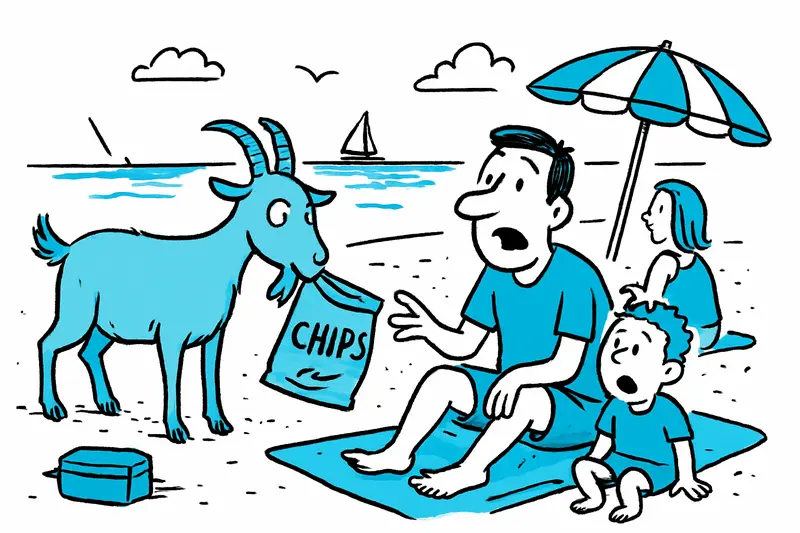
A wild goat strolls through Cala Sant Vicenç among beach bags and coolers, pulls a bag of chips from a bag and nibbles on it — the small scene highlights a larger problem: growing goat populations, drought and too much human contact.
When the Goat Stole the Chips: Why Mallorca's Wild Goats Are Becoming a Problem
Key question: How can Mallorca prevent wild goats from soon treating beach towels and gardens as a permanent menu?
Late one morning in Cala Sant Vicenç, the sound of waves mixes with the distant calls of a boat vendor. Families unpack coolers, children build sandcastles, and between the towels a wild goat wanders, interested in anything that smells like food. It pulls a bag of chips from a bag, nibbles on it — and moves on. For the people on the beach it's an anecdote; for the island it's a warning sign.
The scene is no longer an isolated case. Wild goats are appearing more and more where people live and vacation: on beaches, in settlements and in gardens around places like Andratx or Cala Llamp. The latter was already the scene of a larger encounter last year, when a herd of about 30 animals with around 20 kids climbed over walls searching for food. The cause is not just the animals' curiosity, but shifted living conditions: heat and drought are making plants and water sources in the mountains scarce — the animals move away.
In short: three factors come together here. First, the demographic development of the goat populations on Mallorca, which grow strongly due to a lack of natural predators. Second, changed environmental conditions that reduce food and water in their traditional areas. Third, human behavior: anyone who feeds them or leaves food exposed conditions the animals.
Politically, reactions are already visible in part: In November 2025 the island council banned feeding in particularly affected places. That is the right step, but it is not enough. Bans must be enforced — and the public must understand why this is important.
What often gets too little attention in the public debate is the ecological perspective: these goats belong to the island, and their spread is changing the vegetation of the Tramuntana. Overgrazing endangers rare plants, burdens agricultural land and can trigger chain reactions in sensitive ecosystems. Rarely discussed is the question of long-term, animal-friendly measures for population control — instead of reflexes that swing between "feeding forbidden" and "euthanasia."
There are practical everyday solutions; they require coordination and money. Some proposals:
- Enforcement of the feeding ban: More signs on beaches and in parking lots, targeted checks by local rangers and fines for repeat feeders. Those who leave food exposed on the beach must know the consequences.
- Secure food: Trash and cooler boxes with animal-proof closures; do not leave food exposed. Hotels, beach bars and private individuals can make quick changes here.
- Strengthen habitat: Reforestation and renaturation in the Tramuntana, targeted water reservoirs at higher elevations so that animals find better survival conditions there and do not move into settlements.
- Non-lethal population control: Proven methods such as immunocontraception or targeted, humane interventions can be tested in pilot projects. Such programs need scientific support, monitoring and transparent communication with the population and farmers.
- Road safety and fences: Better barriers and warning signs at vulnerable spots to prevent accidents and protect gardens.
The network of authorities on Mallorca must develop a roadmap: municipalities, the island council, environmental groups and farmers should agree on binding measures — including monitoring, financial support for affected businesses and clear information work for tourists.
On a small scale the problem appears in everyday life: a family picnicking in the cove on a Sunday, a child leaving a bag of chips open, an older man feeding bread out of pity. Such moments shape behavior patterns — they are easy to change when rules and alternatives are visible.
Conclusion: the "chip-goat" is more than a funny episode; it is a symptom. Without coordinated action, incidents will become more frequent, there will be direct damage to agriculture and nature and rising safety risks on roads and beaches. The island can solve the problem, but that requires more than bans: enforcement, prevention, habitat adaptation and humane population control belong together. Next time you sit on the beach you can help immediately: secure food, don't feed and report incidents.
If Mallorca acts now, the goats will stay in the Tramuntana — and the beaches will once again belong to people for bathing, not as a snack bar for four-legged visitors.
Frequently asked questions
Why are Mallorca's wild goats turning up on beaches and in towns?
How can I avoid attracting goats on Mallorca’s beaches?
What measures are being taken to address Mallorca’s wild-goat problem?
Are non-lethal methods being tested to manage Mallorca's goat population?
How do wild goats affect Mallorca's ecosystems?
What can hotels, beach bars, and residents do to reduce goat encounters?
What road-safety measures are proposed to protect people from goats on Mallorca roads?
How should people report goat incidents on Mallorca?
Similar News
From Shine to Decay: Why Palma's Nuredduna Pedestrian Zone Is Falling Into Disrepair Again
In 2022 the city and planners invested nearly two million euros in the Nuredduna pedestrian zone. Today residents compla...
Extremely Expensive Mallorca — a Reality Check: Why Sales Are Falling but Prices Keep Rising
The Registradores report: fewer sales in the Balearic Islands, but higher prices per square metre. What really lies behi...
Agreement with Swissport at Palma Airport: a Beginning, Not the Final Word
Four days of strike action ended with an agreement between Swissport and CCOO. What was regulated — and which questions ...
Jackson from Son Reus: A patient friend waits for his people
Jackson has been living at the Son Reus shelter for years. Calm, loving and slightly reserved — a dog who doesn't immedi...
8,000 People in Santa Ponsa: Who Thinks About Safety, Traffic and the Environment at Mallorca's Sky Spectacles?
The Guardia Civil's overflight video shows tightly packed people under beach umbrellas in Santa Ponsa. The scene was imp...
More to explore
Discover more interesting content

Boat Tour with BBQ along Es Trenc Beach

Private transfer from Mallorca Airport (PMI) to Pollensa
