
From Shine to Decay: Why Palma's Nuredduna Pedestrian Zone Is Falling Into Disrepair Again
From Shine to Decay: Why Palma's Nuredduna Pedestrian Zone Is Falling Into Disrepair Again
In 2022 the city and planners invested nearly two million euros in the Nuredduna pedestrian zone. Today residents complain of dirt, graffiti and a fountain being misused as a toilet. A reality check: what went wrong — and what should be done now?
From Shine to Decay: Why Palma's Nuredduna Pedestrian Zone Is Falling Into Disrepair Again
Key question: How can a street upgraded in 2022, for which about €1.84 million was spent, fall into a neglected state so quickly — and who is responsible?
Brief findings
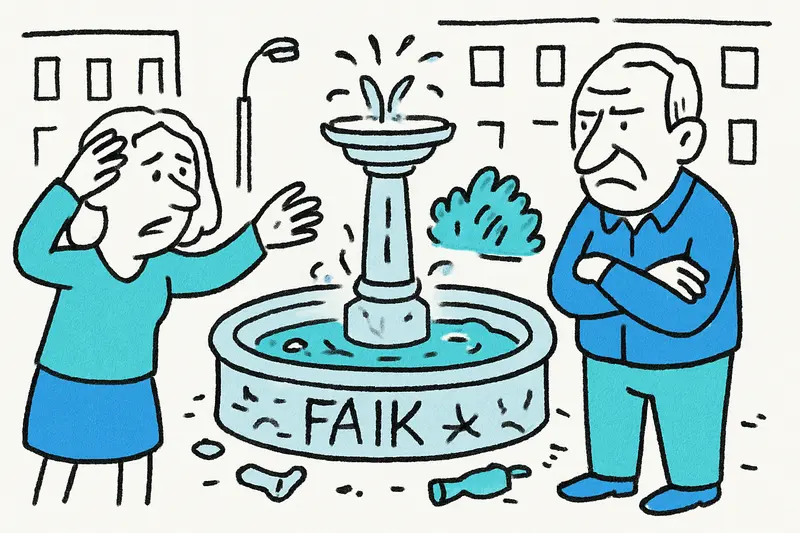
Nuredduna connects the Plaza de las Columnas with the Avenidas and was meant to bring calm and cleanliness to the Pere Garau neighborhood as a new pedestrian zone. Instead, residents and businesses report graffiti, dirty green islands and a fountain that, contrary to regulations, is being used as a toilet and bathing spot, as covered in The Nuredduna Fountain: Why an Ornamental Basin Divides the Neighborhood in Pere Garau. The neighborhood association demands a return to regular maintenance and visible municipal engagement.
Critical analysis
What is happening here is not a technical detail but a systemic failure: planning, handover and long-term upkeep are three different tasks. Money is happily spent on construction — less so on long-term maintenance. A similar pattern was noted after the Paseo Marítimo refurbishment, as described in Paseo Marítimo: Big Spending, Little Everyday Usefulness. Who decides cleaning intervals, who pays for extra emptying of public bins, who monitors misuse of public fixtures? If a clear maintenance plan with responsibilities is not provided at handover, the investment seeps away into routine costs.
Furthermore, the social context matters. Squares and artworks only work if they become part of everyday neighborhood life. A fountain not intended for bathing becomes a problem when left unsupervised and when municipal presence is lacking. The result is damage, odors and conflicts between residents, businesses and visitors.
What's missing in public discourse
There is a lot of talk about the costs of construction projects and too little about recurring expenses for cleaning, repair and social support of public spaces. The question of continuity is also missing: how long does a city's commitment to a project last? Transparent figures on annual maintenance costs are needed and an open debate over whether central budget lines must be permanently increased. Local reporting such as Paseo Marítimo: Residents Take Stock – From Promenade Boulevard to a Nighttime Problem illustrates how residents demand accountability after refurbishment projects.
A daily scene from Pere Garau
In the early morning you can smell fresh coffee from a small corner café, delivery vans chug along Nuredduna, children with backpacks dart by. But in the afternoon, when the heat lingers and voices grow louder, you see plastic cups among bougainvillea, bicycle bells drown out distant sirens, and the fountain sparkles — but not as planned: young people jump in, older neighbors shake their heads. This mixture gives the quarter its charm — and shows how quickly a public space can get out of hand when maintenance is lacking.
Concrete solutions
1. Immediate measures: clearly visible signage at the fountain, temporary barriers in cases of misuse and additional cleaning rounds in the evenings. These measures cost little but act quickly.
2. Add a maintenance contract: the construction project must be followed by a binding care plan with a fixed budget. Penalties or performance proofs could ensure agreements are kept.
3. Involve the neighborhood: a joint sponsorship council of residents, business owners and city representatives can organize regular inspections and report problems early.
4. Social services instead of displacement: when public spaces become meeting points for different groups, low-threshold services (water stations, toilets, streetwork) help more than pure bans. This reduces health issues and protects infrastructure.
5. Transparency: the city should disclose the annual costs planned for cleaning and maintenance and explain how the €1.84 million investment is accounted for in ongoing operations, an issue raised by Plaça de la Reina: Small Repair, Big Questions About Fountain Maintenance.
Conclusion
The situation on Nuredduna is not an isolated case but an indicator of a widespread imbalance in public infrastructure: new construction without sustainable maintenance quickly leads to frustration. Whoever invests in rebuilding urban spaces must also pay the subscription for their upkeep — otherwise the millions turn into rubble and trouble within a few years. For Palma, this means: make improvements, but not with pretty plans, with an honest maintenance concept and real cooperation on the ground.
Frequently asked questions
When is the best time to visit Mallorca for beach days and outdoor activities?
What should I pack for a Mallorca trip?
What are easy day trips from Palma or central Mallorca?
How safe is swimming at beaches in Mallorca, and what should I watch for?
What are the best ways to get around Mallorca?
What local foods should I try in Mallorca?
What is the weather like in Mallorca throughout the year?
Are there beginner-friendly hiking or nature activities in Mallorca?
Similar News
When a Taxi Fare Dispute Turns Violent: What the Magaluf Case Reveals About Safety and Prevention
In Magaluf a 2023 dispute over a taxi fare escalated: an 18‑year‑old British man is accused of seriously injuring a taxi...
Bloody clash in Canòdrom Park: What is missing in addressing violence on Mallorca's streets?
At midday on October 23, an 18-year-old man was critically injured in Canòdrom Park in Palma. The attack raises question...
Palma raises bus fares: Who pays the bill for public transport?
Single tickets rise from €2 to €3, airport trips have a reference price of €4.50. It remains unclear whether residents w...
Palma's New Indoor Pool: Sea View, Sunbeds and Space for Everyone
At Aigua Dolça, near the Paseo Marítimo, Palma has a new municipal indoor pool. For a small fee people can now train, re...
How Four Burglars Emptied Ten Houses with a Simple Trick — and What It Means for Mallorca
Four men used the impressioning technique, posed as delivery workers and accepted two years in prison. A reality check f...
More to explore
Discover more interesting content

Can Cap de Bou

Townhouse Lleo 72
