
Bloody clash in Canòdrom Park: What is missing in addressing violence on Mallorca's streets?
At midday on October 23, an 18-year-old man was critically injured in Canòdrom Park in Palma. The attack raises questions about prevention, policing and social responsibility.
Bloody clash in Canòdrom Park: What is missing in addressing violence on Mallorca's streets?
A guide to the questions that must now be asked
Key question: How could a full-blown knife attack occur in the middle of Palma without prevention, visible presence or rapid identification preventing the escalation?
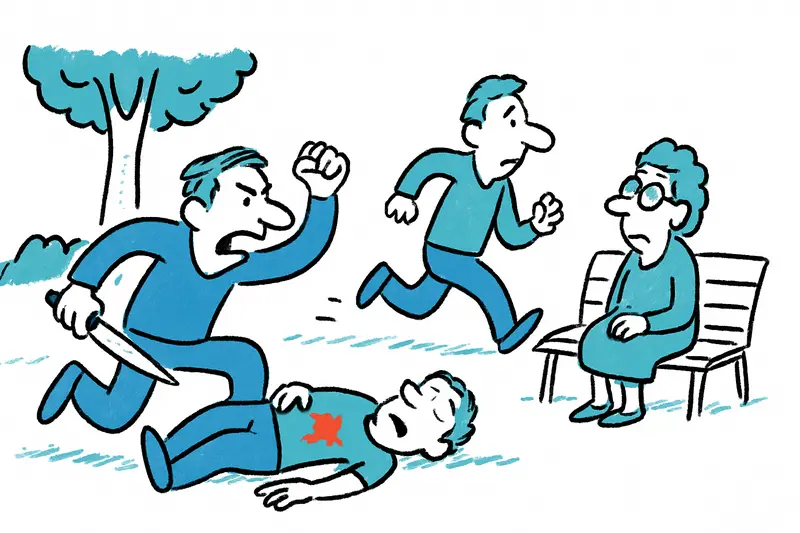
On Friday around 12:50 p.m. a dispute in Canòdrom Park escalated: an 18-year-old man suffered multiple stab and cut wounds so severe that emergency services stabilized him and then transported him to the University Hospital Son Espases. According to eyewitnesses several suspects fled on foot; apparently clothing was changed or discarded during the escape to make identification more difficult. National Police and local police responded with several patrols, searches were carried out, but no one was initially arrested. The alarm chain — emergency call, ambulance, “green alert level” for rapid hospital access — functioned, yet the attack itself raises questions that are currently receiving too little attention.
Critical analysis: It is not only about the minute of the act. Knife violence is rarely isolated; it is the result of multiple failures. First: public spaces like the Canòdrom are transitional zones — during the day walkers, young people, dog owners and temporary workers meet here. That makes conflicts possible and visibility simultaneously fragile. Second: when suspects change clothes and flee unimpeded, that says something about gaps in local presence — not necessarily absent police work, but patchy prevention and surveillance. Third: the perspective of those affected and the neighbourhood is often missing from the debate; instead of only focusing on the course of events and the manhunt, we should ask which social tensions converge here.
What is missing in the public discourse: honest numbers and context. There is a lack of a sober breakdown of knife crimes in Palma over months, an analysis of whether there are patterns by time, location or age groups, and a conversation about causes — young people's lack of prospects, insufficient counselling services, alcohol or drug contexts, neighbourhood conflicts. Equally little discussed is the role urban design plays: poor lighting, narrow paths and bushes provide places to withdraw, where de-escalation would be necessary.
A typical Mallorcan everyday scene: In the afternoon someone passing the Canòdrom hears children on scooters, the distant whirr of scooters, voices from a street café, a man with shopping bags calling his dog. On the benches older women sit and watch the street, sometimes a teenager with headphones. These ordinary sounds make it difficult to spot dangerous moments — but they are also starting points for prevention: people who know each other are more likely to report unusual behaviour.
Concrete approaches — not a plea for more surveillance at any cost, but for combined measures:
Local prevention: Gradual improvement of lighting and pruning of sight-blocking vegetation in parks; clear pathways that reduce short escape routes and encourage natural activation of spaces.
Police and communication: Closer coordination between local police and National Police at hotspots, unified situation maps and faster information sharing with residents. Transparent publication of aggregated knife-violence data so that politics and civil society can recognise patterns.
Social work and youth services: More low-threshold meeting places, street workers and mediation services during fringe hours (late afternoon to night). Prevention programmes in schools and youth centres that practice conflict resolution without violence.
Medical aftercare and data: Clinics should provide anonymised data on stab injuries to statistically identify high-risk areas — of course in compliance with data protection rules.
Resident engagement: Neighbourhood initiatives, park sponsorships, local complaint platforms so observations are collected and taken seriously.
Important: measures must converge. More cameras without social work merely shift the problem; relying solely on reaction and foregoing prevention means hoping only to respond. The balance lies in better urban design, stronger social presence and more efficient policing.
Concise conclusion: An 18-year-old lies seriously injured in Son Espases, the search for the perpetrators is ongoing — and alongside the manhunt, Palma now needs answers to how public spaces can be designed and accompanied so that such escalations do not ignite in the first place. That is uncomfortable, it costs money and it requires cooperation between the town hall, police, health services and the neighbourhood. But anyone who wants to see children on scooters and seniors on benches again in the midday sun at Canòdrom Park must do more than condemn the minute of the act — they must act afterwards.
Frequently asked questions
What does the Canòdrom Park knife-attack in Palma reveal about violence on Mallorca?
How can Palma's park design help prevent street violence?
What steps should Palma authorities take to curb knife violence?
Why is community engagement important for preventing violence in Mallorca's neighborhoods?
What role do schools and youth services play in reducing knife violence in Palma?
Is more surveillance the answer to knife violence in Palma, or is a broader approach needed?
How can anonymised data on stab injuries help identify high-risk areas in Mallorca?
What can residents do to support safer public spaces in Palma?
Similar News
Palma raises bus fares: Who pays the bill for public transport?
Single tickets rise from €2 to €3, airport trips have a reference price of €4.50. It remains unclear whether residents w...
Palma's New Indoor Pool: Sea View, Sunbeds and Space for Everyone
At Aigua Dolça, near the Paseo Marítimo, Palma has a new municipal indoor pool. For a small fee people can now train, re...
How Four Burglars Emptied Ten Houses with a Simple Trick — and What It Means for Mallorca
Four men used the impressioning technique, posed as delivery workers and accepted two years in prison. A reality check f...
Bundles of Drugs, Containers and Open Questions: A Reality Check for Mallorca
3.3 tonnes of marijuana, 80 kilos hidden in golf-ball vending machines and a 44-year-old German released on conditions i...
Rats in Llucmajor: Who clears the streets, who stops the infestation?
In Llucmajor rat sightings and uncollected waste have increased after rain. A local check reveals gaps in cleaning, sewe...
More to explore
Discover more interesting content

Can Cap de Bou

Townhouse Lleo 72
