
Bundles of Drugs, Containers and Open Questions: A Reality Check for Mallorca
3.3 tonnes of marijuana, 80 kilos hidden in golf-ball vending machines and a 44-year-old German released on conditions in Mallorca: What does this say about control, the justice system and our neighborhood?
Bundles of Drugs, Containers and Open Questions: A Reality Check for Mallorca
Key question: How could such a large consignment become part of a giant supply chain without clearer emphasis on control and transparency beforehand?
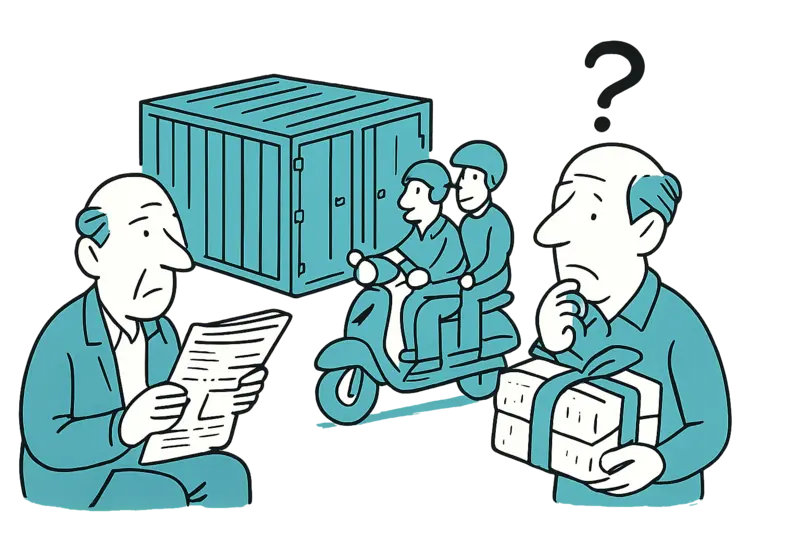
On the Passeig Mallorca older gentlemen sit with the edge of a newspaper in the morning, a scooter convoy passes the Plaça Major and the Mercado de Santa Catalina smells of freshly ground coffee. Against this familiar backdrop, the news that 3,289 kilograms of marijuana and 6 kilograms of hashish were discovered in March in a container at the port of Valencia is not just a report — it is an alarm signal for our control system.
The facts are brief: A large shipment, declared as commercial goods, apparently came from overseas. During the investigations a 44-year-old German came into focus. Investigators see links to that shipment and to a separate transport in which 80 kilograms of marijuana were hidden and seized in golf-ball vending machines in Germany. Police recently searched an apartment in Mallorca and arrested the man; the judge released him under conditions: a ban on being outside the island and an obligation to report on the 1st and 15th of each month. The charges include drug trafficking and membership of a criminal organization.
Critical analysis: The shipment passed through several stages — declared as commercial goods, transiting ports, possibly destined for an industrial hall — and yet the cargo apparently could not be fully neutralized until the seizure. Container traffic is the backbone of world trade; it is also an entry point for organized crime. If supply chains are so complex that suspicion only arises months later, the problem lies less with individual officers than with systemic weaknesses: insufficient transparency about senders and recipients, limited capacity for comprehensive container inspections and often fragmented data sharing between authorities and countries.
What is missing in public debate: Discussion often stops at spectacular seizures or the arrests of individuals. Rarely does it ask which economic structures enable such transports — from anonymous company addresses to used warehouses — and how easily international money flows can be concealed. Equally underdiscussed are the longer-term consequences: How does this change the sense of security in neighborhoods where neighbors once knew each other and now anonymous supply chains run through warehouses? And how effective are judicial conditions if a suspect is released without bail?
Everyday picture on Mallorca: Inca in the early morning, vans unload building materials at a hall, the number on the doorbell does not match the registered company address. A resident notices that at certain times more transports arrive, but does not go to the police — because she thinks it is business activity, not crime. Small observations like these add up; they are clues that should be better linked with customs and police data.
Concrete solutions: 1) Better data transparency for freight: mandatory information for containers — sender, final recipient, linked logistics firms — should be digitally linked and internationally accessible. 2) Selective, intelligent checks: not every box, but risk-based scans with shared risk profiles among ports and customs authorities. 3) Stronger cooperation between Spanish and German authorities, including faster information channels about suspicious goods and financial movements. 4) Local controls of industrial areas and warehouses: municipal reporting systems for unusual transport patterns and regular inspections of halls used as distribution addresses. 5) Measures against money laundering: more consistent scrutiny of ownership structures of properties that purportedly offer “logistics services.”
These proposals are not silver bullets, but they shift the focus from individual cases to structure. Another problem is legal practice: when suspects are released under conditions, the effectiveness of these measures must be transparently verifiable. Reporting obligations alone do not automatically prevent the continuation of criminal activities.
Conclusion: The seizures in Valencia and the confiscations in Germany show how cross-border modern drug flows are. For Mallorca, this means: we must look more closely — at the docks, in the halls and in the registers' figures. Otherwise spectacular finds remain firefighting rather than fire prevention. And while we sit in cafés and the sea sparkles, we should also remain vigilant about what happens in the logistics backyards.
One final pragmatic thought: If residents, warehouse operators and customs authorities are more closely networked, the chances increase that tips do not drown in everyday noise but lead to investigations. That would be a change that costs little on Mallorca — but yields a lot.
Frequently asked questions
What lessons can Mallorca learn from the Valencia port seizure about container transparency and controls?
How does cross-border drug trafficking affect daily life and security in Mallorca neighborhoods?
What practical steps can Mallorcan residents take to spot and report unusual transport activity near industrial areas?
Why are data sharing and risk-based checks important for preventing illicit shipments through ports connected to Mallorca?
What steps can the town of Inca take to monitor industrial areas and prevent questionable cargo passing through its warehouses?
How can businesses around Mallorca's Santa Catalina area contribute to safer logistics by noting irregular shipments?
What signs of potential illicit freight activity might residents notice near Passeig Mallorca, and what should they do?
How could Mallorca coordinate with Valencia port authorities and international partners to strengthen freight transparency?
Similar News

Palma's New Indoor Pool: Sea View, Sunbeds and Space for Everyone
At Aigua Dolça, near the Paseo Marítimo, Palma has a new municipal indoor pool. For a small fee people can now train, re...
How Four Burglars Emptied Ten Houses with a Simple Trick — and What It Means for Mallorca
Four men used the impressioning technique, posed as delivery workers and accepted two years in prison. A reality check f...
Rats in Llucmajor: Who clears the streets, who stops the infestation?
In Llucmajor rat sightings and uncollected waste have increased after rain. A local check reveals gaps in cleaning, sewe...

Who will clean up? Illegal rubbish heaps on the highway near Son Gual drive residents onto the streets
For months, construction debris and household waste have piled up along the highway between Palma and Manacor near Son G...

Amundi takes over Bikini Island & Mountain Port in Sóller – many questions remain open
The French asset manager Amundi has acquired the four-star Bikini Island & Mountain Port hotel in Sóller from an Austria...
More to explore
Discover more interesting content

Can Cap de Bou

Townhouse Lleo 72
