
How Four Burglars Emptied Ten Houses with a Simple Trick — and What It Means for Mallorca
Four men used the impressioning technique, posed as delivery workers and accepted two years in prison. A reality check for homeowners and authorities in Mallorca.
How four burglars emptied ten houses with a simple trick — and what it means for Mallorca
Key question: How could perpetrators open houses for months without leaving visible traces — and what really needs to change?
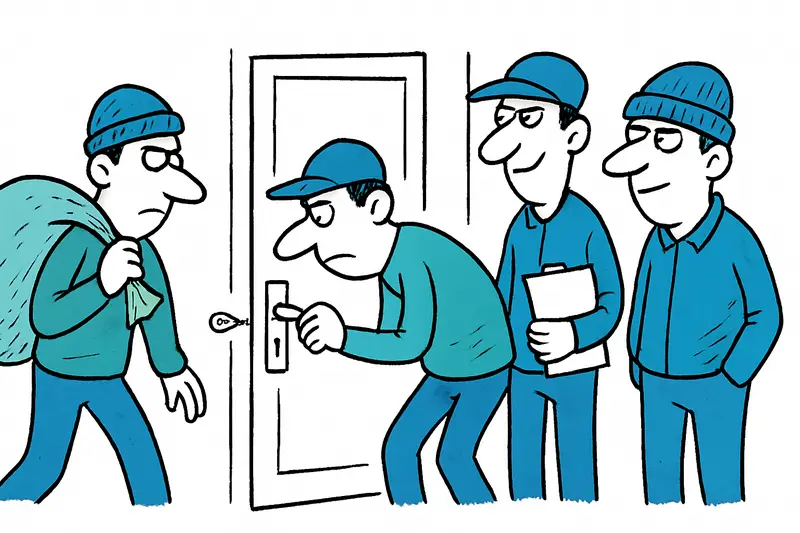
Between March and August 2025 a gang in Mallorca searched at least ten houses, stole jewelry and cash and left hardly any visible signs of forced entry. The four suspects — one Spaniard and three Colombians — have meanwhile each accepted two years in prison and deposited €50,000 as compensation. The National Police brought the group down. The surprising thing: the perpetrators worked with a classic but underestimated method called "impressioning" and with social deception — posing as technicians or parcel couriers.
What is impressioning? Broadly speaking, one makes a key from a blank by inserting the blank into the lock multiple times, turning it and then refining the impressions that form. The result: a functional key without break-in marks on the cylinder. In practice a short trial, a bit of patience — and a lock that is not protected against this method — are enough. That explains why the perpetrators apparently entered without visible signs of force.
Critical analysis: three factors collide here. First: many households still have simple cylinder locks that are vulnerable to impressioning. Second: the perpetrators relied on social manipulation; people are more likely to open the door for someone who appears to be a worker or a delivery person. Third: the organization worked — safe hiding places in Palma, division of roles (searchers, renters of vehicles, transporters), occasional trips to and from the mainland — which increases professionalism and reduces the error rate.
What is often missing in the public debate: the discussion focuses on the arrests and the penalties. Hardly anyone asks which practical weaknesses in everyday infrastructure were exploited. It's not just about "more police," but about preventive measures, minimum technical standards and simple behavioral rules that could significantly reduce the risk.
A scene from everyday life: on a quiet morning along Passeig Mallorca an older man sweeps the sidewalks, vans pass by, a bicycle courier brakes. Many people receive parcels at the front door; some leave unlocked balcony doors open when they step out briefly. In such moments a convincing appearance — work jacket, clipboard, friendly voice — is enough and the door opens. The sound of a caster wheel or the rustle of a uniform generates trust; that is the security gap.
Concrete solutions: homeowners can act quickly. Replacing simple cylinders with certified lock cylinders that offer protection against impressioning is effective. An additional lock (chain, bolt, security bar) makes rapid access more difficult. Visible deterrents help: well-placed cameras, alarm stickers, neighborhood apps, parcel lockers for deliveries. Behavioral tips: have deliveries sent only to secure drop-off points or parcel boxes, verify the identity of strangers, inform neighbors if you will be away.
At the institutional level coordinated steps are needed: targeted information campaigns by police authorities about this specific attack method; cooperation with locksmith businesses to offer subsidy programs or discounted replacement campaigns for vulnerable groups (elderly, people living alone); preventive checks for short-term rentals and for unusually frequent vehicle rentals in certain neighborhoods; better recording and monitoring of tool and spare-part sales that can be used for impressioning, without resorting to disproportionate interventions.
Another point: neighborhood vigilance. Mallorca has many neighborhoods with close-knit communities — these social networks are a practical early-warning system. More small initiatives, less show: knowing your neighbors and asking them to keep an eye and ear out when you are away measurably reduces risk.
Conclusion: The convicted perpetrators did not use a Hollywood method but a banal technical weakness combined with everyday trust. That is uncomfortable because it does not reveal a single big problem but many small gaps — locks, delivery habits, information deficits. Living in Mallorca should be a wake-up call: these gaps can be plugged with manageable means. Authorities, craftsmen and neighborhoods must tackle the issue together before the method reappears.
Quick tip at the end: If you have doubts about your lock, ask a local locksmith instead of relying only on online recommendations. A sturdy cylinder and a simple additional lock often cost less than a single burglary loss.
Frequently asked questions
How can burglars in Mallorca open doors without obvious signs of break-in?
What practical steps can Mallorca homeowners take to prevent impressioning?
How does social deception contribute to burglaries in Mallorca?
How can neighbors in Mallorca help reduce burglary risk?
If I’m worried about my door lock in Mallorca, what should I do?
Are there public safety measures in Mallorca addressing impressioning thefts?
What are practical daily security tips for Mallorca residents when expecting deliveries?
What broader lesson can Mallorca residents take from this case?
Similar News
Palma's New Indoor Pool: Sea View, Sunbeds and Space for Everyone
At Aigua Dolça, near the Paseo Marítimo, Palma has a new municipal indoor pool. For a small fee people can now train, re...
Bundles of Drugs, Containers and Open Questions: A Reality Check for Mallorca
3.3 tonnes of marijuana, 80 kilos hidden in golf-ball vending machines and a 44-year-old German released on conditions i...
Rats in Llucmajor: Who clears the streets, who stops the infestation?
In Llucmajor rat sightings and uncollected waste have increased after rain. A local check reveals gaps in cleaning, sewe...
Who will clean up? Illegal rubbish heaps on the highway near Son Gual drive residents onto the streets
For months, construction debris and household waste have piled up along the highway between Palma and Manacor near Son G...

Amundi takes over Bikini Island & Mountain Port in Sóller – many questions remain open
The French asset manager Amundi has acquired the four-star Bikini Island & Mountain Port hotel in Sóller from an Austria...
More to explore
Discover more interesting content

Can Cap de Bou

Townhouse Lleo 72
