
Palma's New Indoor Pool: Sea View, Sunbeds and Space for Everyone
At Aigua Dolça, near the Paseo Marítimo, Palma has a new municipal indoor pool. For a small fee people can now train, relax and enjoy neighborhood life — with sea views from the sun terrace.
Palma's New Indoor Pool: Sea View, Sunbeds and Space for Everyone
Between Joan Miró and the Paseo Marítimo, Palma has reclaimed a piece of everyday life. Where ruins and scrub dominated for years, there is now a six-story new building with parking spaces and a newly opened swimming pool — and it already feels a little better to walk past it.
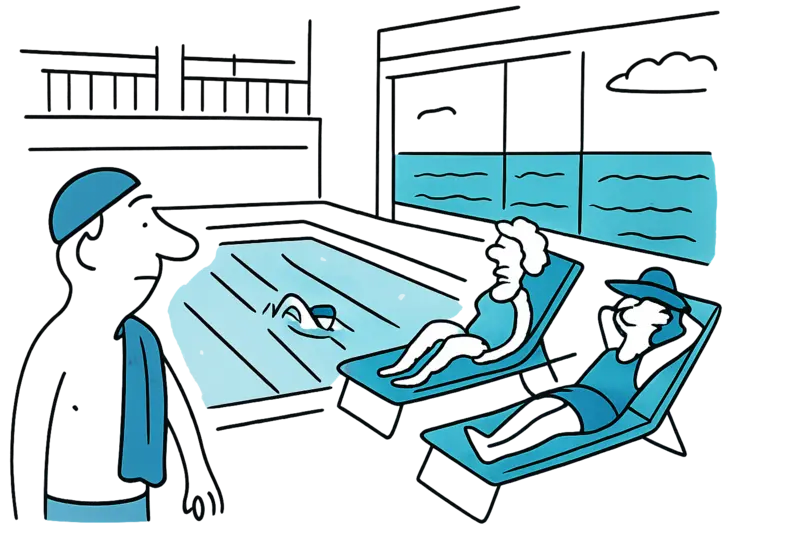
The pool is on the third floor, a 25-meter standard pool with a depth of 1.40 meters. The air is heated to a comfortable 29 degrees, the water measures around 24 degrees — perfect for breaststroke and freestyle laps. For residents, a visit to the pool costs €4.50 on weekday evenings (16:30–20:30). Visitors see people with towels over their shoulders, mothers bringing their children to swimming lessons, older neighbors with swim caps who have been doing their laps again for years.
The facility is part of a project that was built over four years and financed with nearly eleven million euros. Over about 7,500 square meters, the indoor pool is complemented by fitness rooms, two of them on the fourth and fifth floors with 115 and 113 square meters respectively. These fitness areas are currently being equipped; a cafeteria on the ground floor is scheduled to open in January.
Practical details are pleasing: generous changing rooms on the second floor with round sinks and enough space so no one has to leave their bag in the aisle because lockers are full. And when the weather cooperates, you can sit on the terrace with artificial turf and sunbeds, let your gaze wander over the harbor basin and hear the cries of gulls — an unusual luxury for a municipal public bath.
The new building brings joy not only inside. Aigua Dolça street has been spruced up: new paving, young trees, a few green islands. People who used to hurry by with their heads down now stop, chat and stroll more slowly. For a neighborhood that long had a slightly shabby reputation, this is a noticeable change.
From a sporting point of view the offering is relevant: a public 25-meter pool in the city center complements the more distant facilities and provides short distances for many households. Once the fitness rooms are fully equipped and classes start, the building is likely to become the daily address for swimmers, aquafit fans and rehab users.
As a neighborhood observer I notice: in the first days the lanes are already filling with different users. A retired teacher pulls focused strokes, a student trains for a competition video, two friends swim at an easy pace and chat about shopping. Small moments, but they show: infrastructure creates encounters.
What is still missing now are the courses for children and adults, which are to start in the coming weeks, and the final full equipping of the fitness rooms. The city also plans to gradually expand opening hours and offerings. A little more common good near the shore — and an example of how municipal investment can change everyday life.
Looking ahead: schools, sports clubs and seniors will benefit as much as working people who want to swim a few laps after work. A few suggestions: regular early swimming hours for older people, swim-education cooperation with primary schools and occasional neighborhood events on the terrace when the cafeteria opens in January. Such small additions would multiply the positive effect.
So if you walk along the Paseo Marítimo soon, take a look up Aigua-Dolça street. The pale hole in the city edge has been filled, the pool is open, and the sunbeds on the terrace are less a prop than an offer: a municipal place where you can breathe, train and see a little sea.
A tip to start: In the early evening, when the sun still warms and the city becomes quieter, the combination of a few laps and a coffee later in the newly developing ground floor is particularly pleasant. A small piece of Mallorca, rearranged.
Frequently asked questions
What is the best time to visit Mallorca for warm weather and fewer crowds?
What should I pack for a beach trip to Mallorca?
Can I swim in Mallorca year-round?
What are popular activities to do in Mallorca besides lounging on the beach?
How easy is it to get around Mallorca without a car?
What language do people speak in Mallorca and how can I ask for help?
Is Mallorca a safe destination for travelers?
What should I consider when choosing where to stay in Mallorca?
Similar News

How Four Burglars Emptied Ten Houses with a Simple Trick — and What It Means for Mallorca
Four men used the impressioning technique, posed as delivery workers and accepted two years in prison. A reality check f...

Bundles of Drugs, Containers and Open Questions: A Reality Check for Mallorca
3.3 tonnes of marijuana, 80 kilos hidden in golf-ball vending machines and a 44-year-old German released on conditions i...

Rats in Llucmajor: Who clears the streets, who stops the infestation?
In Llucmajor rat sightings and uncollected waste have increased after rain. A local check reveals gaps in cleaning, sewe...

Who will clean up? Illegal rubbish heaps on the highway near Son Gual drive residents onto the streets
For months, construction debris and household waste have piled up along the highway between Palma and Manacor near Son G...

Amundi takes over Bikini Island & Mountain Port in Sóller – many questions remain open
The French asset manager Amundi has acquired the four-star Bikini Island & Mountain Port hotel in Sóller from an Austria...
More to explore
Discover more interesting content

Can Cap de Bou

Townhouse Lleo 72
