
Paseo Marítimo: Big Spending, Little Everyday Usefulness
Despite a €40 million refurbishment, residents complain about litter, nighttime disturbances and a lack of infrastructure on the Paseo Marítimo in Palma. Why the new streetlights don't secure quality of life — and what should be done now.
Paseo Marítimo: Pretty Facade, Rough Reality
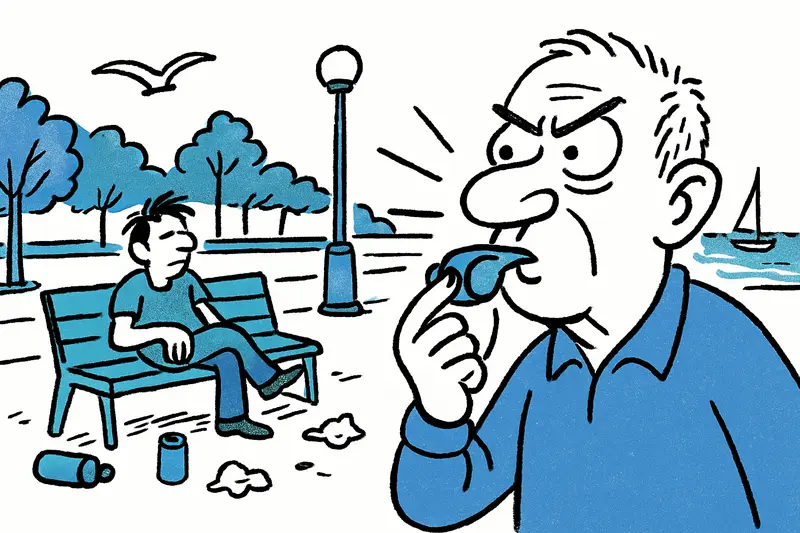
In the early morning, when delivery vans are still supplying the last cafés and seagulls cry over the yachts, the Paseo Marítimo looks tidy: new paving, modern benches, neat lamps. Two hours later, the harsh reality returns. Empty beer cans clink in the wind, scraps of paper fly across the promenade and the smell of urine lingers at some doorways, as described in Paseo Marítimo: Trash, Noise and the Smell of Urine – How Much Nightlife Can the Promenade Handle? For people who live here, this is not an aesthetic issue — it affects being able to leave windows open, having a quiet breakfast every day and getting home at night without stepping on broken glass.
The central question: Where did the impact of the millions go?
€40 million was spent on redesigning the waterfront, officially to enhance the promenade and create places worth staying, raising the central question explored in Paseo Marítimo: More boulevard, more questions — will Palma make the new waterfront part of everyday life? But when large sums go into paving and design, it often only becomes clear later whether everyday life was really taken into account. Did planners and politicians consider operation, cleaning and enforcement when tendering the project? Or was the project calculated as a one-off investment — pretty in photos, but without a long-term concept?
What residents say
Voices from Avenida Gabriel Roca are irritated. "You can hardly leave your window open," says a resident who has lived here for years. Others report nightly drinking sprees on benches and steps, glass bottles and furniture lying on the sidewalk in the morning, and visitors who apparently cannot find public restrooms and then use house entrances. A café owner on the corner by the marina sums it up simply: "When a few groups leave everything behind every night, a bad impression remains — even for paying guests," a situation also noted in Paseo Marítimo: Residents Take Stock – From Promenade Boulevard to a Nighttime Problem.
A look behind the scenes: Where does it fail?
Several factors come together. First, there apparently lacks a clear operations plan: who cleans at night, who intervenes when groups riot? Responsibilities between the city, port authority and local businesses are often less visible than new lamps. Then the infrastructure: public toilets are scarce, trash bins too few and poorly distributed. Cleaning is not a one-off expense but an ongoing item — and it costs. Last but not least, enforcement plays a role. Fines and checks only work if they are carried out regularly and not just as symbolic measures.
Aspects that have been insufficiently considered so far
Three points rarely appear in the public debate: first, management after the construction phase — many projects remain without a fixed operations contract after opening. Second, the social use of the space: a promenade is not a museum; it is used at night by different groups. Third, the economic incentives: some businesses benefit from late opening hours and lax controls; without clear rules the balance remains disturbed.
Concrete suggestions from residents and experts
The demands are practical and unpretentious: more frequent cleaning runs in the early morning hours, more waste containers along the promenade, temporary additional public toilets on weekends and during summer nights. Many also argue for better coordination between police, city administration and business owners — for example a joint night patrol or a quick reporting mechanism for residents via a hotline or app.
On the legal level, residents suggest stricter controls and consistent sanctions against businesses that cause problems through overly loud serving behavior or permissive opening hours. The idea is to think holistically: construction plus operation plus enforcement.
Less obsession with control, more thoughtful design
Some proposals sound drastic — temporarily closing certain sections at night or more surveillance cameras — others surprisingly low-threshold: more benches at strategic spots to disperse groups; lower walls and planting islands that guide sitting behavior naturally; better lighting on stairs without creating a sense of a police state. The important principle is this: infrastructure changes should steer user behavior rather than merely punish it.
Thinking long-term: A usage concept for the Paseo
In the long term, many call for a comprehensive usage concept that integrates residential life, business and tourism. Concretely that means: rules for opening hours, noise limits, cleanliness responsibilities for event organizers, a built-in maintenance fund for cleaning and security, and a permanent residents' representation that participates in planning. Such models exist elsewhere on the island — and they work if implemented seriously, as discussed in Who is Palma's new waterfront boulevard really for?.
Conclusion
Those who love the Paseo Marítimo are disappointed. The new lamps and the pretty paving are only half the story. A plan for everyday life is needed: more cleaning, clear responsibilities, public toilets and better coordination between authorities and business owners. Investing money in projects is important. Even more important is spending it in a way that allows people to live here at night with peace and dignity — not just for postcard photos.
The city bears responsibility: investments must be accompanied by operational and enforcement strategies. Otherwise millions of euros remain merely good photos for brochures.
Frequently asked questions
Why does the Paseo Marítimo in Palma still feel difficult to use every day?
What makes a renovated promenade in Mallorca work in everyday life?
Is the Paseo Marítimo in Palma noisy at night?
Are there enough public toilets on the Paseo Marítimo in Palma?
What do residents in Palma want changed on the Paseo Marítimo?
Who is responsible for keeping the Paseo Marítimo clean in Palma?
How much was spent on the Paseo Marítimo renovation in Palma?
What kind of long-term plan does Palma’s Paseo Marítimo need?
Similar News

Release after bloody attack in Palma: Why the court's decision raises questions
An 18-year-old who allegedly inflicted a serious neck injury on a man at Plaza Gomila using a wristwatch wrapped around ...
Kidnappings in Inca: Three young men forced into car trunks and abused in the forest – a reality check
In Inca, three 18-year-old men were forced into car trunks by masked assailants at the Plaça des Bestiar, taken to a for...
Spreading Massification: The Brake That Still Has Much Work to Do
Marga Prohens announces limits on volume tourism. The measures sound harsh — but are they enough to save everyday life, ...

Through the Keyhole onto the Party Yacht: How Daniela Katzenberger Is Planning Her 40th on Mallorca
Daniela Katzenberger turns 40 and wants to celebrate it on the island — likely with a boat, cake and her mother. A relax...
By Boat Instead of the Road: Palma's Water Bus — a Reality Check
The 'Bus Nàutic' launches in two stages — but questions remain over interim operations, fares and environmental requirem...
More to explore
Discover more interesting content

Can Cap de Bou

Townhouse Lleo 72
