
Wrong-way driving at Coll d'en Rabassa: Near crash raises safety concerns on the airport highway
In the early hours a taxi records a wrong-way driver on the road to the airport at Coll d'en Rabassa. The incident exposes structural weaknesses — from signage to shift traffic.
Near catastrophe at dawn: A taxi records the wrong-way driver
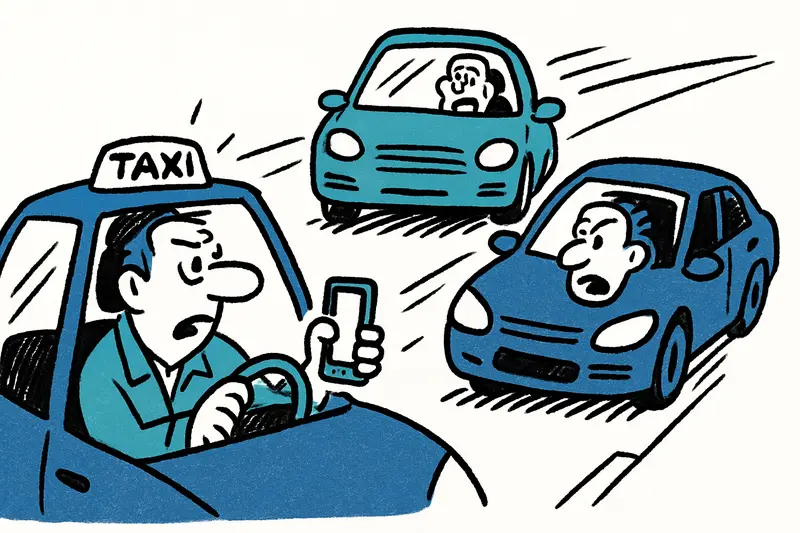
It was still dim, the air smelled of cool sea and diesel, and the highway to the airport carried the usual quiet hum of the early shift: taxis, rental cars, motorcycles. Around four in the morning a car drove for several hundred metres in the wrong direction. A taxi driver heading to his shift pulled out his phone and filmed the scene. The footage shows a car going too fast, drifting into the oncoming lane and forcing other road users into abrupt evasive maneuvers.
"The engine was whispering, then these lights — suddenly right in the middle of oncoming traffic. We passed each other with our hearts racing," says a witness who stopped shortly after the incident to help. The curve before the Coll d'en Rabassa exit looms like a dark hand into view; another driver: "If the curve had been different, we would have seen the wrong-way driver much later."
A single wrong-way driver — or a symptom?
The Guardia Civil has launched an investigation, and forensic teams reviewed video material from several road users. The alleged driver has not yet been caught; charges for endangering road traffic are possible. But the incident feels less like a curious exception and more like a warning sign: why does this happen on a route many of us use daily to get to work? Similar wrong-way collisions have been reported elsewhere, for example the Wrong-way crash near Llucmajor: motorcyclist severely injured — what's going wrong on the road to Cap Blanc?.
Those who travel early in the morning know the mix of tiredness, haste and routine. Added to that are modern pitfalls: GPS instructions in the dark, unfamiliar rental cars with different controls, maybe alcohol or medication, maybe simply a navigational error. The road layout itself also plays a role: poor lighting, insufficient markings and a curve that reduces visibility and reaction time increase the risk.
Often overlooked aspects — and possible remedies
Three points are often underexposed in the public debate: first, the importance of shift patterns. Airport shifts bring many vehicles onto the road in the same direction between three and five a.m. — this creates dense traffic situations in which mistakes can have fatal consequences; incidents on the Ma-19 have put the safety of the airport motorway into question in recent coverage, such as the Chaotic day on the Ma-19: How safe is the airport motorway really?. Second, the infrastructure: reflective markings, additional LED streetlights or guide posts could significantly improve orientation in the dark. Third, the role of digital evidence: dashcams help identify offenders but also raise questions about data protection and data management.
Concrete measures that would be effective immediately are obvious: targeted presence of the Guardia Civil in the early hours, temporary speed limits near exits with poor visibility, rumble strips before critical curves and more visible, high-contrast lane markings. The consequences of inaction have been visible in recent incidents, including the Pile-up at Es Molinar: Small mistake, big traffic jams — and what needs to be done. Airport employers could stagger shift times to ease peak loads. A public awareness campaign for shift workers — "one minute slower, one responsible decision" — would cost little and could save lives.
Statistics and mood: Why this matters to us
The incident fits into a serious trend: the number of road deaths in the Balearic Islands has risen — motorcyclists are disproportionately affected. The numbers are sober, the local feeling is not: at the café by the access road you see the exhausted faces of drivers, hear the horns and the rush of motorcycles, and you know that a moment of inattention is enough.
Anyone who knows the area — I don't live far from Coll d'en Rabassa — feels a slight nervousness after such reports. People are visibly shaken, some recount how they felt the braking and only then realised how close it was. Such stories stay with you and change the routine behind the wheel.
What matters now
Call for witnesses: The Guardia Civil asks for information. Anyone who was on the road in the early morning hours and saw unusual driving maneuvers should report it and, if possible, preserve dashcam or phone recordings. Precise time stamps are important — accurate seconds help forensic investigations to sort things out.
What everyone can do: On the next early start drive a few seconds slower, keep distance, turn the radio down and increase vigilance. Employers should review shift schedules, rental car providers should give clear information about driving directions and local rules; early-morning on-ramp incidents such as the Another Crash at MA-13 On-Ramp in Son Cladera: Two Accidents Within 20 Minutes show how critical clear information is. And authorities should check whether immediate visibility-improving measures are possible where sight is poor.
The central question remains: do we want to leave it at outrage — or do we use every incident to become structurally safer? In Mallorca we know the sea breeze, the clatter of curb signs, the island's easygoing manner. But when it comes to public safety, there is only one answer: act before near-accidents turn into real tragedies.
Frequently asked questions
Is it safe to drive on Mallorca’s airport highway early in the morning?
What should I do if I see a wrong-way driver in Mallorca?
Why do wrong-way driving incidents happen on Mallorca roads?
Are airport shift workers in Mallorca more exposed to road risks?
What makes the Coll d'en Rabassa exit on Mallorca especially dangerous at night?
Can dashcam footage help after a traffic incident in Mallorca?
What road safety improvements could help on Mallorca’s airport motorway?
What should I keep in mind when driving in Mallorca before sunrise?
Similar News
Three-ton llaut salvaged in Puerto Portals – volunteers clear microplastics from the harbor
During the weekend operation in Puerto Portals, divers pulled an approximately three-ton llaut from the harbor. Associat...
Naked Pillar in Bunyola: Why a Climbing Prank Is More Than an Accident
During the Sant‑Mateu verbena a 20‑year‑old fell at a protected wayside cross in Bunyola and pulled the stone cross off ...

Towel on It, Chair Gone? How Hotels Can Regulate Reservations of Sun Loungers
After a deadly dispute in Greece, the question has resurfaced in Mallorca: Are hotels allowed to ban or sanction the pra...
Illetas: Police Officer and Two Lifeguards Rescue Two Female Tourists from the Sea
Late on Friday afternoon emergency responders entered the water off the coast of Illetas: a local police officer and two...
Inca: Severely injured female dog found in garbage bags in a container – who has seen anything?
In Inca, a severely injured female dog was discovered wrapped in two garbage bags inside a container on Avenida Rei Jaum...
More to explore
Discover more interesting content

Can Cap de Bou

Townhouse Lleo 72
