
1.5 million inhabitants in 15 years? Why Mallorca must plan differently now
1.5 million inhabitants in 15 years? Why Mallorca must plan differently now
INE forecasts around 200,000 new residents for the Balearic Islands in 15 years. Without bold policies, housing shortages, parking chaos and informal settlements could follow.
1.5 million inhabitants in 15 years? Why Mallorca must plan differently now
Guiding question: How do we prevent housing shortages, traffic chaos and environmental strain from becoming everyday realities if the Balearic Islands are to host roughly 200,000 more people in one and a half decades?
The figure appears in official tables: Spain’s National Statistics Institute (INE) expects about 200,000 additional residents in the Balearic Islands over the next 15 years. This is not a distant claim but a projection that already shadows island life. Walking along Passeig Mallorca on a humid morning, hearing the tram behind you and construction noise from the Sant Antoni neighborhood, you sense that space and infrastructure are scarce. The issue is not just a number – it is how we build, work and live. This projection is discussed in Population boom in the Balearic Islands: What does it mean for Mallorca?.
Critical analysis: The causes are concrete and interlinked. Since 2000 the population has grown strongly; the currently projected increase rests almost entirely on migration rather than natural birth rates. Large groups move here for work, others settle permanently or retire. Many of the jobs offered are low-paid. When people earn around €1,000 and face rents of a similar amount, a social imbalance emerges. The math is simple: housing is lacking – experts speak of a need of roughly 100,000 dwellings – that is about 6,000 new homes per year. If affordable housing is not created, the likely outcome is clear: precarious accommodations on city edges, densification within neighborhoods, and rising pressure on water, waste management and transport. The scale of housing demand and pressure is examined in How many residents can Mallorca sustain? Growth, pressure and ways out of overcrowding.
What is missing from public debate: Discussions often focus on short-term tourism revenue or complaints about noisy holidaymakers – yet the structural questions remain underexposed. There is a lack of honest debate about the role of second homes and vacant properties, about long-term rental policy, about labor-market models that push workers into poverty systems, and about the necessary coordination between island, municipal and state levels. Also rarely discussed are concrete figures on the capacity of supply networks (water, sewage, energy) under a +200,000 people scenario, as highlighted in Balearic Islands over 1.25 million — How prepared is Mallorca really?.
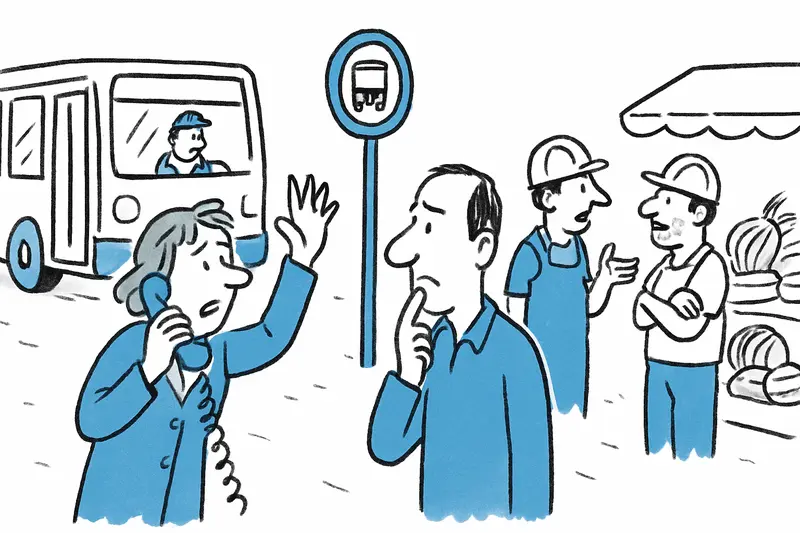
Everyday scene: At a bus stop in Palma a nurse in a worn smock waves the bus away while arguing with her landlord on the phone about another rent increase. Nearby, the smell of freshly brewed espresso comes from a bar, vendors stack melons at the Mercat de l'Olivar, and two construction workers discuss whether the next housing project will really provide social housing or investor condominiums. These small scenes stand for the tension between daily life and planning deficits, a reality explored in Who Shapes Mallorca's Streets? A Reality Check on Island Demographics.
Concrete solutions, not just concepts: First, a short-term social rental program with a clear annual target (e.g. at least 6,000 units per year, with a high share reserved for commuters and low-wage workers). Second, conversion and promotion of vacant buildings and a limited number of hotel properties into long-term rental housing during the low season. Third, targeted tax instruments for empty second homes and progressive levies on unused properties to bring housing stock back to the market. Fourth, mandatory quotas for employers that heavily benefit from seasonal work to provide staff accommodation or housing subsidies. Fifth, expansion of public transport and the cycle-path network along commuter corridors – fewer cars mean less land use and fewer emissions. Sixth, decentralized small-scale infrastructure for water and waste management so supply networks do not reach breaking points.
Practical projects that could have rapid effect: modular, dense housing projects at well-connected locations; cooperative housing with low rents; pilot areas where hotels are required in the low season to offer long-term contracts to workers; and a digital platform that links vacant apartments, temporary work stays and regional needs so that new arrivals can be planned and managed.
Who should be supported by these measures? Responsibility is shared: municipal administrations (Ajuntament), the island council (Consell) and the regional government must act in coordination. Employers, housing cooperatives and civil society – neighborhood associations, churches, NGOs – must take part in solutions. Without a coordinated approach, individual measures will fizzle out.
A pointed conclusion: The island can accommodate more people, but not at the cost of its quality of life. If politicians continue to wait, there will be space for informal settlements and social disruptions. Those who shop at the Mercat de l'Olivar do not want to see a city of containers on the ring roads. It is time for sober but decisive planning that jointly considers housing, mobility and working conditions – otherwise we will not only run out of parking spaces, but also aspects of our island that are non-negotiable.
Frequently asked questions
What challenges will Mallorca face with a projected 200,000 more residents over the next 15 years?
What housing strategies could help Mallorca add residents without sacrificing quality of life?
How can Mallorca improve transport to handle more residents?
What role do employers and housing policy play in supporting seasonal workers in Mallorca?
How could central Palma and places like Passeig Mallorca be affected by population growth?
What role do vacant properties and hotels play in Mallorca's housing plan?
What role do water and waste infrastructure play in planning for more residents in Mallorca?
What is Mallorca's weather like across seasons, and how should visitors pack?
Similar News

Palma Chases Wealthy US Tourists — The Key Question: Who Should the City Actually Serve?
The city is investing more than €200,000 to attract high-paying visitors in several US cities. A good idea — but what is...

Enough swimming: Why Port de Pollenca is louder than the sea
More than 200 people formed a human chain in Port de Pollenca — not only as a protest but as a wake-up call. Guiding que...

Mysterious disappearance in Alcúdia: Where is 24-year-old Lisa B.?
Since August 3 there has been no trace of 24-year-old German Lisa B. The family has traveled to Mallorca and urgently re...

From the Ruhr Area to the Tramuntana: Thorsten Legat and the FC Germania Mallorca Adventure
The former pro has not only taken the coaching role on Mallorca but also moved into a small island shared house, set amb...

Silent Conquest: What Mallorca's Wildlife Can Do Against Introduced Snakes
For years non-native snakes have been appearing on Mallorca. Who monitors the import routes, how effectively do authorit...
More to explore
Discover more interesting content

Boat Tour with BBQ along Es Trenc Beach

Private transfer from Mallorca Airport (PMI) to Pollensa
