
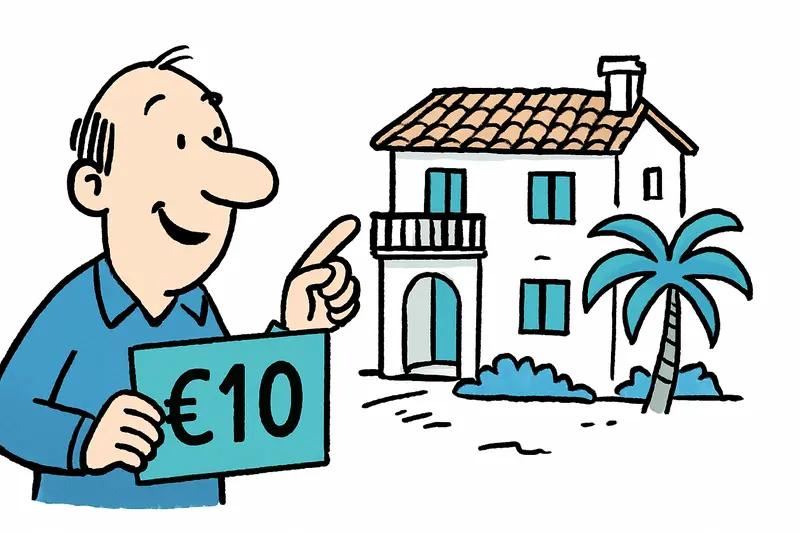
Own finca for €10? Eight questions no ticket leaflet answers
A state-approved social lottery is raffling a turnkey finca in Mallorca — for a ticket from ten euros. Sounds like a dream, but between winning and moving in there are fees, taxes and local hurdles.
For a tenner a finca dream — why the offer is so tempting and yet misleading
On a late morning in Palma, between the smell of coffee and the soft hum of mopeds, headlines read: a luxury finca in Mallorca is being raffled, and a ticket costs just ten euros. Lovely — I thought, as the church bells in the old town rang. But what is really behind it? The social lottery names as the main prize a turnkey newly built house of around 230 square metres, three bedrooms, three bathrooms, a ten-metre pool and allegedly sustainable technology (photovoltaics, heat pump, battery storage). The raffle aims to support social projects — about 20 percent of proceeds are to go to charitable partners. Sounds noble. Yet many questions remain open.
1. Who is even allowed to participate?
Eligible to participate are people aged 18 and over with residence in Germany. That is a first stumbling block for island residents: those registered as residents in Mallorca usually do not participate. This raises eyebrows in villages like Alaró or Sineu: a house here is therefore primarily awarded to people in Germany, not to the local community.
2. Odds and realism
The probability depends on the number of tickets sold. In previous campaigns it was in the range of several million. Viewed realistically, buying a ticket is more of a game of chance with a social overtone: ten euros, a moment of hope, but hardly a real chance at the property.
3. What winning actually costs
Here it gets complicated: handover “turnkey” does not mean “free in everyday life”. In Mallorca there are ongoing costs (garden maintenance, pool cleaning, community fees (Comunidad), IBI) and possible investments. Added to that are Spanish taxes and fees for property transfers, notary and land registry entries. Those who do not move to the island permanently also need local management — annual expenses that for a finca of this size can easily run into the thousands.
4. Legal and permit-related questions
A new build should of course have a valid building permit. Still, it is worth taking a closer look: is the plot in rústico (rural land) or suelo urbanizable (land designated for urban development)? Is there a usage restriction that excludes tourist rentals? Such details decide whether the house can later be rented out, sold or even lived in legally.
5. Social engagement versus marketing
That 20 percent of proceeds go to DKMS is positive — but it is also part of the sales argument. How much net actually reaches the projects after all costs depends on marketing and administrative expenses. Transparency would be important here: a clear accounting of use builds trust, especially when housing on the island is scarce and expensive.
6. Impact on the local housing market
Such promotions create dreams in Germany, but they also change perceptions in Mallorca: real estate is staged as prizes, not as living space. In communities already debating tourism pressure and house purchases, this is not a neutral act. The perspective of neighbours, associations and local authorities is often missing.
7. What to do if you still want to buy a ticket?
A short practical check: read the terms and conditions carefully. Ask for a breakdown of transfer costs, taxes and annual running costs. Ask to see the building permit and a site plan. Clarify how refusal or a legal dispute is handled. And consider: would you buy the house if you had to pay for it regularly?
8. Concrete proposals for more fairness
Transparency about donation proceeds, participation rules and cost estimates for winners would be a good start. Even better: involve local partners, channel part of the proceeds effectively into housing projects in Mallorca and do not exclude residents across the board. Then a media-effective PR event could actually become a win for all involved.
My impression, back on the street with the last sip of café con leche: for many the ticket is a small glimmer of hope. For the island the raffle is more like a mirror — it shows how much Mallorca oscillates between longing, market mechanics and social responsibility. Before buying a ticket: think briefly, calculate and don’t take the dream home without a plan.
Frequently asked questions
Can I take part in the Mallorca finca raffle if I live on the island?
What are the real costs of owning a finca in Mallorca after winning one?
How likely is it to win a Mallorca house raffle?
What should I check before buying a ticket for a Mallorca property raffle?
Can a raffle prize finca in Mallorca be rented out later?
What kind of house is being raffled in Mallorca?
Is a Mallorca house raffle really supporting charity?
Why do Mallorca property raffles cause local criticism?
Similar News

Cap Vermell Grand: Second Michelin Key – a Gift for the East
The Cap Vermell Grand in Capdepera has been awarded its second Michelin key. For the region this elevates the luxury off...
Eurowings lets four aircraft carry names – a friendly idea that also reaches Mallorca
Eurowings is launching a campaign: four Airbus A320s are to carry the first names of people who help others in everyday ...

From the Reality Studio to the Pitch: Aleks Petrovic Makes Mallorca His Base
The former participant in numerous TV shows moves from Dubai to the island and launches a project with FC Germania Mallo...
When the Phone Falls Silent: Concern for Sarah Joelle in Mallorca — and What It Reveals
After days without a response, the TV personality's unreachability in Mallorca sparked concern. Shortly afterwards an al...
Ultraluxury on the Ground: Four Seasons Jet in Palma — a Reality Check for Formentor and the Island
A high-priced flight crosses Mallorca and its guests stay for days at the Formentor resort. What does the island get bes...
More to explore
Discover more interesting content

Can Cap de Bou

Townhouse Lleo 72
