
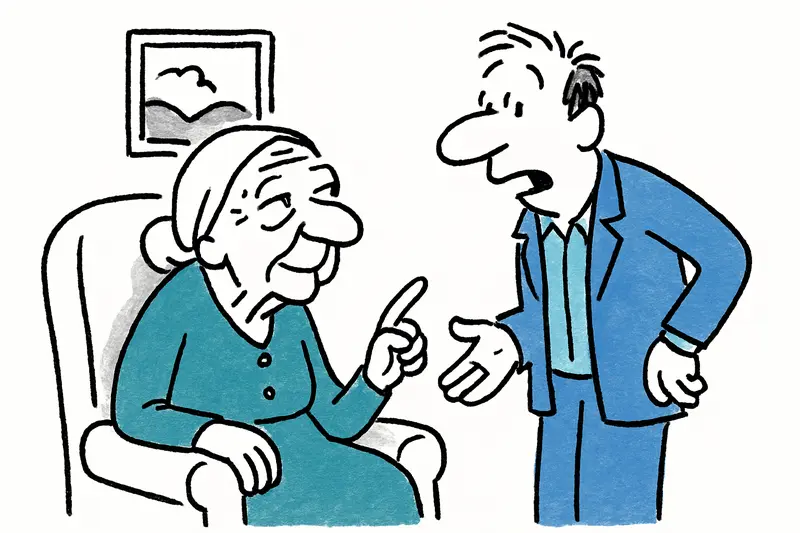
At 102 in Ariany: Francisca's Simple Rules for Growing Older
At 102 in Ariany: Francisca's Simple Rules for Growing Older
Francisca Mestre Costa will be 103 in a few days — in the village of Ariany she talks about work, faith and why togetherness pays off in later life.
At 102 in Ariany: Francisca's Simple Rules for Growing Older
One woman, one village, a whole century of everyday experience
On a quiet afternoon in Ariany, when the church bells ring over the narrow streets and the bakers are taking the last loaf out of the oven, Francisca Mestre Costa sits in a small sitting room overlooking the square. Soon she will be 103. Anyone who listens to her quickly notices: she doesn't pass on grand theories, but very practical rules for life that still matter here in the center of the island.
Francisca was born in 1923, when much of Mallorca still meant field work and a car in a family caused a stir. As the third of ten children she learned early on to take responsibility. Looking after children, cooking, helping in the fields — that was everyday life. At ten she slaughtered her first chicken to help her mother after the birth of a child. Such memories don't sound sentimental with her, more like notes from a life in which pitching in was taken for granted.
The Spanish Civil War also left gaps in families here; her husband was sent to the front in Zaragoza, and Francisca stayed behind to take care of the household and the children. Later she married, had children, enjoyed a long marriage, and today has children and grandchildren, among them the priest Pere Ribot, who often visits her. This family closeness shapes her view of aging: those who are involved have support.
Faith and routine are part of her everyday life. Every morning she prays the rosary, she begins the day with a short prayer and ends it with a word of thanks to her patron saint. Not because she is mainly motivated by fear, but because the daily rhythm matters to her. Routine gives structure — and you feel that when you sit beside her and see her quiet, unassuming smile.
What she advises young people sounds simple: be honest, work, stay engaged in life. It's not moralizing for her, but everyday virtues that still make a big difference on the island. Above all she keeps stressing one thing: the importance of togetherness. In the past neighbors helped each other, people looked out for one another. This kind of closeness, she says, made people more resilient.
That doesn't mean she romanticizes the present. She observes how modern times change family structures and create paths where older people sometimes feel alone. This is reflected in Fewer seniors in Mallorca: Opportunity or a ticking gap?. She experienced a visit to a nursing home that affected her deeply (see Fatal Discovery in Son Macià: A Case Raising Questions about Protecting Older People). Still, her tone remains conciliatory: those who give respect and time return something essential.
Why does a voice like hers do us good in Mallorca? Because it embodies a piece of constancy. In villages like Ariany, at markets in Inca or in the streets of Palma you still meet people who build bridges between generations. Such testimonies remind us that a fulfilling old age is not a luxury but often the result of simple daily habits: community, small rituals, work with meaning.
A concrete tip that is easy to adopt from Francisca: keep an eye on your neighborhood. A visit to the older woman down the street, a shared lunch with someone who doesn't get many visitors, or helping with small jobs around the house — these are gestures that give time and quality of life. In Mallorca, where the squares still smell of life and the paving stones have stories, such gestures are easy to carry out.
In the end what remains with Francisca is a pragmatic serenity: she is not afraid of the end. She does not often speak about dying; more important to her is living well now. Her message is therefore not a call to exceptional achievement, but an invitation: be kind, stay genuine, stick together. The voice of a 102-year-old from Ariany is thus less a moral lesson than an offer: those who try may find more peace and connection in everyday life — on the island and beyond.
What we can do: knock more often, go to the Sunday market, give time. Small things, big impact.
Frequently asked questions
What is life like for older people in Mallorca’s villages?
Why are daily routines important when you get older?
What can we learn from people in Mallorca who live past 100?
What is Ariany in Mallorca known for?
How important is family life for older people in Mallorca?
What values do older generations in Mallorca often pass on?
Is there still a strong sense of community in Mallorca?
What small things can help older people feel less lonely in Mallorca?
Similar News
Fewer Airlines, Fewer Destinations: What Palma's Winter Flight Schedule Means for Mallorca
Analysis shows: Winter at Son Sant Joan Airport will be quieter, with significantly fewer airlines and destinations. Who...
German tourist dies in Sa Calobra – a reality check for emergencies on Mallorca's beaches
A 40-year-old tourist died at the Torrent de Pareis. The emergency call, a doctor who happened to be present, a defibril...
Deadly Tractor Accident in Bunyola: What Needs to Be Done Now
In a work accident on an estate near Bunyola, a roughly 40-year-old man lost his life. His wife and a small child were o...
Head-first dive into the shallow part of Cala Fonoll: An accident and the unresolved question of responsibility
A young tourist dove into Cala Fonoll and was seriously injured. Key question: Why are clear warning signs missing at da...
Mistaken identity with fatal consequences: Brutal assault in S'Aranjassa — what's missing in the follow-up?
At S'Aranjassa a visitor to a finca was tied up, beaten and thrown out of a van. Three men have been arrested, including...
More to explore
Discover more interesting content

Can Cap de Bou

Townhouse Lleo 72
