
160 Euros for Two Sunbeds? Dispute Over Beach Access at Formentor
White towels used as a barrier, high prices for sunbeds, and the question: who owns Formentor Beach? A look at the law, everyday life and possible solutions.
Towel blockade and high price: Who owns Formentor Beach?
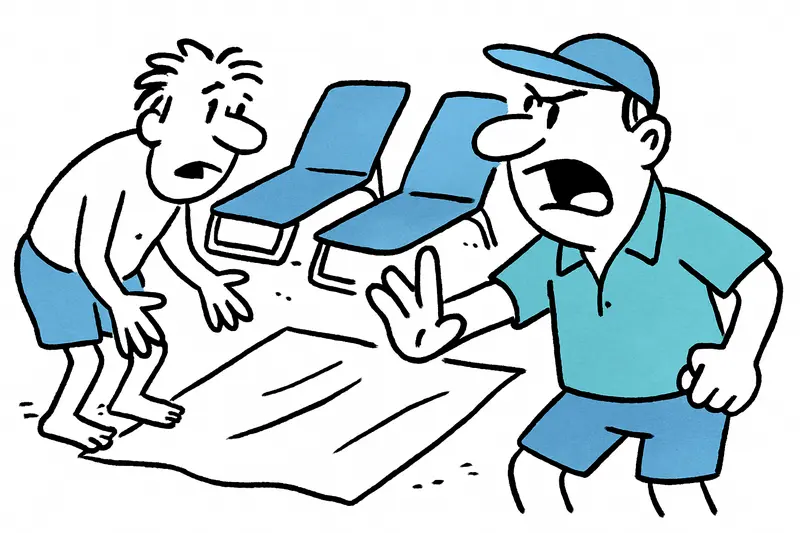
On a clear morning, when the scent of pine still hangs over the bay and the sea gently laps the pebbles, white towels suddenly lay across the sand. As a line, as a border. A photo, taken by a long-time visitor, soon landed with the municipality of Pollença and the coastal authority. The complaint is simple: non-hotel guests can hardly reach the front rows anymore — or so the accusation goes.
The central question
Who decides who gets the best spot by the sea? At its core, the dispute is not only about parasols and balinese beds, but about accessibility, social participation and how public space is distributed in times of booming tourism. When a day rate of around €157.50 for a parasol with two sunbeds is circulating, it is more than a price tag: it is a visible exclusion, as reported in local reporting on high sunbed prices at Formentor.
What exactly happened
Witnesses report a towel blockade in front of the hotel's sunbed area; others say the reception turned visitors away with the note: "Only for hotel guests." On the hotel's website the beach section is partly presented as belonging to the resort — a formulation that angers locals and regular visitors, as described in coverage on alleged beach privatization at Formentor. At the same time, the operators hold the concession for that stretch of beach, which grants them certain service rights. But a concession is not a privilege that automatically privatizes the sea.
What the law really says
Under Spanish coastal law, access to the sea must be ensured; at least a strip from the waterline should remain publicly accessible. That means sunbeds and services can be offered, but not in a way that blocks the path to the water. What matters here is interpretation and on-site enforcement: Are signs put up showing clear access paths? Marking strips? Or does it remain towels and tired words?
What is often overlooked
The public debate usually focuses on legal questions. Less examined are three things: 1) The social divide – who is left out, who can afford the front rows?; 2) The role of the municipality: What conditions are attached to the concession, and how rigorously are they monitored?; 3) The effects on the local scene: When people are pushed to the edges, it also changes local vendors, from the small café to the beach seller.
A beach vendor I met on site put it this way: "Grandparents used to come with a towel, now they come with a credit card." The sentence sounds bitter, but it describes a real shift. The sounds in the bay — the clacking of sunbeds, the calls of the seagulls, the mixing of languages — remain the same. What changes are the faces in the front row.
Practical problems in implementation
In practice it is often small things: missing signage, unclear boundaries, staff given different information. Authorities can in theory intervene, but inspections are labor-intensive. And in high season, when every patch of sand counts, a small practice quickly becomes a visible conflict.
Practical and realistic solutions
What could a compromise look like that creates more transparency and fairness?
Clear markings: A continuous access strip, at least the legally required width, with visible markings and signs. No towel may block it.
Limited reservations: Hotels could reserve certain front sunbeds for guests, but must also provide enough free spots at fair prices for the public.
Transparent price lists: Prices for sunbeds must be clearly displayed on the beach and online — and whether there are discounts for families or locals.
Municipal controls: Regular spot checks by the coastal authority during the season, combined with clear sanctions for violations of access rules.
Dialogue format: A roundtable with hotel operators, municipal representatives, residents and beach vendors. Simple compromises — fixed time windows, social quotas — often help more than lengthy legal battles.
Why this matters for Mallorca
It is not just about a nice spot by the water, but about how the island preserves its character. If beach access becomes a question of the wallet, a piece of everyday life loses its openness. Voices from Pollença and the bay of Formentor show: rules are needed, but so is pragmatism.
Whether the white towels stay or soon disappear is decided not only by judges and officials. It also depends on whether we as a community are willing to defend a public space together — with balance, but resolutely.
Frequently asked questions
Is access to beaches in Mallorca always public, even at hotels?
Why are sunbeds and parasols so expensive at Formentor Beach in Mallorca?
Can a hotel in Mallorca tell non-guests to stay out of the beach area?
What does Spanish coastal law say about access to beaches in Mallorca?
What should I do if a beach path in Mallorca seems blocked by sunbeds or towels?
Why is Formentor Beach in Mallorca often at the center of access disputes?
Are beach prices in Mallorca usually shown clearly before you rent sunbeds?
What is the easiest way to enjoy Formentor Beach in Mallorca without paying for sunbeds?
Similar News
O'zapft is on Mallorca: Pinos conjures a Bavarian evening in Sol de Mallorca
Traditional dress, wheat beer and roast pork knuckle: At Pinos in Sol de Mallorca Bavarian warmth met island atmosphere....

Stab Wounds in Palma: What's Missing in the Response to Domestic Violence?
A 57-year-old woman was seriously injured in an apartment on Arxiduc Lluís Salvador. Police arrested her 61-year-old par...

Iris Katzenberger: New Love on Mallorca — 28-Year Age Difference and Good Cheer
Iris, 59, appears to be in love again on Mallorca. Her new partner is said to be 31 years old. A small romantic chapter ...

Arrest in Palma: ATM technician with nearly €150,000 in his toolbox
After tips from a bank, the National Police in Mallorca arrested a technician. Investigators found almost €146,000 in a ...

When Buyers Are Missing: Why Foreign Property Purchases in the Balearic Islands Are Shrinking
Despite rising prices per square meter, more and more foreign buyers are withdrawing from Mallorca and the neighboring i...
More to explore
Discover more interesting content

Can Cap de Bou

Townhouse Lleo 72
