
When 17 Plane Trees Were Felled: Residents Storm Palma City Hall
When 17 Plane Trees Were Felled: Residents Storm Palma City Hall
After the felling of 17 plane trees on Plaça Llorenç Villalonga, residents marched into City Hall carrying branches. A civic crisis over safety, participation and transparency.
When 17 Plane Trees Were Felled: Residents Storm Palma City Hall
Main question: How much say do residents have when municipal trees are removed for safety reasons?
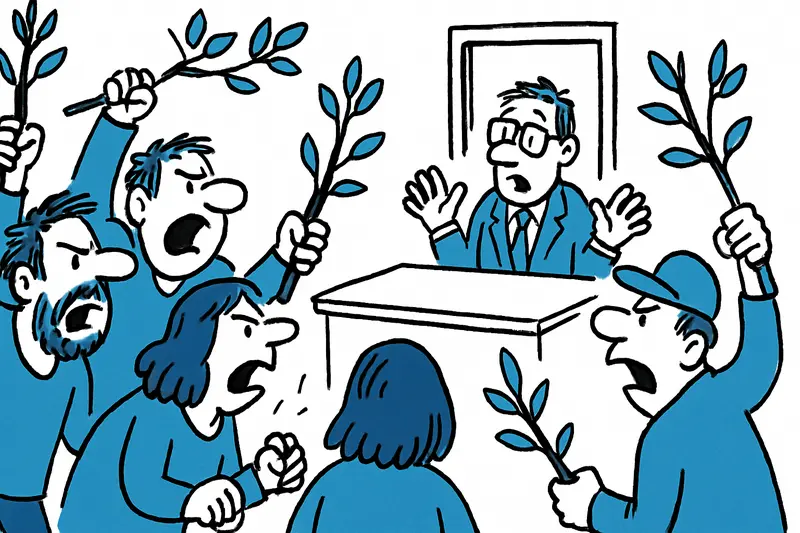
In the afternoon, as the winter sun lay low over the old town, the air at Plaça Llorenç Villalonga still smelled of petrol and fresh wood. After the sounds of workers and the cracking of heavy branches, neighbors gathered with small pieces of trunk and twigs in front of City Hall — not by chance, but because they would not accept a decision that has changed their square, as reported in a report on the planned felling of 17 ombúes in Plaza Llorenç Villalonga.
The scene in the council chamber was loud and raw. People struck the wooden benches with branches, shouted “shame” and demanded answers. Two councilwomen publicly distanced themselves from the municipal leadership and sided with the residents. The mayor was forced to call for order. The confrontation was more than an auditory disturbance: it revealed a deeper problem in how public green spaces are handled.
Briefly on the legal situation: an administrative court gave the city the green light after an injunction was lifted, as described in coverage of the neighborhood's opposition to the planned tree felling. The ruling referred to the duty to avert dangers to people. That is not a carte blanche, but a legal framework that permits action on safety grounds — and yet it leaves questions unanswered.
Critical analysis: from the neighborhood’s perspective the sequence appears to be a top-down decision. Technicians had raised concerns, and the city acted on its own assessments. The issue is not only legal: who decides how much risk is acceptable, and which alternatives were really considered — crown pruning, temporary closures, independent arborist reports?
What rarely appears in the public debate are concrete figures on fracture risks, detailed expert reports, before-and-after photos, and a transparent cost-benefit accounting. A binding timetable for replacement plantings and maintenance is missing, as are statements on how the visual and climatic impacts on the square were assessed.
A commonplace scene in Palma: in the afternoons seniors sit on the square, trade recipes, children chase pigeons. Tree shade is part of everyday life here, a reality contrasted with other felling episodes chronicled in a chronicle of previous tree felling controversies in Palma. For many residents it is not just a dispute about trees, but the loss of a familiar place — the sound of street music, sitting on a bench, the temperature in summer.
Concrete solutions can be identified: first, binding independent tree assessments before final felling decisions. Second, transparent information duties: access to reports, public meetings with experts and clear deadlines. Third, an immediate plan for replanting and temporary shading so the square does not remain bare for months.
Furthermore, the city could offer a mediation procedure when decisions significantly affect citizens. A small commission of residents, city technicians and external tree experts would not prevent every measure, but it would increase acceptance and reduce the feeling of being "steamrolled."
For the administration: law and safety must not be obscured by technical shortcuts. If safety is the argument, the documentation must be thorough, public and comprehensible. Otherwise the accusation remains that the aesthetic and social value of urban green was insufficiently weighed.
The protests in the council chamber made one thing clear: it is not just about 17 trees, but about trust in municipal decisions. Anyone walking past the square during the day does not only see the stumps, but hears the voices of those who feel unheard.
Conclusion: Palma needs clearer rules for handling street trees — legally sound, technically reviewed and democratically involved. Otherwise further confrontations threaten, in which the core question is lost: how do we want to shape our public spaces together?
Frequently asked questions
Can the city of Palma remove trees for safety reasons without asking residents first?
Why did residents protest the tree felling in Plaça Llorenç Villalonga, Palma?
What should Palma residents expect from the city before a tree is cut down?
What alternatives are usually considered before felling a tree in Mallorca?
Why does the loss of shade matter so much in Palma squares?
What happens after trees are removed in a Palma square?
Can residents challenge a municipal tree-felling decision in Palma?
Why do tree-felling disputes in Palma often become a trust issue?
Similar News
Head-first dive into the shallow part of Cala Fonoll: An accident and the unresolved question of responsibility
A young tourist dove into Cala Fonoll and was seriously injured. Key question: Why are clear warning signs missing at da...
Mistaken identity with fatal consequences: Brutal assault in S'Aranjassa — what's missing in the follow-up?
At S'Aranjassa a visitor to a finca was tied up, beaten and thrown out of a van. Three men have been arrested, including...
High heel slips, car accelerates: accident on Camí de Son Hugo
A woman lost a high-heeled shoe on the forecourt of the sports facility at Camí de Son Hugo. The car accelerated, mounte...
Phone Scam: How Two Hotel Employees at Playa de Palma Lost Thousands of Euros
One morning in September, two reception employees at Playa de Palma were pressured by alleged alarm-company staff — in t...

When the Wallet Becomes a Danger: Attack in Peguera and Lessons for Mallorca
In Peguera, two women are said to have stolen the wallet from a 75-year-old German couple. When the victim intervened, t...
More to explore
Discover more interesting content

Can Cap de Bou

Townhouse Lleo 72
