
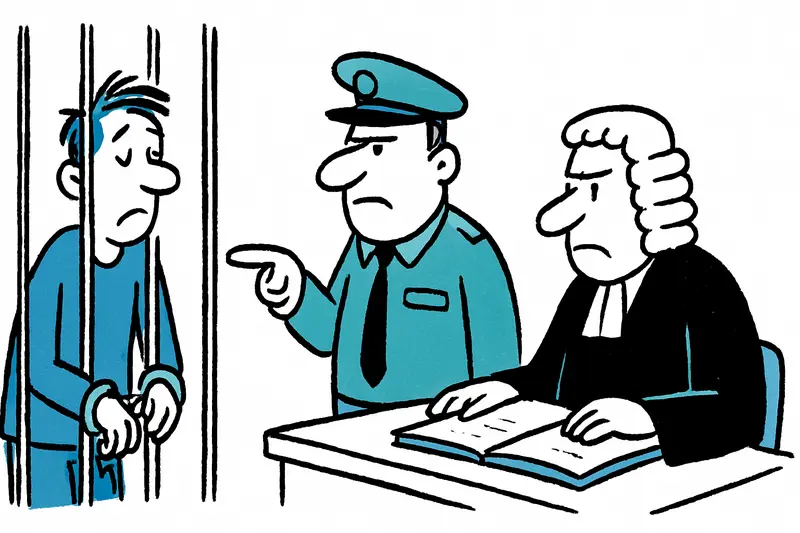
19-year-old remanded in custody again after chase in Palma
19-year-old remanded in custody again after chase in Palma
After a death-defying drive in the wrong direction and a collision with a patrol car, a 19-year-old is once again in pretrial detention. The court justified the decision with the risk of reoffending.
19-year-old remanded in custody again after chase in Palma
Key question: Why was an alleged repeat offender able to get back behind the wheel so quickly?
On Tuesday it was the blare of sirens that shattered the morning calm in Palma: a car sped the wrong way down streets, ran over sidewalks and finally collided with a patrol car. A police officer was injured. The driver, a 19-year-old, is now again in pretrial detention. A judge justified the measure with the danger that he might commit serious offenses again.
The facts are concise but disturbing: it is the same young man whose car collided head-on with a motorcycle in Son Castelló in November. The motorcyclist died at the scene, the car burned out; the occupants fled and only reported themselves to the police days later. During the recent pursuit, investigators found copper, burglary tools and a balaclava in the vehicle.
This sequence—fatal accident, flight, a short lull, then an escalation in the middle of Palma—raises a simple, urgent question: why were earlier warning signs not sufficient to reduce the risk to the public?
Critical analysis: In Mallorca, as elsewhere, the police, the judiciary and social services often encounter different limits. The police investigate and clarify. Judges weigh up grounds for detention. Social workers try to prevent young people from falling into a spiral of crime and repeat offenses. This pattern is visible in other local arrests, such as detention in Palma after a series of shop robberies, the 21-year-old detained in Palma after a string of necklace robberies, and three youths in Palma detained for a series of car thefts.
But when a young man is involved in a fatal accident within months and shortly afterwards is found with burglary tools, this points to gaps: in the monitoring of restrictions, in the protection of potential victims and in aftercare for youths following serious incidents.
In public discourse such cases often provoke arguments about toughness or leniency. What is often missing is a debate about practical weak points: how quickly are conditions monitored? How well are information linked between police departments, courts and youth services? Is there a systematic check on whether a suspect has access to stolen vehicles, tools for theft or easily flammable substances? And last but not least: how transparent is victim support when an accident ends in death?
A slice of everyday life in Palma: on the Plaça de Cort a shopkeeper drinks her first café con leche, street sweepers brush the corners, and at the junction with Avinguda de Jaume III the bus is held up by a police cordon. People look out from cafés, exchanging brief glances—the feeling is always the same: the city is alive, but vulnerable. Such scenes show how deeply public safety is tied to everyday life; a pursuit leaves traces in the neighborhood even after the headlines fade.
What is missing from the discussion are concrete, actionable proposals. Here are some measures that could be tried locally:
- Faster, coordinated information flows: A digital protocol that makes reports about dangerous suspects visible between police, prosecutors and youth services, without breaching data protection.
- Priority for expedited detention reviews when there is a risk of repeat offending: If there are clear indications of renewed willingness to commit violence, hearings should be brought forward to avoid long delays in decisions.
- Targeted monitoring of scrap metal collection points: Copper theft is a common element in criminal careers; stricter controls and registration requirements for scrap dealers could raise barriers.
- Practical prevention in schools and vocational schools: Workshops that present opportunities while also highlighting the legal consequences of speeding, driving without a license or possession of burglary tools.
- Improved aftercare following serious traffic accidents: Not only investigations are needed, but also an assessment of whether the individual belongs in care structures—therapy, supported housing, reintegration.
Such measures are no panacea. But they shift the focus away from headlines and punishment toward prevention and protection. And they would help ensure that not every escalation comes as a surprise.
Sharp conclusion: This case is not an isolated incident but a mix of personal misjudgments and systemic gaps. If Palma does not want such scenes to happen more often, the island must respond not only more forcefully but also smarter: network faster, prevent more targetedly, and give more attention to victims and residents. Otherwise the familiar image will remain: an officer injured, a life lost, and many questions left unanswered.
Frequently asked questions
Why was a 19-year-old in Palma placed in pretrial detention again?
What happened during the police chase in Palma?
Was the Palma driver linked to a fatal crash before this chase?
What does it mean when someone is remanded in custody in Mallorca?
Why do police in Palma treat reckless driving cases so seriously?
What items were found in the car after the Palma pursuit?
How can Mallorca prevent repeat offending among young drivers?
What safety issues do Palma residents notice after a police chase?
Similar News
Mistaken identity with fatal consequences: Brutal assault in S'Aranjassa — what's missing in the follow-up?
At S'Aranjassa a visitor to a finca was tied up, beaten and thrown out of a van. Three men have been arrested, including...
High heel slips, car accelerates: accident on Camí de Son Hugo
A woman lost a high-heeled shoe on the forecourt of the sports facility at Camí de Son Hugo. The car accelerated, mounte...

Phone Scam: How Two Hotel Employees at Playa de Palma Lost Thousands of Euros
One morning in September, two reception employees at Playa de Palma were pressured by alleged alarm-company staff — in t...

When the Wallet Becomes a Danger: Attack in Peguera and Lessons for Mallorca
In Peguera, two women are said to have stolen the wallet from a 75-year-old German couple. When the victim intervened, t...
Plata stays Plata: Young people take over, Llonguets remain
A small bar on Carrer de l'Argenteria will continue: Tolo Serra hands the place over to young Mallorcans at the end of t...
More to explore
Discover more interesting content

Can Cap de Bou

Townhouse Lleo 72
