
At 27 Degrees and Turrón: Why Mallorca Is Selling Christmas Already
At 27 Degrees and Turrón: Why Mallorca Is Selling Christmas Already
Almonds are harvested in August, and by late October turrón is already on the shelves. Key question: Are retailers simply selling us Christmas earlier — or is there more behind the advanced start to the season? A critical look from the Paseo to the Mercat.
At 27 Degrees and Turrón: Why Mallorca Is Selling Christmas Already
Key question: Is retail selling us Christmas earlier — and who really benefits?
When you stroll along the Passeig Mallorca on a warm October day, scooters buzzing, seagulls crying over the bay and the scent of fresh produce drifting from a side street from the Mercat de l'Olivar, a shelf full of turrón almost feels like a bad joke. But the chocolate with almonds and honey is not there by accident: there are solid reasons — and some uncomfortable side effects.
Fact one: Almonds are harvested in summer. The nut is a main ingredient of Spanish turrón; as soon as the harvest is secured, manufacturers can get going. Production cycles, shelf life and supply chains allow sweets to be produced and delivered early. Retailers then decide: offer earlier and sell longer — or wait and fill the shelves later.
Fact two: Logistics and demand planning. Supermarkets and chains plan their assortments months in advance. Seasonal goods are now distributed over longer periods because this smooths warehouses and sales curves. On Mallorca a third factor comes into play: tourists with different shopping preferences and several national chains that coordinate or try to outdo each other — for example, Christmas with ALDI on Mallorca: Gourmet options for the island table.
All of this sounds pragmatic. It becomes critical when marketing shifts the calendar. Consumer organizations observe that an ever-earlier start blurs the perception of 'season': Christmas feels like it begins in autumn. This leads to longer spending periods and purchase decisions based less on real need than on the extended availability.
What is often missing from public discussion: a debate about pricing and transparency. Just because a product is on the shelves earlier does not mean it is cheaper. Longer sales periods give retailers room for staggered promotions, but they do not automatically result in long-term price cuts for households. Also too often overlooked is the perspective of smaller producers on Mallorca: big brands dominate shelf placement, and regional producers struggle for shelf space and visibility.
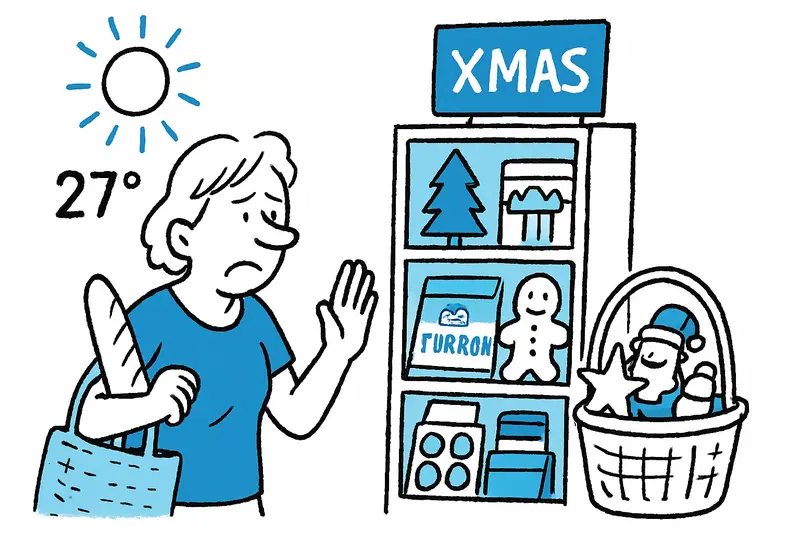
An everyday scene: On a Saturday morning in Santa Catalina an older woman stands in front of a supermarket with a bag of fresh bread in her hand. Beside her a basket full of promotions — gingerbread figures in October, plastic decorations, turrón in a bargain pile. She shakes her head: 'Too early, it's still autumn.' For her the early start is less a celebration than a constant sale that creates pressure.
Concrete solutions can be named. First: mandatory price and origin transparency — for example on the label or a shelf note stating when the almonds were harvested and when the product was produced. Second: Consumer protection authorities should monitor promotion periods and check whether early placement leads to misleading advertising, especially around events like Sunday Shopping in Mallorca: More Time or Just More Pressure?. Third: Strengthen local producers — special sections in markets for Mallorcan foods, marketing support campaigns and direct communication to tourists about seasonal products.
It would also make sense to clearly label 'seasonal products': if retailers had to indicate whether a product comes from regular annual production or was specifically stored for the long pre-sale phases, customers could better assess whether an early purchase makes sense.
A practical tip for buyers: those who want to spread costs should plan early, buy deliberately and compare prices. Those who react emotionally quickly fall into impulse purchases. And those who want to support local producers should look for shelves marked Mallorcan origin or visit weekly markets — there the harvest calendars and the people behind them are often visible, for example at Jai de Nadal: Palma's sweetest Christmas market on Calle Sant Miquel.
Conclusion: The early turrón is no accident but the result of harvest cycles, production logic and economic strategy. What is critical is that the extended festive period changes the perception of need and price and disadvantages smaller suppliers. More open labeling, active consumer information and more space for local producers could restore the balance — and allow people to enjoy the autumn sun, beach dress and a piece of real Mallorcan almond cake without the anticipation being artificially extended.
Frequently asked questions
Why does Mallorca start selling Christmas treats like turrón in October?
Does early Christmas merchandising in Mallorca mean cheaper prices?
How can I support Mallorcan producers when seasonal goods arrive early?
What should I know about almond-based turrón on Mallorca's shelves?
Where can I find Mallorcan seasonal foods in Mallorca?
What practical tips help me buy seasonal Mallorca products without overspending?
How do logistics affect when Christmas products hit Mallorca stores?
What changes could help balance the market for smaller Mallorcan producers?
Similar News
Barítimo: Marítimo returns to Palma's waterfront
The long-closed Marítimo on the Paseo Marítimo is set to reopen as "Barítimo": 198 seats, primarily Mallorcan cuisine, j...

Storm accident involving 'Mein Schiff 3' in Bremerhaven – a wake-up call for ports, including Palma
A severely damaged cruise ship, more than 3,300 people on board and a port that reacted because of a storm: why the coll...

When Balcony Coffee Sits Next to Tent Tarps: Nou Llevant as a Mirror of the Housing Crisis
In the Nou Llevant neighborhood, extreme contrasts become visible: luxury apartments, often inhabited by Germans, sit di...

Iris Berben live in Mallorca: Two opportunities to experience the island's culture
German actress Iris Berben is coming to the Evolution Mallorca International Film Festival. At the opening gala she will...
Serious Fall at the Son Ferriol Roundabout: Who Protects Us from Gaps in Road Design?
A 77-year-old driver fell early Saturday morning with his car from the upper section of a roundabout in Son Ferriol. The...
More to explore
Discover more interesting content

Can Cap de Bou

Townhouse Lleo 72
