
Barítimo: Marítimo returns to Palma's waterfront
Barítimo: Marítimo returns to Palma's waterfront
The long-closed Marítimo on the Paseo Marítimo is set to reopen as "Barítimo": 198 seats, primarily Mallorcan cuisine, just over one million euros in investment, and an almost energy-neutral building beneath the Jonquet mills.
Barítimo: Marítimo returns to Palma's waterfront
A harbor classic gains sea views, a glass facade and Mallorcan cuisine
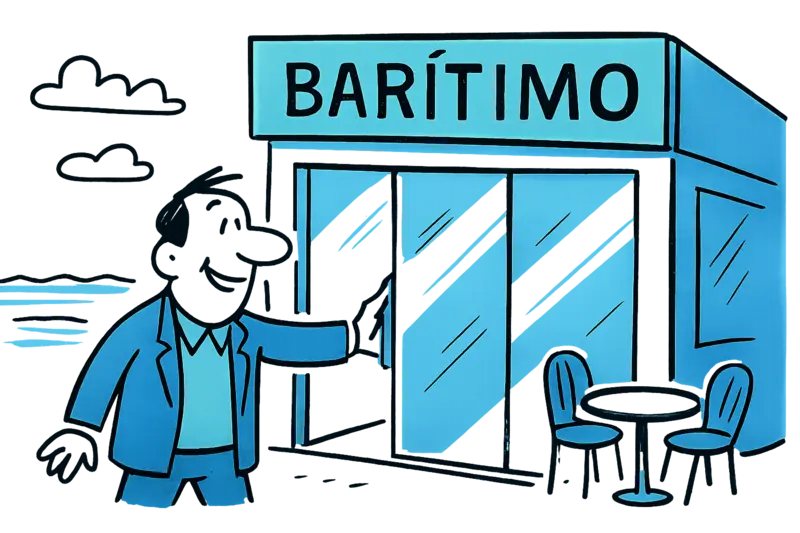
Anyone who strolls along the Paseo Marítimo (near completion) in the morning knows the gap: a vacant venue, covered windows, occasionally a yellowed sign from the former Marítimo. That is set to change. Under the new name Barítimo, the operator plans to reopen in the same location — with 198 guests in mind, fresh Mallorcan dishes on the menu and a comprehensive renovation intended to make the building more modern and energy-efficient.
The figures are concrete: across roughly 527 square meters, the dining room and terraces will be refurbished, while the building's volume and load-bearing structure will remain untouched. A key element of the project is the demolition of the existing parapet wall; in its place a new, highly efficient glass facade will be installed on the existing metal framework. The goal is simple and understandable: to reclaim the sea view from the plaza.
The planning is led by architect José María Riera Erasmo. The venue is to be operated by Marport Sunbeach S.L., a company that belongs to the Beewi Group and Grupomarport. The planned investment is just over one million euros; the lease agreement foresees an eleven-year operating term. It is also reported that the renovation aims to make the building nearly energy-neutral — a delicate but important step on a promenade that is lively with tourists in summer and locals in winter.
For the neighborhood this means a familiar place being revitalized. The former Marítimo was particularly popular with German visitors; Barítimo now intends to offer primarily Mallorcan dishes. That is more than a slogan: when plates feature products from the region, not only guests but also local producers and markets on the island benefit.
A walk on site reveals the potential. Between the Jonquet mills and the berths, cutlery often clinks in the evening, children walk by holding ice cream cones, and cyclists turn from the promenade into the neighborhood. A transparent facade that opens up the sea view can restore atmosphere here — and make the Paseo Marítimo a little more livable.
Why this is good news for Mallorca: long-established venues are part of the urban fabric. Their reopening means not only more places to eat but also an enhancement of public space. A nearly energy-efficient concept fits the growing expectation of sustainability, and a menu focused on Mallorcan cuisine supports local value creation without neglecting tourist demand.
Of course questions remain: How will operations be managed in the high season? What measures will ensure the glass facade is not only attractive but also climate-friendly? How many jobs will actually be created locally? Such details are important but are usually resolved during the planning and construction phases.
The next steps are: obtaining permits, managing construction logistics on a heavily frequented waterfront promenade, and coordinating with the heritage area around the Jonquet mills (a topic explored in Who is Palma's new waterfront boulevard really for?). If all goes smoothly, Palma will soon see a revived venue that adapts its materials, technology and offerings to the times — while returning something familiar (see Palma's new promenade — Opening in mid-November).
At the end there is the image: a mild evening, a glass in hand, the sound of the waves, plates with sobrasada, frit mallorquí and fresh fish. Not a vision for the distant future, but a realistic plan that brings a slice of everyday life back to the promenade. For those who regularly walk by the sea, that is already something to celebrate.
Outlook: Barítimo aims to open soon and to revive a well-known spot with regional cuisine, a transparent facade and modern technology. For residents and visitors alike, it would be a return to the familiar — only with a better sea view.
Frequently asked questions
What is Barítimo and where will it reopen?
What renovations are planned for Barítimo’s building?
How many guests will Barítimo seat and what will the menu focus on?
Who operates Barítimo and how much is being invested?
Will Barítimo be energy-efficient?
When is Barítimo expected to reopen?
What impact will Barítimo have on the Paseo Marítimo and local community?
What planning steps are necessary for Barítimo’s waterfront reopening?
Similar News

At 27 Degrees and Turrón: Why Mallorca Is Selling Christmas Already
Almonds are harvested in August, and by late October turrón is already on the shelves. Key question: Are retailers simpl...

Storm accident involving 'Mein Schiff 3' in Bremerhaven – a wake-up call for ports, including Palma
A severely damaged cruise ship, more than 3,300 people on board and a port that reacted because of a storm: why the coll...

When Balcony Coffee Sits Next to Tent Tarps: Nou Llevant as a Mirror of the Housing Crisis
In the Nou Llevant neighborhood, extreme contrasts become visible: luxury apartments, often inhabited by Germans, sit di...

Iris Berben live in Mallorca: Two opportunities to experience the island's culture
German actress Iris Berben is coming to the Evolution Mallorca International Film Festival. At the opening gala she will...

Serious Fall at the Son Ferriol Roundabout: Who Protects Us from Gaps in Road Design?
A 77-year-old driver fell early Saturday morning with his car from the upper section of a roundabout in Son Ferriol. The...
More to explore
Discover more interesting content

Can Cap de Bou

Townhouse Lleo 72
