
480 Euros Missing at the Petrol Station: How a Find Turned Into a Criminal Complaint
A delivery driver found 480 euros at a petrol station on Avenida de San Fernando, took the money back and was reported for embezzlement. Why do such cases escalate so quickly — and how could they be avoided?
Found money, a quick report: A case from Avenida de San Fernando
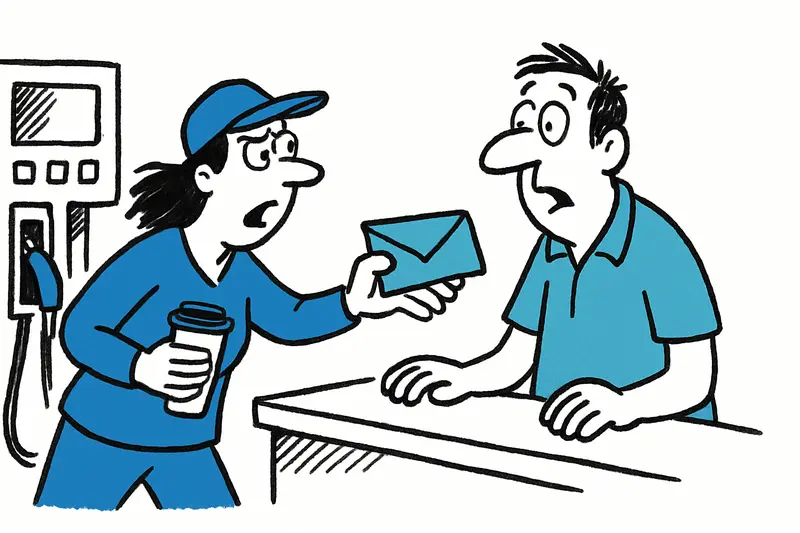
In the early morning, when Avenida de San Fernando still smells of espresso, exhaust and the rustle of delivery boxes, a small but consequential incident occurred: A 28-year-old delivery driver apparently found 480 euros in a petrol station, handed the money to an employee — and took it back hours later. What sounds like a confusing everyday scene ended with a report for embezzlement.
The key question: How does a good deed become a criminal accusation?
The core of the problem lies less in the amount than in the documentation and the timing of the decision. According to the police, surveillance cameras helped to identify the woman beyond doubt, similar to a suspicious incident at a Palma gas station involving an abandoned wallet and surveillance video reported in mid-July. Witnesses describe a brief, hectic scene: paper cups in hand, a few exchanged words, then she was gone. Whether the money was actually meant to be handed in at the counter or whether the woman only took it with her temporarily — these ambiguities are decisive for the further proceedings.
From a legal perspective, the judiciary is now examining whether embezzlement occurred. Decisive is the element of permanently appropriating someone else’s property without the intention of returning it. Important questions are: Was the money formally handed over as lost property? Are there receipts, witnesses or video recordings that document the event unequivocally? Was a misunderstanding the reason for taking it back?
Aspects that are rarely discussed
First: the organizational gaps in small businesses. Many petrol stations do not have a standardized lost-and-found procedure — a note in the office, a short entry on the counter. These gaps have surfaced in other fraud cases, such as the employee allegedly defrauded company in Palma with forged invoices for €150,000. Second: work realities, especially for delivery drivers and temporary staff who act under time pressure and without up-to-date instructions; this reality has led to incidents like the arrests at Palma Airport of two employees detained after alleged thefts. Third: digital traces. Video recordings help the police but can remain ambiguous without accompanying written documentation.
In Palma such scenes are not unusual: morning noise, school buses and delivery vans create constant hustle. If language barriers or embarrassment are added to the mix, poor decisions that carry heavy consequences can easily occur.
Concrete opportunities and pragmatic solutions
Not everything has to end in a criminal report. Some concrete proposals that could improve the handling of found items in Mallorca:
For petrol station owners: A visible lost-and-found container with a logbook (date, time, name), immediately photographing the find and a short protocol when handing it to staff. Clear notices: “Please hand in found items here.”
For employees and delivery personnel: Short training: What to do with found items? Have the phone number of the nearest police station ready, create proof of handover (photo + signature) and stay calm — even when the workday is busy.
For the authorities: Cooperation with chambers of commerce and operators’ associations, standardized reporting channels for smaller amounts and quickly available information leaflets in Spanish, Catalan, English and German.
Why prevention makes sense
A clear procedure protects finders, staff and owners alike. It prevents misunderstandings, preserves livelihoods and reduces the number of reports that often arise because of formal errors or poor documentation. And last but not least, it saves police and court resources.
The police continue to ask for witnesses to come forward regarding the incident on Avenida de San Fernando. Whether the 480 euros will turn up again is unclear — what is certain is that a bit of paper, a photo and a clear procedure could prevent a lot of trouble in the future.
Note: Some employees did not want to be quoted by name; we are following the investigation and will report as soon as new information is available.
Frequently asked questions
What happens in Mallorca if you find money and take it from a petrol station?
What should I do if I find cash at a petrol station in Mallorca?
Why can a found item in Mallorca turn into a theft or embezzlement case?
What evidence is important in a found money dispute in Palma?
How can petrol stations in Mallorca handle lost property better?
Can a delivery driver in Mallorca get into trouble for picking up found money?
What is the best way to report found property in Mallorca?
Why are morning incidents at petrol stations in Palma more likely to be misunderstood?
Similar News

Why the Striped Breams in Cala Pí Should Be a Wake-up Call
Once again bathers in Cala Pí were surrounded while swimming by small, nippy fish — some wounds bled. Time for clear rul...

Daily from New York: How Palma's Air Traffic Is Growing — and What Must Change
United will increase the Newark–Palma service to daily flights in 2027 (Boeing, 231 seats). Strong tourist numbers clash...

When Love Ends in Shards: Destruction in Son Vida and the Questions That Remain
In Son Vida a relationship dispute escalated: a woman destroyed furniture in a luxury villa, later pressed a panic butto...

Who Bears the Burden? Mallorca Between Tenant Protection and Landlord Fears
Madrid's new housing decrees strengthen tenant rights — but on Mallorca concern is growing: will the law drive small lan...
On the Edge: What Mallorca's Airport Loses If a Major Low-Cost Carrier Falters
The company that operates numerous connections from Palma to France and domestically is negotiating with creditors to re...
More to explore
Discover more interesting content

Can Cap de Bou

Townhouse Lleo 72
