
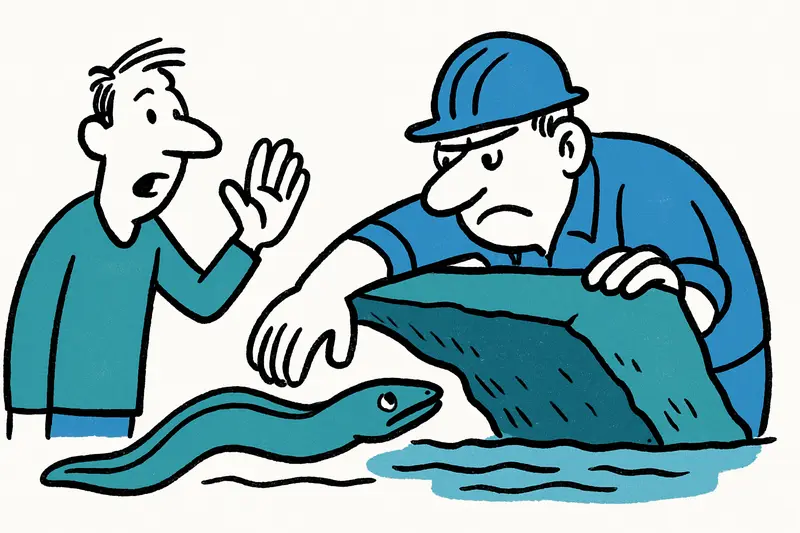
6,000-kilometer journey – and now threatened: what Mallorca's eels really lack
6,000-kilometer journey – and now threatened: what Mallorca's eels really lack
European eels swim from the Sargasso Sea into Mallorca's wetlands. But pollution, salinization and gaps in protection are putting the animals at risk. A reality check with concrete measures for the island.
6,000-kilometer journey – and now threatened: what Mallorca's eels really lack
Guiding question: How is an animal supposed to survive after a 6,000-kilometer crossing of the sea if its home waters on Mallorca are breaking down in many places?
Every spring tiny, translucent glass eels drift from the Atlantic into the island's bays and freshwater channels. They end up in ponds, canals and the reeds of S'Albufera, grow there over decades and, at the end of their lives, set out once more on the long return to the Sargasso Sea. This life story sounds like a natural miracle. In reality, however, it ends early for many animals: polluted water (see Can you still safely swim in the sea around Mallorca? A look at water quality in 2025), rising salinity and man-made barriers are causing numbers to decline.
Briefly on the situation: the Balearics have had a ban on eel fishing for three years now – an important local signal. But bans alone are not a protective wall. International research bodies do recommend broader measures, yet the problems threatening eels along the coast and inland are often tackled only piecemeal on the island.
Critical analysis
First point: water quality. Fertilizers, nitrate runoff from agriculture and inadequate wastewater treatment alter the chemical composition of many tributaries. That affects young eels particularly severely. Second point: salinization. Excessive groundwater extraction, combined with hotter, drier summers, allows seawater to push further inland locally (see Sea off Mallorca: When the Underwater Meadow Disappears). That changes ponds and freshwater zones and reduces suitable spawning and nursery areas. Third point: habitat fragmentation. Dams, locks and poorly passable water structures prevent natural migration. Fourth: illegal trade in glass eels and uncontrolled fishing outside island waters remain a risk, as do large-scale changes in ocean currents driven by climate change.
What is missing from the public debate
There is a lot of talk about fishing bans and international declarations of intent. Much less visible are concrete measures on municipal drinking water and agricultural policy that directly affect eels. Also underexposed are practical solutions for the small communities around S'Albufera – improved sewage technology, renaturation of small tributaries, sensible groundwater extraction plans. And finally: involving fishers and residents in monitoring and protection projects, instead of only sanctioning them.
Everyday scene from the island
Early in the morning on the edge of S'Albufera it smells of wet reeds and the sea. An old fisherman pushes his boat into the water, children on their way to school pause to watch the first wading birds. Tractors are parked along the field paths; the fields behind are still damp from irrigation. This mixture of nature, agriculture and recreation is typical – and it is precisely here that the glass eel's fate is decided.
Concrete solution approaches
- Better wastewater treatment in coastal towns: municipal investments in modern treatment plants and decentralized solutions for small settlements.
- Measures against salinization: clearer rules on groundwater extraction, protection of freshwater lenses and targeted replenishment measures in dry periods.
- Renaturation of tributaries: creation or restoration of shallow, shallow-water zones, reed belts and floodplains as nursery areas for glass eels.
- Restore connectivity: fish passes at locks and small weirs, simple ramps for migratory fish at canal crossings.
- Local monitoring networks: volunteers, schools and fishers report glass eel arrivals; data support research and targeted protection measures.
- Controls and international cooperation: stepped-up monitoring of the glass eel trade and Mallorca’s participation in wider protection initiatives.
Punchy conclusion
The eel is not a remote sea creature but a barometer for the health of our coastal landscapes. The fishing ban was an important signal – now tangible steps are needed on the ground: clean water, connected waterways and policies that integrate agriculture, urban planning and nature conservation. If we manage that, we will not only save a migratory fish but preserve a piece of island character for future generations.
Frequently asked questions
Why are eels in Mallorca declining?
How do eels live in Mallorca during their life cycle?
Can you still swim safely in the sea around Mallorca if water quality is poor?
What is salinization and why does it matter in Mallorca?
Why is S'Albufera important for Mallorca's eels?
What is being done to protect eels in Mallorca?
What should Mallorca do to restore streams and canals for wildlife?
Can residents in Mallorca help monitor eel populations?
Similar News

Carriages Without Horses: Palma Plans E-Carriages – a Reality Check
Palma plans to switch to electric carriages in 2027. The prototype was shown near the cathedral. What is the technology ...

Record season, empty coffers: Who really benefits from the tourism boom?
Full hotels and more flights: the numbers sound impressive — yet many locals feel no benefit. A reality check with an ev...

Pool ordered for €46,000 – €23,000 paid, no work carried out: A fraud case in Palma
A homeowner in Palma transferred €23,000 for the construction of a pool. Weeks later it emerged that no building applica...

Summer greetings from the Pitiusas island: Gottschalk and Krüger enjoy the sun on Ibiza
A friendly photo of Thomas Gottschalk and Mike Krüger on Ibiza evokes memories of their shared film years and shows that...

Occupied in a Few Days: When Property in Mallorca Turns into a Dispute
Six young men were arrested in Palma after homeowners returned and could no longer open their own door. A case that rais...
More to explore
Discover more interesting content

Can Cap de Bou

Townhouse Lleo 72
