
Aborted Landing Approach in Palma: When Does Wind Become the Limit?
Aborted Landing Approach in Palma: When Does Wind Become the Limit?
In hurricane-force gusts a Eurowings jet at Palma airport had to go around just before touchdown. A risky situation — and an opportunity to scrutinize safety rules in Mallorca more closely.
Aborted Landing Approach in Palma: When Does Wind Become the Limit?
Key question: Why was the landing attempted so close, instead of diverting early?
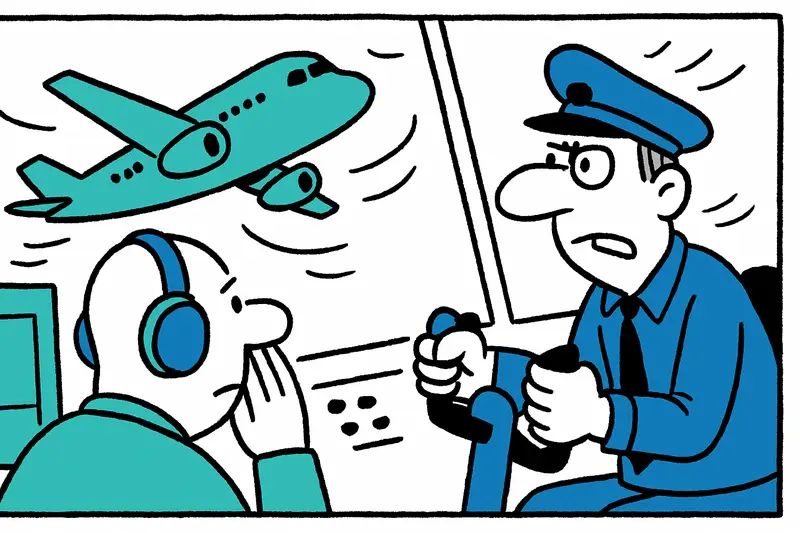
On Thursday afternoon a Eurowings flight caused a Heart-stopping moment over Son Sant Joan: Why the Eurowings plane climbed again during stormy weather. Just before touchdown the aircraft noticeably rolled; the pilots decided to go around. The maneuver is a routine safety measure, but the images — a jet tilting to the right as if barely missing the runway — remain striking. In Mallorca, where winter winds often blow from the south or northwest across the bay, the debate returns: At what point is a landing too risky?
Brief facts, as known from observations and official procedures: Storm system Nils had produced strong gusts, with some measurements reaching hurricane-gust levels, and other services were affected, for example Wind forces Palma–Bilbao flight to land in Barcelona: What travelers need to know. Air traffic controllers released footage showing an aborted landing attempt. Media reports indicate the jet came from Germany and was later diverted to the Spanish mainland. On the ground the bad weather led to fallen trees, road closures and disruptions at ports — that is the broader backdrop.
Critical analysis: risk, decision-making and transparency
A go-around is technically correct and shows that pilots and crew kept the situation under control. At the same time the incident raises questions: Were the current wind values along the approach path sufficiently considered in the decision? How clear are the thresholds at which a landing maneuver is aborted or a flight is diverted early? Airports have so-called crosswind limits that depend on aircraft type and airline rules. These limits are technically justified but are hardly comprehensible to outsiders — and are often not communicated to passengers.
A particular problem in Mallorca is the airport's location: it is close to the sea, and wind shear and direction changes along the coast are not rare in winter. Visible images of a crooked jet reinforce the impression that an unnecessary risk may have been taken, even if the crew ultimately reacted correctly. The decision to attempt a landing instead of diverting early can have many reasons: fuel situation, slot congestion, short-term forecast changes or the pilots' on-site assessment. However, this operational detail usually remains behind closed doors.
What is missing from public discourse
There is a lack of clear, locally accessible information about: 1) the specific thresholds for crosswind and lateral wind at Palma airport; 2) the decision-making paths between crew, airline and air traffic control in extreme gusts; 3) transparent explanations why some flights attempt to land despite strong gusts while others are diverted early. The people of Palma and many travelers mostly receive shortened messages: 'landing aborted' or 'flight diverted'. Technical and organizational backgrounds remain invisible.
Everyday scene in Palma
On Avinguda Gabriel Roca the wind whistles through the palm trees, and canvas awnings rattle on the Paseo Marítimo. At Terminal 1 people sit in thick jackets with suitcases scattered everywhere; a child draws small circles on the window with a finger. An older man from the inland shakes his head: 'I wouldn't have allowed landing in that wind.' A young mother asks the information desk about an alternative flight and receives only a vague answer. Sometimes travelers are rerouted long distances, as in a case where a delayed Palma–Berlin flight landed in Hanover and continued by bus (Delayed Mallorca–Berlin Flight: Landing in Hanover, Continued by Bus). Scenes like this repeat in the cafés of Portixol and on Platja de Palma — the weather becomes a daily unrest.
Concrete solutions
1) Better, publicly accessible wind data along the approach routes: a minimal dashboard solution by the airport authority could display live measurements and threshold visualizations. 2) Standardized information duties: airlines could inform passengers more clearly about decision reasons — for example 'diverted due to crosswind above X km/h' — without revealing business secrets. 3) Training and simulation: more frequent crosswind training for pilots, especially for runways with coastal, variable wind conditions. 4) Infrastructure review: examine whether additional wind sensors along the runways are needed, or whether structural measures (windbreaks outside critical zones) make sense — without endangering airflow. 5) Community dialogue: regular transparency workshops by the airport authority, airlines and consumer protection groups so local expectations and operational limits can meet.
Concise conclusion
The aborted landing was clear proof that safety mechanisms work — a go-around is good news when it happens early enough. The real construction site lies elsewhere: in the comprehensibility of decisions and in communication between aviation and the public. In Mallorca, where wind and sea are part of everyday life, we should not only marvel at how a jet dances in gusts but also demand that the rules that allow or prevent such dances become more understandable for everyone.
Frequently asked questions
Why do planes sometimes abort a landing at Palma airport?
How strong can wind be before a flight can’t land in Mallorca?
Is it safe to fly into Palma during stormy weather?
What should I do if my flight to Mallorca is diverted because of wind?
Why is Palma airport more affected by wind in winter?
What does a go-around mean at Palma airport?
Can strong wind also affect ports and roads in Mallorca?
What information do passengers usually get after a wind diversion in Palma?
Similar News

Rental Car Theft in El Arenal: What This Incident Reveals About Our Gaps
A teenager steals a running rental car in El Arenal, flees on foot, climbs over walls and is caught by the Guardia Civil...

Red Rope in Palma's Library: What Helps Against Selfie Tourism — and What's Missing
Palma's city library cordoned off an area with a red rope to keep selfie tourism away from reading and working activitie...

Fort San Carlos: Museum, Harbor Dispute — and a Conflict That Demands Answers
The military museum at Fort San Carlos sits right on Palma's harbor, with unexpectedly quiet rooms filled with cannons a...

Old Town Under Pressure: When a Doorway Becomes a Sleeping and Shower Place
For months a woman has been living with a parasol, a clothes rack and personal belongings next to the social welfare off...

When Shopping Weighs Heavier: Mallorca Demands a Tax Pause on Food and Fuel
Rising prices are putting pressure on households and agriculture. The Balearic Islands are calling for temporary tax rel...
More to explore
Discover more interesting content

Can Cap de Bou

Townhouse Lleo 72
