
After Adamuz: Train strike threatens Mallorca - how safe is the network really?
After Adamuz: Train strike threatens Mallorca - how safe is the network really?
SFM employees are preparing partial work stoppages. Reasons cited: alleged visibility problems in driver cabs, dissatisfaction with speed and quality decisions, and a sense of neglected prevention. Are the safety issues resolved or is a larger problem simmering beneath the surface?
After Adamuz: Train strike threatens Mallorca - how safe is the network really?
SFM employees vote to prepare partial work stoppages over concerns about visibility and standards
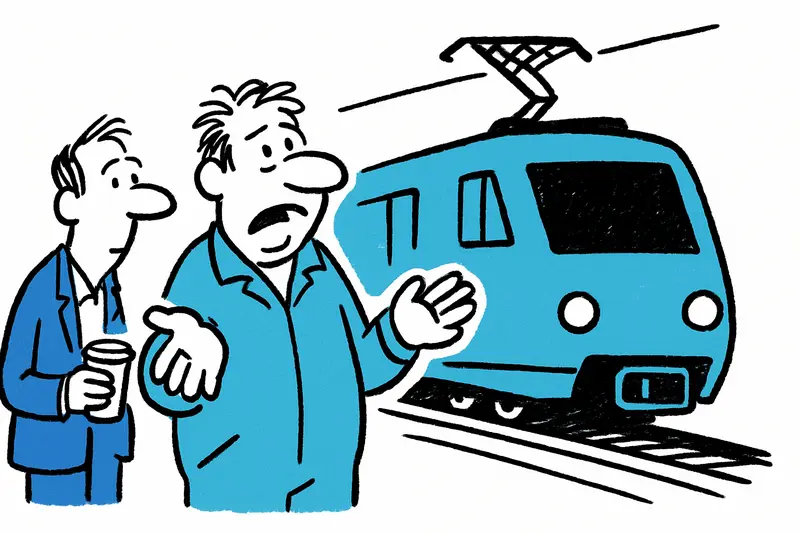
A lot is happening on a gray January morning at the Palma intermodal station: commuters with coffee cups, the clatter of an SFM locomotive, snippets of conversation about delayed trains. Between the usual annoyances something else is now in the air – the workforce has voted by a majority to prepare partial strikes. The earliest possible timeframe is considered the second week of February, because statutory deadlines must be met.
Key question: Is the response so far from the operator and the government sufficient to allay serious safety concerns, or is there a risk of a spiral of mistrust and industrial action?
The voices from the trains and depots are clear: the main criticism is the restricted visibility from driver cabs in bad weather, fog and abrupt changes in light. External cameras, drivers say, provide hardly usable images in such situations. Complaints were reportedly filed with the labor inspectorate as early as June. The workforce sees this problem as symptomatic of a deeper lack of prevention.
The company has implemented isolated measures – for example additional mirrors at certain stops. The regional government points to investments in maintenance, infrastructure and the ERTMS train control system. Discussions about staffing levels and training have been raised elsewhere, for example in More Staff for Mallorca's Trains: Is That Really Enough?.
Critical analysis: both can be true at the same time. Investments and modern train control provide a foundation. However, they do not automatically replace the daily working conditions in driver cabs and rolling stock. Cameras, software updates, speed rules: this is technology that must be maintained. If visibility aids and user interfaces fail in certain weather conditions, these are systemic problems – not just construction sites that disappear with a one-off cash injection.
Another point of contention is the reduction of maximum speed on certain sections with new multiple units and the associated question of internal quality standards. Employees report that requirements have been relaxed. In a safety-relevant operation, such signals act like interference. Mistrust grows when decisions are poorly explained or when staff feel their practical knowledge is not taken seriously. Negotiation failures in other transport sectors illustrate similar dynamics, as reported in Bus strike in Mallorca: Why talks keep failing — and what might come next.
What is often missing in the public debate: transparent data and independent inspection reports on the concrete deficits. There are many statements – political affirmations, operational explanations, union accusations. But only a few verifiable, technically prepared pieces of information that show how cameras perform under defined conditions, how speed reductions are justified and what consequences changes have for operations and safety. Concrete examples of alleged equipment neglect in other services have been highlighted in reporting such as Alarm among Uber drivers in Mallorca: Safety apparently put at risk.
Everyday scene: On Plaça d'Espanya an elderly woman waits for the train to Sóller. She is afraid of a strike because her doctor's appointment is hard to reschedule. Next to her a professional driver shrugs in a diesel-scented overall – he worries about his colleagues, not just his travel time. Such close-up images show: safety debates go beyond numbers. They concern people who want to arrive on time and safely.
Concrete solutions that could be started immediately:
1) Independent visibility inspection: A technical assessment by external experts testing camera and sight fields in rain, fog and backlight and formulating concrete minimum requirements.
2) Transparency drive: Publication of an inspection plan and regular status reports – not only internally but for the public. The more precise the arguments, the less room for speculation.
3) Dialogue with practical involvement: Setting up a round table with drivers, maintenance staff, technicians and ministry representatives. Changes to operating rules should be accompanied by trial phases.
4) Immediate measures for critical cases: Mobile visibility aids, temporary speed adjustments with a clear duration and defined evaluation, mandatory checklists before departure in poor visibility.
These proposals are not cure-alls. They aim at quickly implementable, verifiable steps that can build trust. A strike would be a harsh response – for commuters, for tourist season planners, for the employees themselves.
Conclusion: Safety cannot be created with lip service alone. The government and the company should allow technical inspections and publish the results. Employees need to feel that their concerns are not only recorded but are being taken seriously. Otherwise the situation remains tense: a threatened labor dispute would then be less an expression of radicalism than the result of a prolonged loss of trust.
Frequently asked questions
Is Mallorca’s train network still safe if staff are threatening partial strikes?
Why are Mallorca train staff planning partial strikes?
What safety issues have Mallorca train workers raised?
Could a Mallorca train strike start soon?
What should commuters in Palma do if Mallorca trains are delayed or disrupted?
What has the Mallorca government done about the train safety complaints?
Is the Sóller train in Mallorca affected by the current rail dispute?
What is the best time to travel by train in Mallorca if there may be strike action?
Similar News
More water than last year: Mallorca's reservoirs breathe easier
September rain refilled the Tramuntana's reserves: overall fill around 35 percent, Cúber at 40.42 percent, Gorg Blau at ...
Three Luxury Hotels in Banyalbufar: Lots of Money, Many Questions
A Danish investor plans three exclusive accommodations in Banyalbufar — including the historic Son Valentí. The announce...
2.1 tonnes of cocaine on sailing yacht off Spain's coast – a reality check for the coastguard
A 14-metre yacht was seized with 2.1 tonnes of cocaine. Who monitors the ports, how does the international hunt succeed ...

Heat Bonus in Mallorca: 100 Euros Extra for Outdoor Staff at MarSenses
MarSenses pays employees who worked outdoors in August an extra €100 as recognition. Lighter uniforms, reduced hours for...
Renovating in Mallorca: What You Really Can Do Without Neighbour Consent
Many think they can do whatever they want in their apartment. That's partly true — but only as long as structural elemen...
More to explore
Discover more interesting content

Can Cap de Bou

Townhouse Lleo 72
