
After Ceuta: Intelligence Activities in Mallorca – A Reality Check
After Ceuta: Intelligence Activities in Mallorca – A Reality Check
The CNI, National Police and Guardia Civil have intensified their surveillance in Mallorca. What does this mean for island society, for freedom of religion and for the rights of Maghrebi communities? A critical look.
After Ceuta: Intelligence Activities in Mallorca – A Reality Check
Key question
Where does intensified surveillance end, and when does it become a burden for communities already struggling to settle in everyday life?
In recent weeks, the Spanish intelligence service CNI as well as the National Police and Guardia Civil have increased their presence in Mallorca, a trend underlined by early morning raids in Palma, Manacor and Llucmajor. The reason is the events at the Ceuta border and the increased boat arrivals from Algeria, which have alarmed security authorities. According to internal assessments, state services from Morocco could be represented on the island with around a dozen informants; a slightly smaller number is suspected from Algeria. These people are said to mainly collect information, maintain contacts and pass on details about diaspora networks.
This is the sober situation. What is missing, however, is a public debate about two simple things: proportionality and oversight. Surveillance is not an end in itself. It has real consequences for life, work and coexistence here — from Pere Garau to sa Pobla.
Critical analysis
Security authorities name several observation fields: economic flows (money transfers to countries of origin), political activities within Maghrebi communities and possible influence networks. There are around fifty Muslim places of worship in the Balearic Islands — they are also in the focus. In Palma and in places like Inca, Felanitx, Muro or sa Pobla, intensified investigative activity was reported according to internal assessments, and this was reflected in a major raid that led to 13 arrests and 18 searches.
That sounds plausible when it comes to clarifying criminal structures. It becomes problematic when "collecting information" leads to the persistent surveillance of a population group. The line between intelligence precaution and stigmatization is thin. Uncontrolled queries, indiscriminate observations at places of worship or routine eavesdropping on phone conversations do not only affect those who actually pass on information — they create mistrust, hinder integration and can push people into precarious situations.
The question of the legal framework also remains central. Intelligence services often operate covertly; but in a democracy such measures require oversight by courts or parliamentary bodies. Who checks whether the surveillance is actually targeted? Who guarantees that collected data will not be used for other purposes?
What is missing in the public discourse
The voice of those affected is missing. In many neighborhoods you hear more in everyday life: at the bakery in Pere Garau, where neighbors talk over a cup of café con leche about money transfers; at the weekly market, where traders from several countries stand side by side; in phone shops where SIM cards are changed. These small everyday scenes reveal how intertwined transnational ties are — and how quickly whole communities can fall under general suspicion.
There is also often a lack of discussion about alternatives to blanket surveillance: better cross-border cooperation on tax and financial issues, targeted investigations when there is concrete suspicion, stronger controls on transfers through banks instead of informal channels.
Everyday scene from Palma
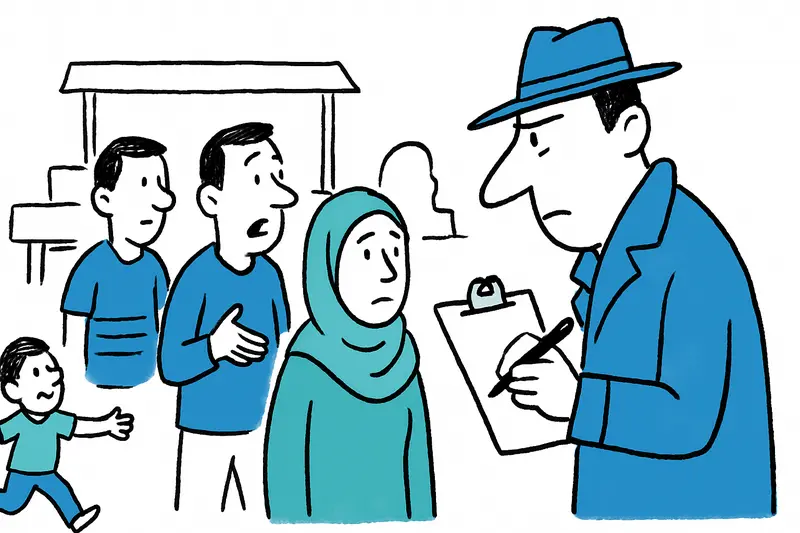
A Saturday morning in Pere Garau: vendors call out, a scooter stutters, a prayer gathering disperses, children run between fruit stalls. At the edge, an unmarked police car is parked unobtrusively, officers with notepads. No one wants unnecessary trouble, but in conversations one senses a quiet uncertainty: "Why are they looking more closely now?" asks an older woman who has sold vegetables for years. Such questions are justified and show how surveillance measures arrive locally.
Concrete solutions
- Clear legal limits and judicial authorization for interventions that affect fundamental rights: no indiscriminate surveillance without a court order; - Transparency reports from security agencies to parliament about the scope and purpose of measures (anonymized figures are often sufficient); - Local liaisons: Community Liaison Officers who mediate between authorities and migrant organizations, on equal terms and in several languages; - Focus financial supervision: cooperation with banks and financial supervisory authorities to identify suspicious large transfers, instead of blanket monitoring of private transactions; - Independent oversight: data protection and human rights audits by external bodies.
Pithy conclusion
The security situation is real, as shown by the response of the CNI, National Police and Guardia Civil. But security must not be used to justify general suspicion. Mallorca is an island with many connections to the world — that is both strength and challenge. Those who want security here should rely on targeted investigations, rule-of-law oversight and dialogue, not indiscriminate surveillance of entire communities.
Frequently asked questions
When is the best time to visit Mallorca for sunny days and outdoor activities?
Do I need a car to explore Mallorca, or can I rely on public transport?
What should I pack for a Mallorca vacation?
Is Mallorca safe to swim at its beaches?
What are the highlights of Palma de Mallorca for a first-time visitor?
Is the Serra de Tramuntana worth a day trip from Mallorca’s coast?
What makes Alcúdia worth a visit in Mallorca?
Is Sóller a good base for exploring Mallorca’s northwest?
Similar News
Autumn approaches on the island: Still sun, but a rain band will soon bring relief
The last warm days on Mallorca are still here – around 30°C by day, just under 20°C at night. According to AEMET, a rain...
TV documentary on the Mediterranean: How threatened is Mallorca really?
A new television documentary follows marine research off Mallorca and shows: sea temperatures are rising, and farmers ar...
An evening that resonates: Hans Theessink in the Claustre of Llucmajor
With a guitar, dry humour and a voice that carries stories: Hans Theessink turned the Claustre de Sant Bonaventura in Ll...

Reality Check: Will Mallorca Become the Weather Laboratory of the Mediterranean?
A new TV documentary has the Mediterranean off Mallorca in its sights. What research shows — and what we on the coast st...

Cardiac arrest in the Tramuntana: Why a rescue often depends on chance
A 47-year-old cyclist suffered a cardiovascular arrest near Lluc. What went well, what is missing in the mountains — and...
More to explore
Discover more interesting content

Boat Tour with BBQ along Es Trenc Beach

Private transfer from Mallorca Airport (PMI) to Pollensa
