
With Drones over the Mediterranean: Palma's Voices from the Gaza Flotilla
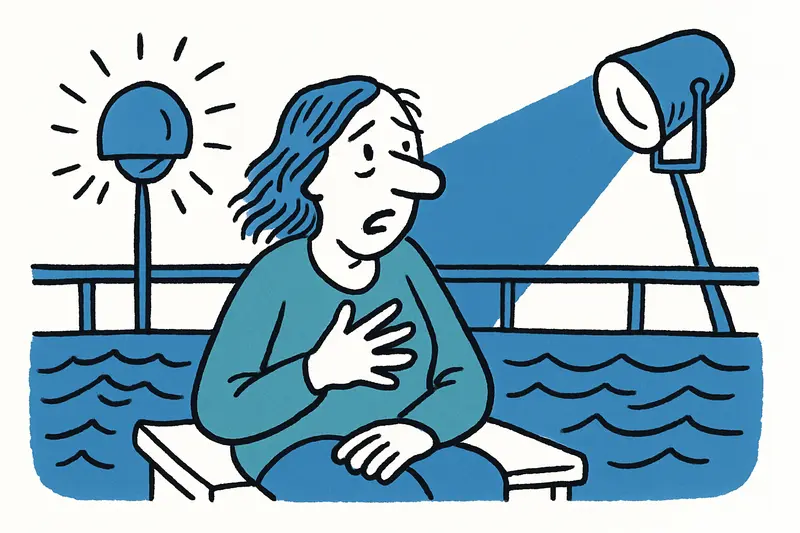
A woman from Palma films at night from the deck: "Red Alert." On Mallorca concern has turned into debate — not only about politics, but about protection, liability and the psychological consequences for volunteers who take small boats into high-risk areas.
In the middle of the sea: Red Alert and the voices from Palma
It is shortly after midnight in Portixol. Streetlights cast a pale glow over the bay, a phone flickers, and a video circulates through WhatsApp groups: a woman from Palma, the deck behind her dimly lit, her voice muffled by the wind. "Red Alert," she says — alert despite tiredness. You can hear the sea hitting the hull, somewhere a dull impact. For many on the island these images are no longer foreign: they are neighbors, friends, people from the harbor club who set out to bring aid. The clip was reported in Alarma roja en el mar: una mallorquina relata la flotilla hacia Gaza.
The central question
How does a democratic government protect citizens who engage in humanitarian efforts when they enter a highly risky international conflict zone? This guiding question has been circulating for days in cafes, workshops and the fish market in Santa Catalina. In the bars you hear it between the clink of espresso cups and conversations about the next Tramuntana storm.
What really happens on board — more than headlines
Reports and recordings paint a picture that goes beyond protest postcards: repeated overflights by unidentified drones, nighttime explosions nearby, constantly monitored and disrupted communications. Volunteers speak of psychological warfare — sleep deprivation, uncertainty, deliberate intimidation. Coffee goes cold, orders are given in whispers, but hope still surfaces repeatedly: the hope of at least getting a few boxes of medicine or baby food on board.
What is barely noticed
Public debate quickly turns to grand gestures: warships, appeals, statements. What is neglected are the practical safeguards for private volunteers: How are they insured? Who pays for medical evacuation? Is there psychological aftercare when night watches leave trauma behind? On Mallorca parents, partners and children sit in Port de Sóller or Son Espanyol and wait — often without a clear answer as to who would intervene in an emergency.
Politics, the navy and the gap between announcement and practice
Italy sent a frigate, Spain a warship — officially to be able to intervene at sea and to protect international law. But people on board report a life‑saving distance: presence alone is not enough. Protection needs defined rules of engagement, graduated escalation plans and, above all, transparent communication with relatives on land. Such rules are missing or not practicably formulated for volunteer actions. Local reporting on Arrests at Sea: How Palma Grapples with the Detention of Three Mallorcan Women has amplified those concerns.
Concrete risks and a new pattern of endangerment
The eastern Mediterranean has changed: networked drones, electronic jamming systems, modern reconnaissance technology. For civilian vessels this means new, subtle threats — not only direct hits, but intimidation through nighttime overflights or targeted communication disruptions. The flotilla operates in a legal gray area: neither a regular search-and-rescue zone nor a clearly defined humanitarian corridor under the United Nations Convention on the Law of the Sea (UNCLOS) text. This mix of legal and technical uncertainty increases the risk.
What matters locally: Why Mallorca is affected
Connections on the island are personal. Here people recognize the sounds of a night watch in the harbor, the scent of seaweed after a Tramuntana storm and the silent worry of families waiting for a message on a Saturday evening. Boat owners from Port de Sóller call volunteers, cafes in Palma light up when new images arrive. That makes the issue immediate rather than abstract: these are people from the neighborhood putting themselves in danger. Recent coverage of Detenciones en alta mar: Tres mallorquinas detenidas en Israel — Palma entre preocupación y protesta underscores that fear.
Proposals instead of powerlessness: What would help now
The debate needs concrete answers. Suggestions repeatedly mentioned here on the island and on board include: a binding state deployment plan to accompany and evacuate civilian missions; a legally anchored obligation to inform relatives in the ports; financial protection through special insurance or emergency funds; EU Civil Protection Mechanism coordination for humanitarian corridors and independent maritime observer missions; mandatory psychological aftercare for participating volunteers. Technically, better satellite communications, redundant emergency signaling systems and clearly defined medical evacuation plans would be essential.
A realistic outlook
The flotilla remains risky, but it also reveals something else: when civilian courage meets military reality, the gaps in democratic protection mechanisms become visible. Mallorca cannot just watch passively. The island has the opportunity to make the discussion more factual: away from symbolic appeals and toward concrete rules, protective measures and chains of responsibility. Authorities on the island should, not least, create clear information channels so relatives are not left in the dark.
And until improvements arrive, the image remains of a cool night: beams of searchlights, tired voices that nevertheless carry on. In Palma people pull their jackets tighter, listen to the sea and ask resolutely: who ensures that commitment is not punished by underestimation?
Frequently asked questions
Why are people in Mallorca talking about the Gaza flotilla?
What risks do civilian boats face in the eastern Mediterranean during humanitarian missions?
How should Mallorca families prepare if a relative joins a high-risk aid mission?
What kind of protection do civilian volunteers need at sea?
What is happening in Portixol when people from Palma follow the flotilla?
Why is Santa Catalina part of the conversation about the flotilla in Mallorca?
What happens if a Mallorcan volunteer is detained at sea?
What support should be available after a dangerous humanitarian mission?
Similar News

Eggs in Mallorca: What the Wrong Size Grade Really Means
Price isn’t the only thing that matters when buying eggs: carton size labels follow fixed rules. Here’s what shoppers ca...
Groceries in central Palma: Carrefour Express opens on Jaume III
There’s a new place for a quick shop on Jaume III: Carrefour Express offers groceries and everyday essentials, including...
Palma on the Jersey: Germania Mallorca Sells New Away Kit
White with dark blue accents and Palma Cathedral on the chest: FC Germania Mallorca is offering its new away kit for €49...
Palma Cathedral as a Film Set: When AI Advertising Makes Fiction Look Real
An Instagram Reel makes a giant film poster appear on Palma Cathedral. The image is artificially generated and not label...
New Carrefour Express Brings Everyday Shopping to Palma’s Jaume III
A Carrefour Express has opened on Jaume III. The small store offers groceries and everyday essentials—and is open on Sun...
More to explore
Discover more interesting content

Can Cap de Bou

Townhouse Lleo 72
