
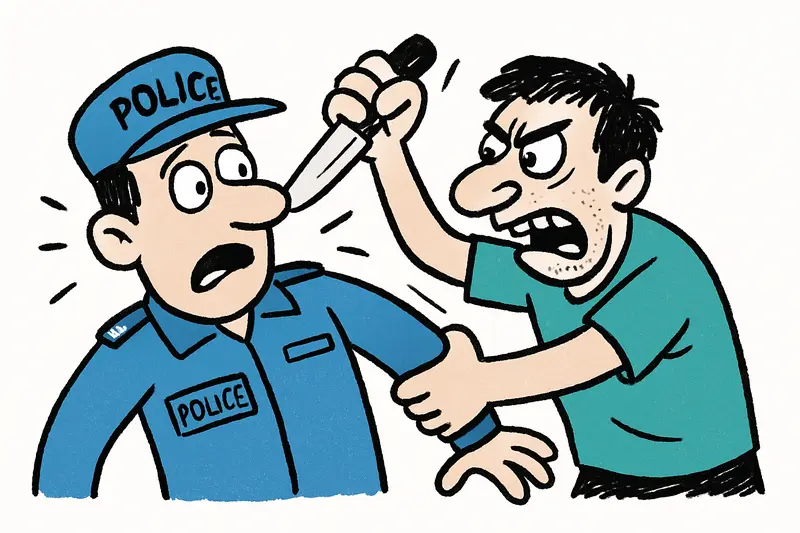
Alcudia: Knife attack during alcohol check - police officer seriously injured
A nighttime alcohol checkpoint in Alcudia ended in a knife attack: an officer was seriously wounded in the arm. Why do such checks escalate, and what needs to change?
Checkpoint on Carrer de Corneli Atic: A routine operation ends in blood
It was shortly after 4 a.m. on a windless morning in Alcúdia when the normally quiet Carrer de Corneli Atic was broken by sirens and the rattle of an ambulance. At a small roundabout police officers had set up a routine alcohol checkpoint. Three occupants sat in a car, giving a cooperative impression — until the breathalyzer test showed 0.80 per mille. For local coverage of the events see Mallorca Magic report on the Alcúdia checkpoint attack.
The scene initially sounded familiar: ID check, fine form, a brief explanation of the consequences. But something tipped. According to officers on the scene, the 34-year-old suddenly pulled a knife; a scuffle ensued in which the officer tried to dodge a stab to the neck. The blade instead struck the arm. Colleagues subdued the attacker, put him in handcuffs, and emergency services treated the injured officer — a tourniquet had to be applied, and later in hospital the wound was closed with around a dozen stitches.
Key question: Why do seemingly routine checks escalate?
This question is now central: why does a routine check become a potentially life-threatening attack? At first glance, alcohol and sudden unpredictable behavior play a role. But that does not explain everything. The investigation of causes must go further: was the checkpoint optimally secured? Were preventive measures such as visual contact with the other passengers, choice of location, and the presence of additional officers adequately considered? How do the early hour, dim street lighting, and the tight space of the roundabout affect reaction options?
Incidents like this show that the risks for officers are often underestimated. The public sees stops as an annoying formality. For police officers they are potentially dangerous encounters with unknown variables: alcohol, stress, hidden weapons.
Aspects that receive little attention
First: the location of the checkpoint. A roundabout is not ideal; it offers little room to exit and maneuver. Well-lit, spacious checkpoint zones reduce stress on both sides. Second: the role of passengers. In this case family members were in the car — their possible involvement or shock plays a role in the assessment, but is often only examined later. Third: medical first aid on site. That a tourniquet had to be applied shows how quickly a police action can become a medical emergency. Do patrols have sufficient emergency equipment and training? For practical information on stopping severe bleeding see first-aid guidance for severe bleeding from the Red Cross.
Finally: prevention work. Public awareness campaigns about the dangers of drunk driving and clear information about the consequences are important. But if checkpoints are perceived as treacherous or intrusive, the likelihood of aggressive reactions increases.
Concrete opportunities and solutions
What can be improved concretely? A few proposals that could quickly have an effect in practice:
1. Choice of location and lighting: Checkpoints should be set up at the safest, best-lit spots possible — not in the middle of roundabouts. This improves visibility and reaction space.
2. Minimum staffing and backup: At night, alcohol checks should always be conducted with at least two officers per stopped vehicle and timely backup must be guaranteed. Rapid support within minutes is crucial.
3. Early weapons check: Short, standardized procedures to assess passengers and potential weapon risks can reduce the element of surprise.
4. Medical equipment and training: Tourniquets, pressure dressings, and first-aid training for units at particular risk must be standard.
5. Transparency and communication: Inform citizens why checks take place and how they are conducted. Trust reduces escalation.
Aftermath in the neighborhood
Residents reported windows thrown open, neighbors briefly putting on their headgear and listening at their doorsteps — sirens, the click of handcuffs, the low murmur in the early morning. Such images linger. Not only because a colleague was injured, but because the idea that a simple breath test can end in life-threatening violence affects people's sense of security.
The investigations by the Guardia Civil are ongoing; the suspect was arrested and will be brought before a judge. For the people of Alcúdia the question remains: how often must we see routine and risk so close together — and what concrete steps will follow to make sure it does not happen again?
Frequently asked questions
What should drivers in Mallorca expect at a late-night alcohol checkpoint?
Why do police controls sometimes turn dangerous in Mallorca?
Is it safe to drive after drinking in Mallorca?
What should passengers do if police stop a car in Mallorca?
Why is a roundabout a difficult place for a police checkpoint in Mallorca?
What first aid is important if someone is seriously cut during an attack?
What happened in Alcúdia during the police alcohol checkpoint?
How do police in Alcúdia try to prevent violence during night checks?
Similar News
After Being Admitted to Hospital Again: Heinz Hoenig and the Questions We Should Ask in Mallorca
Long-time Mallorca resident Heinz Hoenig was admitted to hospital again. A clear “what next?” is missing from the covera...
Yellow Alert: Is Mallorca Prepared for the Next Rain Band?
Aemet has issued a yellow alert for the south, southwest and the island's interior. Thunderstorms and heavy rain are for...
Kegel brothers trial postponed: Why Mallorca must wait for a verdict
The trial of 13 German holidaymakers will not begin until May 2028. The long wait raises questions — for victims, defend...
Chaos on Palma's Runway: Why the Summer at the Airport Was So Disrupted
This summer laid bare where Palma airport is faltering: only just over half of departures were on time and seven percent...
Cocaine Offer on Ham Street: Why the Open Trade Should Ring Alarm Bells
In the middle of Pare Bartomeu Salvà a tourist was offered a packet of cocaine as part of a sunglasses deal. A short int...
More to explore
Discover more interesting content

Can Cap de Bou

Townhouse Lleo 72
