
Giga Yacht in Puerto Portals: Glamour and Open Questions – A Reality Check on the Luminance
Giga Yacht in Puerto Portals: Glamour and Open Questions – A Reality Check on the Luminance
The 138-metre M/Y Luminance is anchored off Puerto Portals: pure luxury, but what does that mean for Mallorca — ecologically, legally and for everyday life in the harbour?
Giga Yacht in Puerto Portals: Glamour and Open Questions – A Reality Check on the Luminance
In the early afternoon, the cafés along the promenade are half full, somewhere a plate clinks, seagulls circle: one of the world’s largest private yachts is currently anchored off Puerto Portals. 138 metres long, with a steel hull and aluminium superstructure, room for around 40 guests in 20 suites, a crew of about 24 people – the vessel is called Luminance and is attributed to Ukrainian entrepreneur Rinat Akhmetov; a similar mooring was covered in Black Pearl in Puerto Portals: Luxury Sailing Yacht, Sustainability Promises and Open Questions. Design by Espen Øino, interiors by Studio Zuretti, infinity pool, two helipads and a high-speed elevator; value estimates speak of well over 500 million US dollars.
Central question: How much luxury can Mallorca tolerate – and which questions remain in the shadow of the shining yacht?
The presence of such giga yachts appears at first glance to be good news: harbour revenue, fuel deliveries, local service providers. But it’s worth taking a closer look. Who benefits, when and how much? What rules apply to anchoring and berthing near protected seagrass meadows? And how transparent are ownership structures and financial obligations to harbours and municipalities?
Analysis: economy versus ecology, visibility versus transparency. In the short term, money flows into yacht repairs, provisions and yachting services. For Puerto Portals, such a vessel brings attention, photographers and customers to nearby restaurants. In the long term, however, costs arise that are not immediately visible: increased pollution from wastewater and waste, potential damage to Posidonia seagrass meadows from improperly set anchors, noise from tenders and occasional helicopter takeoffs. These effects do not directly show up in the pockets of local residents.
What is often missing from the public debate: concrete figures and responsibilities. Reliable information on fees, onboard wastewater treatment or compliance with emission standards is scarce. Equally rarely discussed are the rules for helicopter landings near the coast or how crew working conditions are monitored. Transparent information is also regularly lacking on whether owners are restricted by sanctions, asset freezes or other legal measures — an issue that has become more relevant since the start of the war in Ukraine.
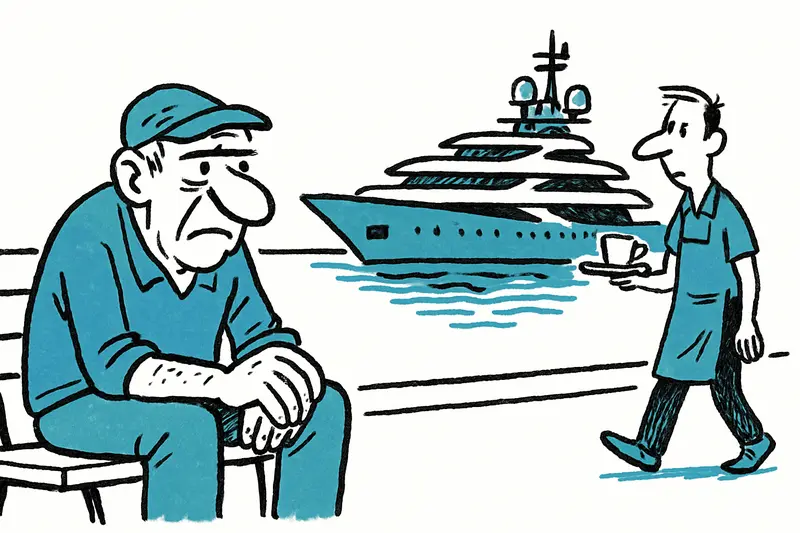
Everyday scene: On one of these days an old harbour worker sits on a bench at the quay, his hands weathered by salt. He looks at the Luminance, shakes his head and says to the café server: “You don’t see something like this every day. They bring work, sure — but in the end questions remain: who clears the rubbish when no one is watching?”
Concrete solutions that could bring calmer harbours and honest bills: mandatory proof of onboard wastewater treatment before entering the port, higher and tiered berthing and anchoring fees for megayachts with revenues earmarked for coastal protection and monitoring of seagrass meadows. A publicly accessible register of the beneficial owners of superyachts would create transparency; complemented by regular inspections of crew working conditions and noise limits for helicopter movements. Captain’s offices and the Capitanía Marítima could exchange information more quickly if data such as fuel consumption or waste volumes had to be reported in a standardized way.
Practically on site one could start today: harbour police and environmental services could pay increased attention to correct anchoring spots, local boat services could cooperate for environmentally friendly disposal and restaurants on the pier could clearly communicate to guests how revenues from yacht visits feed back into the community. That requires effort at first, but it removes the impression from residents that the sea serves only the spectacle of the super-rich.
Punchy conclusion: The Luminance is a statement of the superyacht season – elegant, expensive and photogenic. Mallorca need not merely admire it; the season has seen other notable arrivals, including Cuando llega el transatlántico de lujo: Explora II en Palma – entre el brillo y las preguntas. If we want the glamour not to come at the coast’s expense, we need binding rules, enforcement and more transparency. Otherwise the fascination remains just a pretty picture and the problems land with those who live here.
Frequently asked questions
Why do superyachts stop in Puerto Portals, Mallorca?
Can you swim safely near a superyacht anchorage in Mallorca?
What environmental problems can giant yachts cause in Mallorca?
When is the best time to see luxury yachts in Puerto Portals?
How much does it cost to moor a superyacht in Mallorca?
Are helicopters allowed to land on superyachts near Mallorca?
What is Posidonia and why does it matter in Mallorca?
Who benefits from superyacht visits to Mallorca, and who pays the costs?
Similar News

Fewer Airlines, Fewer Destinations: What Palma's Winter Flight Schedule Means for Mallorca
Analysis shows: Winter at Son Sant Joan Airport will be quieter, with significantly fewer airlines and destinations. Who...
German tourist dies in Sa Calobra – a reality check for emergencies on Mallorca's beaches
A 40-year-old tourist died at the Torrent de Pareis. The emergency call, a doctor who happened to be present, a defibril...

Deadly Tractor Accident in Bunyola: What Needs to Be Done Now
In a work accident on an estate near Bunyola, a roughly 40-year-old man lost his life. His wife and a small child were o...
Head-first dive into the shallow part of Cala Fonoll: An accident and the unresolved question of responsibility
A young tourist dove into Cala Fonoll and was seriously injured. Key question: Why are clear warning signs missing at da...

Mistaken identity with fatal consequences: Brutal assault in S'Aranjassa — what's missing in the follow-up?
At S'Aranjassa a visitor to a finca was tied up, beaten and thrown out of a van. Three men have been arrested, including...
More to explore
Discover more interesting content

Can Cap de Bou

Townhouse Lleo 72
