
Anchor chaos off Alcúdia: Concrete blocks, chains and the risk to bathers
Anchor chaos off Alcúdia: Concrete blocks, chains and the risk to bathers
In Es Clot, Es Morer Vermell and off Es Barcarès more and more leisure boats are moored to illegal concrete anchors. Who protects beach visitors and the seabed — and who pays the consequences? A look at causes, everyday scenes and solutions.
Anchor chaos off Alcúdia: Concrete blocks, chains and the risk to bathers
Key question: Who protects bathers and the seabed from homemade anchors and unlifted boats — and why is so little being done?
What this is about
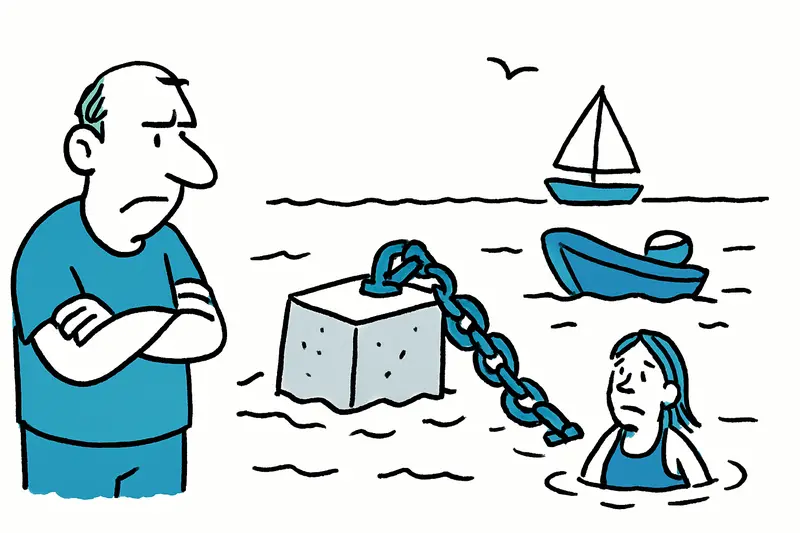
This summer, in several small coves in the northeast of Mallorca, more and more leisure boats can be seen that are not tied to official moorings but to improvised concrete blocks or car tires filled with concrete. Places associated with peace, children paddling and the scraping sounds of traditional llaüts — such as Es Clot, Es Morer Vermell or the coast in front of Es Barcarès — show the consequences: churned seabed, destroyed seagrass beds — a problem documented in private boat rentals putting Mallorca's coasts at risk — and long anchor chains that silently plough through the underwater world.
Critical analysis
The problem has several layers. Ecologically, heavy concrete anchors and chains harm the seabed: seagrass and small animals lose their habitat, sediments are resuspended. For swimmers this creates a safety risk: boats drive between swimmers, sometimes at excessive speed; rescue and diving zones are disturbed. In terms of costs, mooring to unattended, improvised anchors sooner or later leads to salvage operations — whether boats wash ashore after a storm or abandoned wrecks need to be recovered. Who pays the bill often remains unclear, because responsibilities between the municipality, the coastal authority and the port administration are not always cleanly distributed, a point underscored by the Banyalbufar catamaran incident.
What is missing from the public debate
People talk about annoyance and post outraged beach photos, but rarely about precise responsibilities and practical alternatives. There is a lack of a clear strategy for how to defuse immediate dangers and create suitable berths in the long term. Also insufficiently discussed is the role of boat owners themselves — their knowledge of safe anchoring spots, awareness of protected areas and possible sanctions are too often left out. Financing for salvage or seabed repair is hardly negotiated in discussions.
Everyday scene from Mallorca
Early in the morning at Es Clot: the heat has not yet swallowed the alleys of the village, fishermen change their nets, children run along the pebble beach with wet hair. From the water, black buoys greet you, between them rubber dinghies and an old llaüt rock, tied to a jagged concrete block. An outboard motor thunders in the distance; seagulls screech while the sun is already fairly high. Residents watch the scene with a mix of anger and resignation — they've seen it so often, yet rarely does anything change, as local complaints have shown in Es Carbó residents demand more controls.
Concrete solution approaches
1) Short term: equip mobile coastal patrols with rigid inflatable boats so local police or harbor guards can intervene quickly. Mark temporary protected zones with clearly visible buoys for swimmers and enforce no-go rules for vessels in immediate bathing areas. 2) Medium term: install a mooring network of approved, environmentally friendly buoys with usage rules; these could be fee-based and generate revenue for monitoring and maintenance. 3) Sanctions and transparency: clear fines for illegal anchoring, registration of fittings and publication of salvage costs that can be charged to the polluters. 4) Prevention: information campaigns in ports and marinas about protected areas, anchoring bans and eco-friendly mooring alternatives. 5) Cooperation: bring municipality, port administration, fishing communities and environmental organizations to the table and develop joint handling plans.
What should happen immediately
A simple measure would be the rapid loan or provision of a rigid inflatable boat to the local police so that urgent action can be taken in acute danger. At the same time, affected beach sections should be monitored more intensively for a while and immediate measures taken in the event of violations — that creates visibility and deters copycats.
Punchy conclusion
This is not just about quarrels between neighbors and boaters. It is about protecting a sensitive coastal strip, the safety of families on the beach and the question of who pays for damage. Pulling the concrete buckets out of the water stops the current image of anchor chaos but does not solve the structural gap in monitoring, responsibilities and affordable alternatives. If Alcúdia does not want or cannot act, the summer will repeatedly present the same scene: concrete on the seabed, chains in the water and irritated voices on the shore.
Frequently asked questions
What’s behind the anchor chaos off Alcúdia and how does it affect bathers?
Why is there confusion over who pays for damage from improvised moorings near Es Clot and Es Barcarès?
What short-term steps could Mallorca's authorities take to protect swimmers at northeast coves?
What longer-term plan could replace improvised moorings with safer options in Mallorca?
How can boat owners help reduce seabed damage and comply with protected areas in Mallorca?
What immediate actions could be taken now to improve safety near Alcúdia beaches?
How does this issue affect local families and beach life on Mallorca?
What signs indicate illegal anchoring near Mallorca’s beaches and how should concerns be reported?
Similar News
Failed before the first flight: How Fischer Air's plans for Palma were ground down
Announced routes, repeated postponements and now apparent insolvency: Why the Fischer Air project for Mallorca is not me...

Seconds in the Water: 19-year-old Fights Her Way Out of Flooded Car in Palma
A 19-year-old managed to rescue herself from her half-submerged car after sliding under the Verge de Lluc underpass. Res...

Between Dream and Reality: Thorsten Legat and the Challenges of FC Germania Mallorca
The former Bundesliga pro has assembled a colorful squad in a short time. But how realistic is the grand plan for promot...

Arrest warrant at check-in: Why two travelers at Cologne/Bonn Airport suddenly had to pay
At Cologne/Bonn Airport, federal police in mid-September found two German passengers subject to enforcement measures. Bo...
Balearic Islands as a New Route: A Reality Check on Rising Boat Migration
For the first time the Balearic Islands are ahead of the Canary Islands in boat arrivals. What do the numbers really say...
More to explore
Discover more interesting content

Can Cap de Bou

Townhouse Lleo 72
