
Appeared Overnight: Log Benches Between Bunyola and Orient – Nice Gesture or Unresolved Issue?
Rustic log benches line the country road between Bunyola and Orient. A sympathetic improvisation — but who is liable, who maintains them, and where did the wood come from? A look at opportunities and open questions.
Appeared Overnight: Log Benches between Bunyola and Orient
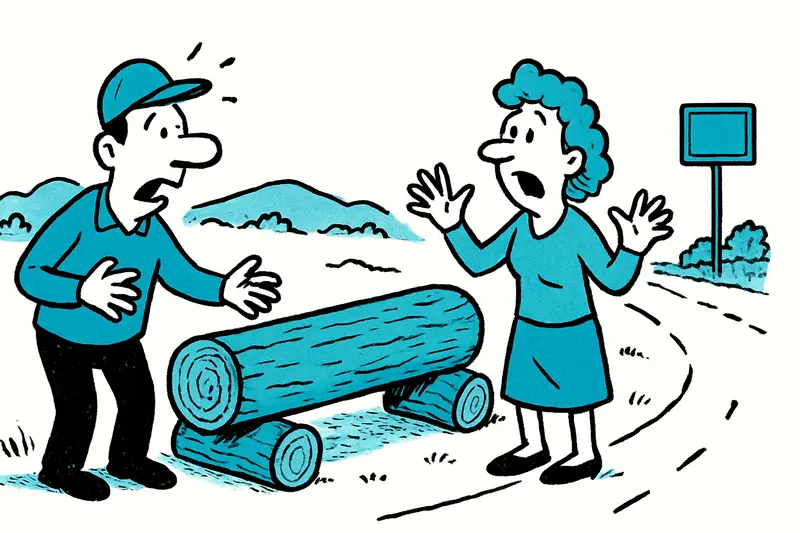
Those who in recent days walked along the narrow country road from Bunyola towards Orient or traveled by bike have surely noticed them: massive benches made from raw tree trunks, as if lifted from the landscape. The sun was low, the air smelled of damp earth, pine and rosemary — somewhere in the distance cicadas chirped, although it had already become cooler. Three benches on a steep curve invite you to rest, a boy balances, an older couple breathes deeply; small everyday scenes on the edge of the Serra de Tramuntana, as noted in Wayside Resting Place: Between Charm and Responsibility.
Key question: Who is allowed to change public space?
The benches are charming, that's beyond question. But the decisive question is another: Is a private owner allowed to permanently equip parts of the roadside without coordination? Town hall and island council seem relaxed as long as there is no immediate danger. But the calm is deceptive. It's about liability, traffic safety, maintenance and the principle: What happens if everyone beautifies the little road according to their own ideas?
Craftwise, the benches tell an honest story: split trunk, roughly planed seating surface, a thin protective coat, boulders as bases. No painted perfection — instead traces of work, handwriting and an improvised solution that fits the rugged surroundings. But this improvisation is double-edged: it creates atmosphere but also raises legal and ecological questions, a tension explored in The Benches at the Bend: Between Improvisation and Public Responsibility.
Who is affected — and which problems often remain invisible?
First and foremost responsibility: Who is liable if someone falls from a bench or a rotten foot gives way? Formally, the person who installs the furniture carries responsibility. Practically, town hall or island council usually get involved when problems arise. And in practice documentation is often missing: who put it up, when was it checked, who maintains it?
Ecological aspects are often overlooked. Where does the wood come from? Is it treated or raw — won't it soon attract pests or decay? Are natural drains disturbed, plants trampled or small habitats destroyed? Such questions are easily overlooked in spontaneous zeal.
Everyday scenarios also play a role: littering after weekend visits, vandalism in quiet months, growing use that overwhelms the small parking area. Especially in autumn and winter, when day visitors look for the route, the risk of overuse increases.
What argues in favor of the benches — and what opportunities arise?
There is much to recommend them: the seats create places to pause, they encourage slow travel, relieve private properties and invite locals and visitors to take short breaks. Low-tech and handmade — that tells a story that harmonizes with the Tramuntana. Such initiatives can build bridges between authorities, neighbors and gentle tourism.
The opportunity lies in simple institutionalization without overbureaucratization: banning would be short-sighted. Better would be pragmatic guardrails that ensure safety, transparency and sustainability, but do not stifle every good idea.
Concrete proposals — so that good ideas don't become problems
1. Temporary notification and quick inspection: Whoever installs a bench notifies the town hall. A small safety check and a temporary permit (one to two years) create clarity.
2. Community care: Sponsorships for individual benches: neighbors, hiking clubs or volunteers take on inspection, cleaning, reporting damage — distributing the burden.
3. Minimum standards for materials and anchoring: Requirements for wood treatment, solid foundations and minimum distance from the roadway protect against accident risks and rapid decay.
4. Information sign: Small, unobtrusive notice with responsible party, year of installation and a QR code to care instructions — transparency creates identification and reduces misuse.
5. Long-term integration if proven successful: If a bench proves its worth, it can be added to the public inventory or secured by formal permission — ensuring maintenance and liability issues.
Conclusion: Small intervention, big effect — but not without rules
The new log benches between Bunyola and Orient are more than places to sit: they express a quiet pragmatism common in Mallorca — someone sees a problem, acts and creates something useful. That is likable and practical. Without rules, however, problems threaten: liability issues, decay, litter and a fuzzy legal understanding of how to deal with public space.
A pragmatic approach would welcome such initiatives but not simply ignore them: little bureaucracy, clear minimum standards and simple forms of participation could ensure that the benches remain an asset — for locals, walkers and the quiet views of the Tramuntana.
Frequently asked questions
Why have log benches appeared between Bunyola and Orient in Mallorca?
Are the new benches in Mallorca safe to use?
Who is responsible if someone is injured on a bench placed in public space in Mallorca?
Could handmade benches like these damage the environment in Mallorca?
Is it common for people to make small improvements to public areas in rural Mallorca?
What should walkers expect on the road between Bunyola and Orient in Mallorca?
When is the route between Bunyola and Orient in Mallorca most likely to feel busy?
Should Mallorca regulate handmade roadside installations more clearly?
Similar News
Rats in Llucmajor: How Uncollected Garbage Became a Health Problem
In Llucmajor, uncollected trash bags, overflowing containers and rain are leading to increased rat sightings. An assessm...
Sly Distraction Scam at Ballermann: How Tourists Became Targets — and What Must Be Done Now
Five suspected pickpockets were arrested. Their method: distract, secure the loot, return the wallet — without the cash....
Eviction in El Arenal: Who protects neighbors — and who protects the homeless?
A vacant hotel on Carrer Girona was cleared and secured. The neighborhood breathes a sigh of relief. But the action trea...
'La Tapita' loses its home: Who will protect Palma's last affordable meeting places?
The bar 'La Tapita' on Simó-Ballester Street will close at the end of December. For neighbors, police officers and small...

Million Heist at Bulgari: Who Is Responsible for Palma's Security Gaps?
Three men stole jewelry worth around one million euros – the crime series began at the end of September and was likely c...
More to explore
Discover more interesting content

Can Cap de Bou

Townhouse Lleo 72
