
Arena noise in Palma: Judges side with residents — and question the town hall
Arena noise in Palma: Judges side with residents — and question the town hall
The Balearic Supreme Court demands more than fines: three residents of the Plaza de Toros receive compensation because nighttime events violated their nighttime rest and privacy.
Arena noise in Palma: Judges side with residents — and question the town hall
Who protects the night's peace when event venues in the middle of the city become a constant burden?
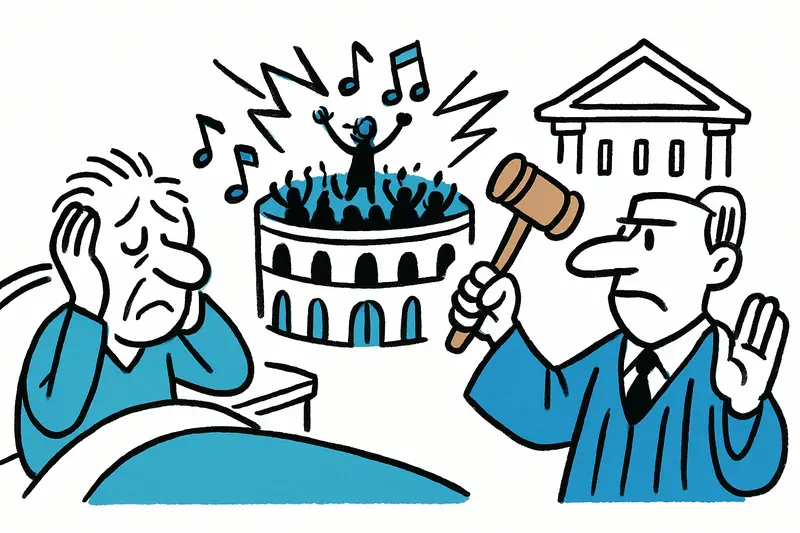
The Balearic Court has now ruled that the city of Palma must pay compensation to three residents for repeated nighttime noise nuisance. Each affected person receives €3,000; the ruling thus overturns a previous dismissal. The judges regarded the authorization of concerts and similar events in the Plaza de Toros as an interference with personal rights, specifically: the right to peace, privacy and mental well-being; this follows public controversy over events at the bullring documented in Palma bans concerts in Es Coliseu – a noise dispute with consequences.
Key question: Who bears responsibility when municipal events systematically destroy residents' sleep — the organizers, the city administration for its permitting practices, or the control system that only sanctions noise after residents have already been harmed? This question is now on the table because the court has judged the city's previous measures to be insufficient.
Critical analysis: In public debate, noise is often treated as a collateral damage of urban cultural events. The court, however, places a different emphasis: if fines and occasional closures do not prevent repeated exceedances of limits at events, responsibility is no longer solely on event management but on municipal licensing. The ruling makes clear that symbolic sanctions are not enough; effective, verifiable prevention is needed.
What is missing from the discourse: measurement data. So far we know public debates about noise mostly from complaints and individual cases, rarely from systematically collected level logs that show how often and by how much limits are exceeded. The long-term effects of constant nighttime noise peaks on health and neighborhood coexistence are also rarely discussed. Other local conflicts, such as 'Our bedroom sounds like a workshop' – Palma residents demand night flight ban, show how varied the sources of disturbance can be. And finally: the question of how fairly costs should be distributed — should residents endure noise for years until a court decides in individual cases?
Everyday scene from Palma: Imagine a July evening, the air still warm, rolling suitcases of the last tourists clicking on Plaça de España, people lingering in the old town's street cafes. Around midnight, bass rumbles from the arena, windows vibrate, an older woman on Carrer del Sindicat sits with closed eyes at an open window, the portable radio turned low because sleep is no longer possible. Children who have to go to school the next morning find no restorative sleep — this is not an abstract right but a daily experience.
Concrete proposals: First: mandatory, publicly accessible noise logs for every event with independent measuring equipment. Those who grant permits must monitor — live and transparently. Second: late concerts should only be allowed with additional conditions, such as reduced volume, directional sound technology and limits on bass levels. Third: a municipal hardship fund for faster compensation of affected households and a binding mechanism requiring organizers to post higher deposits after repeated violations. Fourth: promote low-noise venues — in the long term it makes sense to move large nighttime events to areas with fewer residences or to arenas designed for that purpose.
Further measures the city should consider: financial support for soundproofing affected apartments, binding closing times instead of vague promises, and a transparent contact person at city hall who centrally collects complaints and publishes statistics. Only in this way can it be verified whether fines and temporary closures have an effect or only create the impression of action.
What the ruling means in practice: It is a warning signal to the municipality. If noise nuisances recur with the same intensity and frequency, further lawsuits with additional claims may follow. At the same time, the legal situation remains open because the city can still appeal to the revision instance in Madrid. Thus the ruling is a stage victory for the residents, not a final endpoint.
Bullet-point conclusion: The decision confirms that night peace is not a luxury but a constitutionally protected good. Palma now faces a choice: continue responding with minor sanctions or create systematic rules that balance legal protection and city life. Those who promote cultural events in a city should not impose the price solely on the people living outside their front doors.
Frequently asked questions
Why did a court order Palma to compensate residents over arena noise?
Can residents in Mallorca claim compensation for repeated night noise?
Who is responsible for noise from concerts in Palma city venues?
What can Palma residents do if an event venue keeps disturbing the neighbourhood?
What does the Palma noise ruling mean for future events at the bullring?
Is it legal for Palma to allow late-night concerts in the city centre?
What noise control measures could help in Palma's event venues?
Does the Palma court decision end the arena noise dispute?
Similar News

Nipping Sea Creatures: Why Bathers in Cala Major and Elsewhere Should Be Cautious
In Cala Major, bathers have reported being nipped by small fish. What is behind it, how can problems be avoided — and wh...
Forced eviction in Santa Catalina: When a 65-year-old slept in her car and showered on the beach — a question of responsibility
The story of Pilar López from Santa Catalina represents a problem affecting many Mallorcans: How can an island with a bo...

New traffic rules from October 1: What Mallorca visitors and locals need to know
From October 1, 2026, Spain will implement far-reaching changes to traffic regulations. Important for Mallorca: greater ...

More water than last year: Mallorca's reservoirs breathe easier
September rain refilled the Tramuntana's reserves: overall fill around 35 percent, Cúber at 40.42 percent, Gorg Blau at ...

Three Luxury Hotels in Banyalbufar: Lots of Money, Many Questions
A Danish investor plans three exclusive accommodations in Banyalbufar — including the historic Son Valentí. The announce...
More to explore
Discover more interesting content

Can Cap de Bou

Townhouse Lleo 72
