
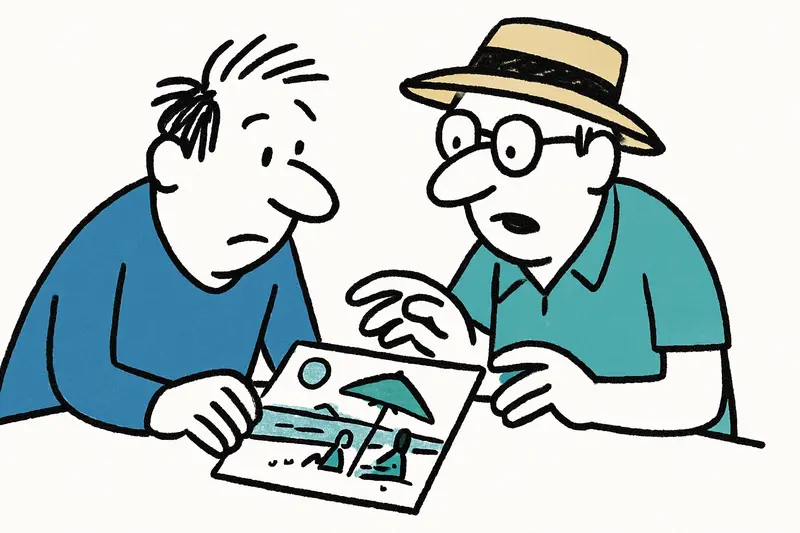
Arenal Vintage: Photos of Quiet Beach Life in the 1970s
Arenal Vintage: Photos of Quiet Beach Life in the 1970s
The residents' association Amics de s’Arenal has published a collection of images showing everyday scenes from the 1970s. A look back that builds community and inspires local remembrance projects.
Arenal Vintage: Photos of Quiet Beach Life in the 1970s
How a new photo collection awakens memories and strengthens local community
Amics de s’Arenal, the residents' association from the coastal town, has put together a small but heartfelt collection of old images: "Arenal Vintage – A Day at the Beach in s’Arenal in the 1970s." The photos do not show mass tourism, but people by the sea, a modest number of sunshades offering relief, and a coastline that is hardly recognizable today. For many who live here or grew up here, these are not mere postcards but pieces of their own lives.
Looking at the pictures, you can feel the warm light of those years: no hotel walls slicing the sky, but open sightlines to the sea. There are no celebrities in the photos, only families on blankets, children with wooden sand toys, and walkers carrying straw bags. There is something comforting about that. When I think of the Passeig de s'Arenal, I can still hear the seagulls, the voices of the kiosk vendors, and the footsteps of people on the large stone slabs of the promenade — the very sounds that resonate in the old images.
This collection is more than nostalgia. It connects neighbors and younger people who vacation or live here with a concrete local history. On social channels where the pictures are shared, users often write a simple line like "I remember this," or an anecdote about grandparents. Those reactions create identity; they remind us that places are made not only of buildings but of everyday memories, as recollections of Senegalese street vendors in Mallorca also show.
For Mallorca, this has a pleasant side effect: stories like these soften the bold portrayals of coastal life. They show that tourism development is always also a social process that changes family life, jobs, and neighborhoods, a theme echoed in Mallorca in Retrospect: A 1970 Film and the Uncomfortable Truths We Haven't Solved. The photos capture how part of the island began quietly and then changed in many small steps.
What can be done with this? A few uncomplicated ideas have already emerged in conversations with people from the neighborhood: a small exhibition in the municipal library, a monthly photo hour on the beach where older residents tell their stories, or a digital album that schools and the tourism office use together. Even a guided memory trail along the promenade, with old views opposite the current ones, would be a simple and sympathetic initiative, and small local ventures such as New Start in El Arenal: The Haudes, Their Boat 'The Phoenix' and Life on Deck illustrate how modest projects can reshape the area.
Such projects not only bring back memories, they also create a sense of responsibility. If children at school see how the beach looked in the past, they better understand why cleanliness, dune protection, and respectful behavior are important. And visitors gain a normal, human access to the island's history — away from clichés.
In the end, what makes the photo collection special is the warmth in the small details: a bench where people sit, an old lifeguard tower with patina, shadows that are longer than today. That creates closeness. Anyone walking the Paseo on a summer evening and listening to the sounds of the ice cream shops will hear voices similar to those in the photos — only at a different pace.
Inspiration from the present: anyone who wants to contribute can visit the association, scan old photographs, or show pictures to local children and ask them to invent stories. Such steps are simple, inexpensive, and good for community life. And they remind us: Mallorca is not just a backdrop but a home — with a past that can be preserved without blocking the future.
Why this is good for Mallorca: The collection promotes local identity, sparks conversations between generations, and provides ideas for small, concrete projects — exhibitions, school activities, or a memory trail along the beach. Seeing this, you feel: this is not a finished monument but a lived piece of the island.
Frequently asked questions
What is the weather usually like in Mallorca in early summer?
Is Mallorca warm enough to swim in early summer?
What should I pack for a trip to Mallorca in early summer?
Is early summer a good time to visit Mallorca?
What is Palmanova like in early summer?
What is Port de Sóller like in early summer?
Is Cala Millor good for families in early summer?
What kind of activities are best in Mallorca during early summer?
Similar News
More water than last year: Mallorca's reservoirs breathe easier
September rain refilled the Tramuntana's reserves: overall fill around 35 percent, Cúber at 40.42 percent, Gorg Blau at ...
Three Luxury Hotels in Banyalbufar: Lots of Money, Many Questions
A Danish investor plans three exclusive accommodations in Banyalbufar — including the historic Son Valentí. The announce...
2.1 tonnes of cocaine on sailing yacht off Spain's coast – a reality check for the coastguard
A 14-metre yacht was seized with 2.1 tonnes of cocaine. Who monitors the ports, how does the international hunt succeed ...

Heat Bonus in Mallorca: 100 Euros Extra for Outdoor Staff at MarSenses
MarSenses pays employees who worked outdoors in August an extra €100 as recognition. Lighter uniforms, reduced hours for...
Renovating in Mallorca: What You Really Can Do Without Neighbour Consent
Many think they can do whatever they want in their apartment. That's partly true — but only as long as structural elemen...
More to explore
Discover more interesting content

Can Cap de Bou

Townhouse Lleo 72
