
Seven Hours in the Heat: What Happens When the Ferry's Air Conditioning Fails?
Seven Hours in the Heat: What Happens When the Ferry's Air Conditioning Fails?
Passengers report more than seven hours of sweaty travel between Palma and Valencia. A thermometer in the cafeteria showed 33 °C; families and pets suffered. A reality check with concrete demands.
Seven Hours in the Heat: What Happens When the Ferry's Air Conditioning Fails?
Key question: Why can passengers on a seven-hour crossing between Palma and Valencia apparently not rely on adequate cooling and protection on board during high summer?
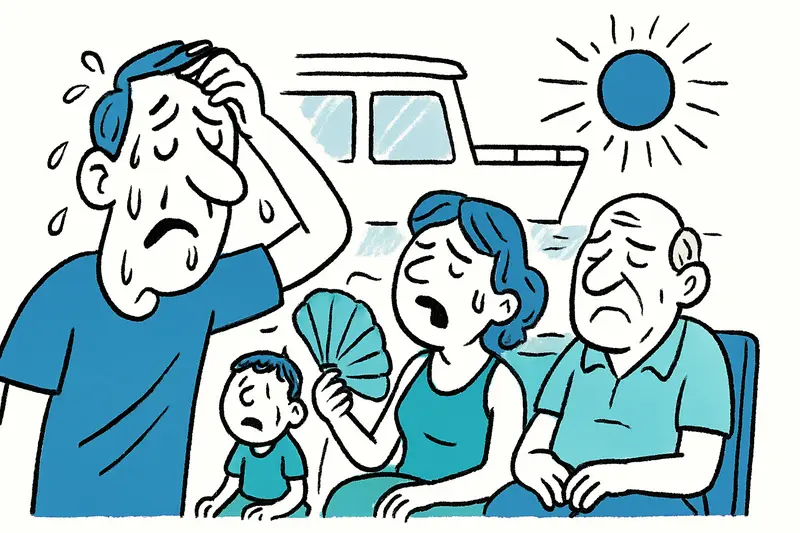
At the quay in Palma, between the screeching of seagulls and the dull roar of truck engines, travelers boarded a ferry that normally offers shelter from the heat. But already when boarding many noticed: it was oppressively warm. Later, in the cafeteria, a carried digital thermometer showed around 33 °C. The air felt humid, clothing stuck to skin – and many moved out to the upper deck to get at least a breath of wind.
Such accounts from passengers initially sound like an inconvenience. On closer inspection, they reveal a safety and customer service problem: families with small children, elderly people and those with pets could not simply endure the conditions. Some left their cabins, others lay down on metal surfaces in the shade of the ship's superstructure – not places intended for prolonged stays.
Reports indicate a pattern: the malfunction reportedly persisted for several days, crew members are said to have been aware of the problem before the trip in question, and no satisfactory alternatives were apparently offered on board. Water was only provided for a fee, and official complaint channels initially led to a QR code instead of direct, personal recording of grievances.
Critical analysis: the problem has multiple levels. Technically, a failed air conditioning system at high outside temperatures is a real risk to wellbeing and health. Organizationally, there is a gap in crisis communication: passengers report they were not informed or properly cared for. Legally, questions arise about the obligations ferry operators have towards travelers in such cases and how supervisory authorities will respond.
What is often missing in public debate is the perspective of vulnerable groups on board: young children, people with chronic illnesses, older passengers, and animals. Their needs require fast, simple protective measures – shaded areas, free drinking water, basic medical care and transparent information about next steps.
A daily scene from Palma: imagine how the old town's streets cool quickly in the evening while the air over the sea can remain stagnant for hours. Vendors on the Paseo Marítimo hand out cold drinks, taxi drivers look for fans for their vehicles, a problem also raised in Fresh breeze, but is it enough? What Palma's bus station really needs. This island knows heat, and yet the experience shows that at sea the same standards as on land are apparently not always applied; similar pressures are described in Nearly 40 °C: Mallorca's Daily Life Under Heat Stress — How the Island Can Respond.
Concrete measures that could help immediately: ferry companies should have binding emergency protocols that take effect immediately when air conditioning fails – free water distribution, shaded waiting areas with additional ventilation, and priority relocation of vulnerable passengers to cooler spaces. Technically, regular maintenance and redundant systems should be mandatory so that a single failure does not disable the entire cooling system.
On the authorities' side clearer reporting and control mechanisms are needed: spot checks on board during hot periods, mandatory protocols for reported faults and swift sanctioning options when operators neglect protection duties. Consumer protection agencies should also provide easily accessible on-site forms and personal contacts instead of relying solely on digital QR solutions.
For travelers I recommend pragmatic measures: when booking, check whether the operator provides information on emergency plans; when filing complaints, immediately request a copy of the report; collect photos of measurements and signatures from other affected passengers. Combining documentation with collective complaints increases the chances of success with consumer agencies.
What remains after the experience on board? The image of sweaty families, restless pets, and people gasping for air over metal surfaces in the blazing sun – scenes that, on an island accustomed to summer heat, feel unpleasant and avoidable. This is not a luxury issue: it is about health protection and appropriate service.
Sharp conclusion: a ferry that has no effective cooling in the cafeteria at 33 °C must not simply continue the voyage without adequately protecting and informing passengers. Practical checklists, mandatory maintenance and closer oversight could prevent such "hellish rides" in the future. Until then the advice for travelers is clear: stay vigilant, document – and if necessary raise your voice collectively so that hot hours on board do not become the norm.
Frequently asked questions
When is the best time to visit Mallorca for sunny weather and swimming?
Are there family-friendly beaches in Mallorca and what should I look for?
What should I pack for a Mallorca trip across seasons?
How should I get around Mallorca to explore the island?
What are must-see places for first-time visitors to Mallorca?
Is Mallorca safe for solo travelers, and what general safety tips should I follow?
What outdoor activities are popular in Mallorca and how can I plan them?
What languages are commonly spoken in Mallorca and do I need Spanish to enjoy visiting?
Similar News

"Expensive chaos" and many open questions: What clients can do when a lawyer suddenly stops responding
Several clients complain that a well-known German lawyer in Mallorca has been unreachable for months. Key question: What...

TV tip: 'The Last Problem' — Mallorca as the setting of a classic crime
A classic whodunit on Mallorca: A new miniseries set in spring 1959 brings storm, an isolated hotel and a dense web of s...
Nipping Sea Creatures: Why Bathers in Cala Major and Elsewhere Should Be Cautious
In Cala Major, bathers have reported being nipped by small fish. What is behind it, how can problems be avoided — and wh...
Forced eviction in Santa Catalina: When a 65-year-old slept in her car and showered on the beach — a question of responsibility
The story of Pilar López from Santa Catalina represents a problem affecting many Mallorcans: How can an island with a bo...
New traffic rules from October 1: What Mallorca visitors and locals need to know
From October 1, 2026, Spain will implement far-reaching changes to traffic regulations. Important for Mallorca: greater ...
More to explore
Discover more interesting content

Can Cap de Bou

Townhouse Lleo 72
