
New traffic rules from October 1: What Mallorca visitors and locals need to know
New traffic rules from October 1: What Mallorca visitors and locals need to know
From October 1, 2026, Spain will implement far-reaching changes to traffic regulations. Important for Mallorca: greater protection for pedestrians and cyclists, new rules for e-scooters, motorcycles and motorhomes, and stricter seatbelt and helmet requirements. How this will specifically affect tourists, rental car drivers and everyday life.
New traffic rules from October 1: What Mallorca visitors and locals need to know
Key question
Does the reform really protect the most vulnerable road users — and are tourists, rental car customers and leisure cyclists on Mallorca sufficiently prepared? Many are asking this as they move around Palma, the beach or the mountain roads of the Serra de Tramuntana in the coming weeks.
Key points of the decree
Royal Decree 518/2026 comes into force on October 1, 2026 and changes Spain's traffic regulations in numerous ways. Important facts: it explicitly defines particularly vulnerable road users (pedestrians, cyclists, motorcyclists, users of small electric vehicles) for the first time, prescribes minimum overtaking distances for bicycles and introduces new equipment and behavior obligations for e-scooters, mopeds and motorcycles. Changes also affect motorhomes, seatbelt obligations and the formation of emergency lanes in traffic jams.
Critical analysis – what works and what is problematic
Positive: the stronger legal focus on people rather than vehicles is the right approach. Anyone who has ever walked along the Paseo Marítim in the morning knows the chaos of delivery vans, tour bikes and scooters – clear rules help. But parts of the new regulations are inconsistent: some obligations apply immediately, others only from 2027. Transitional periods create uncertainty. Tourists renting e-scooters often don't know whether their model already has the required lights or registration. Rental car companies must inform their customers; so far practice is very inconsistent.
What is missing in the public debate
There is much talk about fines and minimum distances, but little about on-the-ground implementation: where are the information points for holidaymakers? How will temporary tourist hotspots like the promenade in Can Pastilla be signposted? The responsibility of municipalities – for example which streets are open to e-scooters – remains a blind spot. And: who checks that motorhomes do not discharge wastewater when parked? The rule exists, but enforcement is often lacking.
Concrete consequences for everyday life on Mallorca
In Palma this means concretely: when overtaking cyclists, keep at least 1.5 metres of lateral distance, and outside built-up areas additionally at least 20 km/h below the speed limit. Drivers following a bicycle in the same lane should keep five metres distance. On the MA-20 or Avinguda Gabriel Roca, emergency lanes must be formed in traffic jams – a practice that tourists from Germany know, but many Mallorcan drivers still need to internalize. E-scooters may no longer be ridden on pavements, the minimum age is 15 and helmet rules are new; daytime lighting requirements largely apply from 2027.
Everyday scene
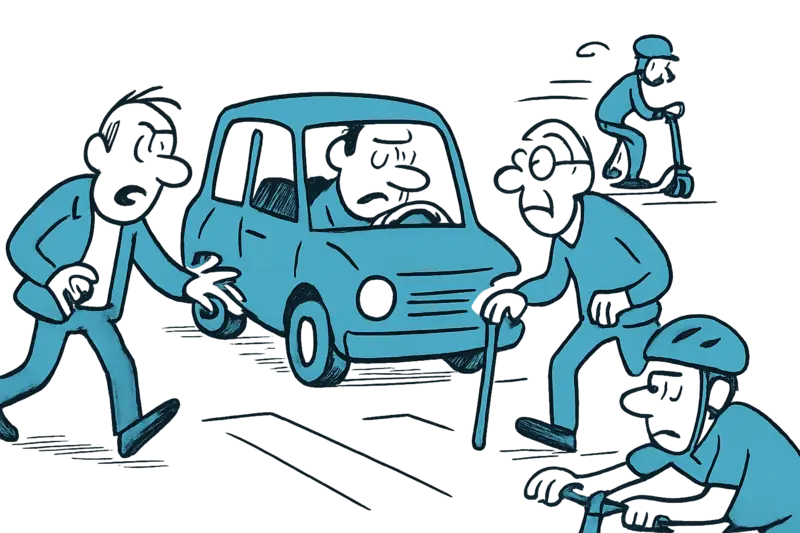
Imagine the Plaça de la Llotja on a Saturday: delivery vans parked, cyclists weaving past, a few e-scooters at the edge, seniors crossing the street toward the Mercat de l'Olivar. This creates potential for conflict. If a rental car driver suddenly has to stop because pedestrians have priority, or a motorbike with a high-visibility vest uses the hard shoulder – such situations will be judged differently in the future. The soundscape remains the same, but priorities shift.
Practical tips for tourists and landlords
- Rental car customers: fasten your seatbelt, not just in town; remember information about emergency lanes; keep distance from cyclists and, when overtaking, change lanes if possible.
- Bicycle and e-scooter tourists: check whether the rental bike or rental helmet has the required certification; lights and reflectors are mandatory, especially in the evening; avoid pavements.
- Motorhome users: ensure that no parts protrude beyond the vehicle's footprint and that no liquids are discharged externally; wheel chocks are allowed.
- Professional drivers (delivery drivers, taxis, driving instructors): keep a high-visibility vest ready; observe seatbelt obligations.
Concrete improvements needed now
So that the rules do not remain only in legal texts, authorities and providers should act practically: rental car companies and e-scooter operators must provide mandatory information at handover (checklist, short multilingual handout with pictograms). Municipalities should install standardized, highly visible signs for pedestrian-priority zones and publish clear maps showing where e-scooters are allowed. Police and Guardia Civil need targeted educational campaigns during the initial phase instead of pure enforcement – control weeks with flyers and mobile information stands at tourist spots would help.
Conclusion – to the point
The decree is a step in the right direction. Whether the island actually becomes safer depends less on legislation than on implementation, enforcement and simply getting along on the road. For tourists: keep your eyes open, fasten your seatbelt, put on your helmet. For administrations: explain rather than punish – at least at the beginning. Otherwise much will remain theoretical while scooters continue to zip between the tables in front of cafés.
Frequently asked questions
What is the best time of year to visit Mallorca for beach weather?
What should I pack for a Mallorca trip in warm months?
Are Mallorca beaches safe for swimming with kids?
How does Mallorca's weather vary across the island and what outdoor activities suit different days?
What are practical sun and hydration tips for Mallorca in summer?
What are good ways to spend a day in Mallorca without renting a car?
Are boat trips or water activities worth trying in Mallorca?
How do I pick a Mallorca beach that matches what I want, like calm water or family-friendly spots?
Similar News

Nipping Sea Creatures: Why Bathers in Cala Major and Elsewhere Should Be Cautious
In Cala Major, bathers have reported being nipped by small fish. What is behind it, how can problems be avoided — and wh...
Forced eviction in Santa Catalina: When a 65-year-old slept in her car and showered on the beach — a question of responsibility
The story of Pilar López from Santa Catalina represents a problem affecting many Mallorcans: How can an island with a bo...

More water than last year: Mallorca's reservoirs breathe easier
September rain refilled the Tramuntana's reserves: overall fill around 35 percent, Cúber at 40.42 percent, Gorg Blau at ...

Three Luxury Hotels in Banyalbufar: Lots of Money, Many Questions
A Danish investor plans three exclusive accommodations in Banyalbufar — including the historic Son Valentí. The announce...
2.1 tonnes of cocaine on sailing yacht off Spain's coast – a reality check for the coastguard
A 14-metre yacht was seized with 2.1 tonnes of cocaine. Who monitors the ports, how does the international hunt succeed ...
More to explore
Discover more interesting content

Can Cap de Bou

Townhouse Lleo 72
