
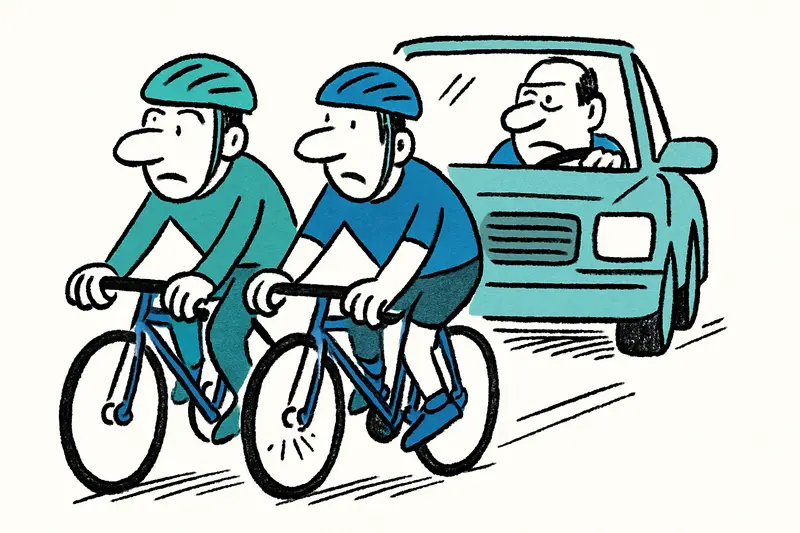
Riding Side by Side in Mallorca: New Rules — Is That Really Enough?
The island now allows cyclists to ride side by side. Which problems remain — from the MA-10 to Plaça Espanya — and which practical solutions are possible?
Side by side allowed, but how safe is that really?
New traffic rules have recently come into force in Mallorca, affecting cyclists and motorized two-wheelers in particular, as reported in Nuevas reglas en Mallorca: los ciclistas pueden ir lado a lado, ¿qué significa exactamente?. In short: groups are allowed to ride side by side in a lane, stricter visibility rules apply at night, and a minimum distance is required when overtaking. A good idea. The central question remains: are these rules enough to resolve the daily conflicts on narrow country roads and in crowded towns?
What has practically changed
Key points at a glance: bicycles may ride side by side in groups, visibility at dusk or in rain is now mandatory (reflectors, bright lights, visible clothing), and in 30 km/h zones cyclists may move forward against the flow in congested traffic to avoid risky maneuvers on the pavement. Motorists must keep a minimum distance of 1.5 meters when overtaking, a measure examined in Is a 1.5‑meter sign enough to protect cyclists in Mallorca?. Motorcyclists must wear reflective vests at night and use certain helmets outside built-up areas.
Why this becomes tricky in practice
On a perfect, wide road this may all work well. On the MA-10 in the Tramuntana, where the wind carries the scent of pine needles and salt, the carriageway is often so narrow that a 1.5-meter gap is hard to guarantee; as discussed in Cruising Safely on Mallorca: What Tourists and Authorities Should Finally Do Differently, sand and missing information add to the danger. When groups of road cyclists roll past a café on Plaça Espanya in the morning, pedals click and the espresso scent hangs in the air — then it is not the law but patience and mutual respect that decide safety.
And there are other blind spots in the discussion: tourists with rental bikes often don’t know the rules. Some electric scooters and e-bikes are quieter than before, leading to surprising encounters. Enforcement of the new regulations is vague so far: who checks the required visibility? How often will violations be sanctioned?
Aspects hardly discussed
First: the role of rental companies. Bike rentals are the first point of contact for many visitors. A requirement to give brief safety tips and hand out visibility kits at handover would help a lot. Second: time separation. On popular tour sections, limited time windows for large groups could be introduced — early mornings for road racers, later for leisure riders. Third: emergency and bus traffic. Narrow roads become a challenge when an ambulance is stuck behind a group of cyclists. Who clears the way first? Such practices must be clearly regulated.
Concrete proposals — practical and local
A few measures could be implemented immediately and noticeably ease everyday life:
1. Visibility kits at ferry terminals and rental stations: Small reflector sets or USB lights for tourists when renting a bike. Low cost, huge benefit.
2. Pilot zones with supported rule implementation: On the MA-10 and in Palma (e.g. Plaça Espanya) police and local wardens could show a stronger presence at first and focus on education rather than immediate fines, as outlined in More space for cyclists and pedestrians – but is it enough? Mallorca's plan for 60 km of safe routes.
3. Time slots for training groups: Coordination with cycling clubs and event organizers to reserve times so that large training groups don’t clash with rush hour.
4. Clear signage: Multilingual signs (Spanish, English, German) at prominent locations — Side by side allowed: Please keep your distance — this reduces uncertainty.
5. Targeted controls and fines: Use them not as a revenue source but specifically against dangerous behavior (e.g. risky overtaking, missing lights).
What participants must do
Laws are only part of the solution. On my rides between Banyalbufar and Sóller I often see how small gestures achieve big things: hand signals, eye contact, a short slowdown. Drivers should learn to be patient when two cyclists ride side by side. Cycling groups should form as far to the right as is safely possible and show consideration for slower road users. Motorcyclists should view the new rules as an opportunity to improve nighttime visibility — that’s a genuine gain, not just an obligation.
Conclusion: a start — but not a free pass
The new rules provide direction and set important standards. Whether the number of critical encounters decreases depends on many details: training and information by rental companies, targeted enforcement, clear communication measures and not least the attitude of people on the road. Mallorca remains a cycling paradise. To keep it that way, we need less legal cleverness and more practical, local solutions. A little more consideration — and maybe a reflector on the saddle — would already do the trick.
Practical tip: If you plan to ride the MA-10 in the coming days or join a morning group in Palma: approach slowly, wave, and enjoy the scenery. The Tramuntana has patience.
Frequently asked questions
Can cyclists ride side by side in Mallorca now?
What do cyclists in Mallorca need to wear or use at night?
Is it safe to cycle the MA-10 in Mallorca with the new traffic rules?
What is the 1.5-meter overtaking rule in Mallorca?
Can cyclists move against traffic in Mallorca’s 30 km/h zones?
Are rental bike companies in Mallorca expected to explain the new rules?
What are the new rules for motorcyclists in Mallorca at night?
How do the new cycling rules affect Palma and Plaça Espanya?
Similar News

Maribel: Five Decades of Service – Housekeeper from Peguera Celebrated with a Special Honor
Over 50 years in the hotel business: María Isabel “Maribel” Molinos was honored in Palma at the Nit del Turisme by Unive...

Orange Alert over Parts of Mallorca: Are We Prepared?
Dark clouds and an announced wet spell have triggered an Orange alert in parts of Mallorca. A reality check: what's miss...

Sundair & Co.: Sale speculation and what it could mean for Mallorca
Rumors about a possible sale of the airlines Sundair and Fly Air 41, which belong to Schauinsland-Reisen — and whether b...
Anne Wünsche in Mallorca: A job offer with a catch — who fits the role of personal assistant?
Influencer Anne Wünsche has left Berlin and is urgently looking for a full-time personal assistant in Mallorca. Why the ...
Daily from New York: Palma Between Boom and Strain
United will increase the Newark–Palma route to daily flights in 2027 using Boeing aircraft (231 seats). What does the in...
More to explore
Discover more interesting content

Can Cap de Bou

Townhouse Lleo 72
