
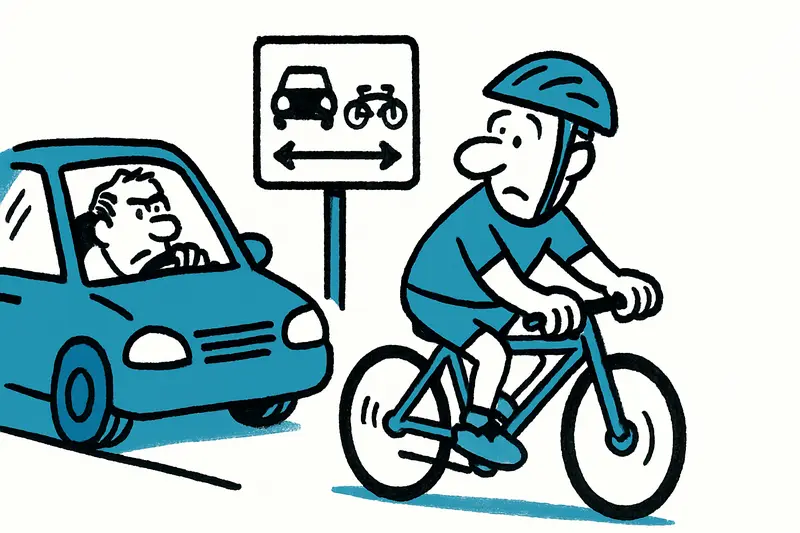
Is a 1.5‑meter sign enough to protect cyclists in Mallorca?
A new supplementary sign reminds drivers to keep a 1.5‑meter distance – symbolism or protection? A realistic look at impact, blind spots and concrete steps for safer Mallorca roads.
Is a sign enough to save lives?
Early in the morning, when the olive trees still stand in the mist of the Tramuntana and the quiet clatter of bicycle chains fills the village road of Fornalutx, a new supplementary sign is mounted at some narrow spots: 1.5 meters. It is meant to remind drivers to keep distance when overtaking cyclists and motorcyclists. A small plaque, a big claim — but how big is the effect really?
Why now and in these places?
The signs hang at well-known pinch points: winding sections of the Ma‑10 towards Soller, narrow connecting roads to Deia, the access roads to Port de Soller or near the Cruz de Sa Batalla. The intent is clear: make it visible before it gets tight. Mallorca is no longer a secret tip for road cyclists, as discussed in Riding Side by Side in Mallorca: New Rules — Is That Really Enough? — morning groups, colorful vests, rental bikes and competitive athletes share the same asphalt.
The key question: reminder or behavior changer?
The central question is: can a supplementary sign sustainably change driving behavior – or does it remain a polite reminder that does little without enforcement and a change of perspective? On site it becomes clear: signs are impulses, not miracle weapons. In a curve, when the view is on olive branches and the sea, such a plaque can easily get lost. And under time pressure or in a pack of rental cars, haste often matters more than the message on metal.
What the roads really tell
At the café on the Ma‑10, in the mornings you hear not only the clinking of coffee cups, but also tires passing closely by each other. Regular cyclists from Palma, tour guides and locals agree: hope meets skepticism. Some drivers stop, others overtake closely. Tourists who know the island for only a week rarely identify with local traffic rules; many are released into traffic by the rental company without guidance; the island council has even promoted a roadside cleanup to improve safety, see 1,600 km of Roadside: The Big Cleanup for Cyclists — Is It Enough?.
Aspects that are too rarely on the table
First: visibility is not the same as understandability. A number says little if drivers do not know whether they can actually maintain 1.5 meters. Pictograms or distance lines could be more internationally understandable. Second: the spatial reality. On narrow side roads there is often physically no space for 1.5 meters – the sign then feels more moral than practical. Third: institutional gaps. Without coordinated enforcement by the Guardia Civil official site, Policía Local and a clear fine strategy, the sign remains symbolic politics.
Concrete opportunities instead of mere reminders
The island has several levers that bring more than another sign. Some suggestions that could have immediate effect:
- Reduce speed at bottlenecks, visible markings and asphalt strips that visualize overtaking bans and safety distances.
- Multilingual information at rental car centers, hotels and tour operators; a short note in the rental handover protocol would do a lot.
- Temporary checks at cycling events and targeted police presence at known hot spots; presence changes behavior.
- Cooperations with local cycling clubs: training for tourist groups, information booths at meeting points like the market in Soller or the Plaza of Santa Maria.
- Infrastructure: expand overtaking zones, create 30 km/h zones in villages and safe holding areas before bends (see More space for cyclists and pedestrians – but is it enough? Mallorca's plan for 60 km of safe routes).
A realistic look ahead
The supplementary sign is not a panacea, but an impulse. In an island world where road is scarce and view often spectacular, a clear reminder can make the difference between a racing heartbeat and a relaxed ride. What remains decisive, however, is the interplay: visible rules, regular enforcement, better infrastructure and awareness in the tourism industry.
Conclusion: Mallorca needs more than a new sign — a small cultural revolution in road traffic: less honking, more patience, more consideration — and yes, maybe another coffee stop before overtaking. If authorities, locals, landlords and cyclists work together, the 1.5‑meter reminder could soon become commonplace — and therefore unnecessary.
Frequently asked questions
What does the 1.5-meter cycling sign in Mallorca mean for drivers?
Are Mallorca’s 1.5-meter road signs enough to improve cyclist safety?
When is cycling in Mallorca safest on the roads?
What should cyclists wear or carry for Mallorca road rides?
Why are the Ma-10 and roads near Sóller and Deià often mentioned for cyclist safety in Mallorca?
Is it common to see rental cars overtaking cyclists too closely in Mallorca?
What more does Mallorca need besides warning signs to protect cyclists?
Are there safer cycling routes in Mallorca than narrow village roads?
Similar News

Maribel: Five Decades of Service – Housekeeper from Peguera Celebrated with a Special Honor
Over 50 years in the hotel business: María Isabel “Maribel” Molinos was honored in Palma at the Nit del Turisme by Unive...
Orange Alert over Parts of Mallorca: Are We Prepared?
Dark clouds and an announced wet spell have triggered an Orange alert in parts of Mallorca. A reality check: what's miss...

Sundair & Co.: Sale speculation and what it could mean for Mallorca
Rumors about a possible sale of the airlines Sundair and Fly Air 41, which belong to Schauinsland-Reisen — and whether b...
Anne Wünsche in Mallorca: A job offer with a catch — who fits the role of personal assistant?
Influencer Anne Wünsche has left Berlin and is urgently looking for a full-time personal assistant in Mallorca. Why the ...
Daily from New York: Palma Between Boom and Strain
United will increase the Newark–Palma route to daily flights in 2027 using Boeing aircraft (231 seats). What does the in...
More to explore
Discover more interesting content

Can Cap de Bou

Townhouse Lleo 72
