
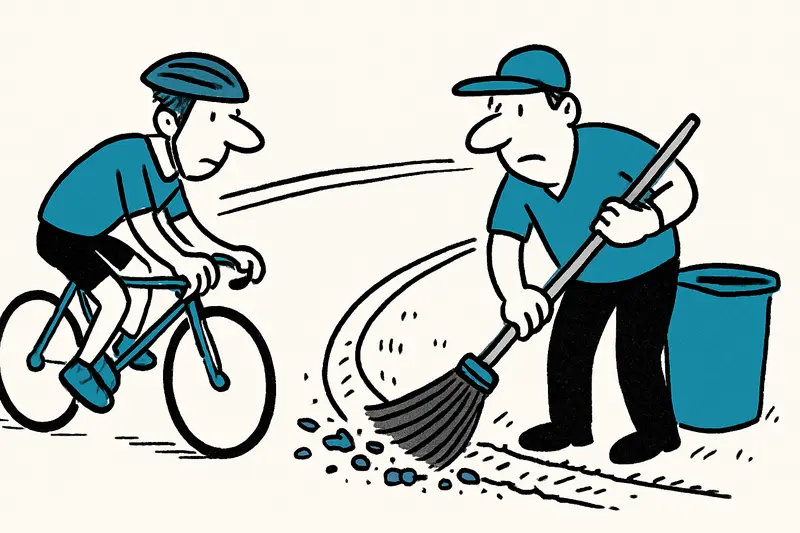
1,600 km of Roadside: The Big Cleanup for Cyclists — Is It Enough?
The island council is cleaning 1,600 kilometers of road edges to improve cyclists' safety. A concrete measure — but is a clean edge alone enough?
More than sweeping? The central question: Does cleanliness make cycling safer — in the long run?
When the fog still hangs over the bay and the first road bikes whistle along the promenade, it becomes apparent: in many bends pebbles, leaves and dirt lie like invisible trip hazards. The island council now wants to respond: In the coming months 1,600 kilometers of roadside on Mallorca will be cleaned. From the wide asphalt of the MA-13 to the narrower connecting roads around Felanitx or Sa Pobla — the sweepers are rolling out.
The numbers sound impressive. The price also feels tangible: around €300,000 are planned for machines, small excavators and teams that will be out in the mornings and afternoons. In towns like Inca or Port de Sóller I hear agreement with a slight nod: finally they are working on the corners that are otherwise often overlooked.
Why this is not just a makeover
The official arguments are clear: fewer falls, fewer breakdowns, better visibility of road markings. For cyclists this means concretely: less loose gravel in corners, cleaner accesses to cycle paths and a clearer kerb edge to lean on. Someone who sets off in the morning with helmet and coffee at Playa de Palma will likely feel the difference immediately.
A cyclist from Palma puts it practically: 'Last winter I slipped on gravel, that happens quickly when you're going downhill.' Experiences like that helped drive the launch of this measure.
What is overlooked in the public debate
But the cleaning is only one piece of the puzzle. Three points are often left out:
1. One-off action or permanent state? Sweeping once is helpful — but dust, leaves and gravel collect again every autumn and after storms. Without a clear maintenance rhythm the effect remains temporary. The €300,000 must be translated into a recurring budget, otherwise the result will be fleeting.
2. Prioritization by risk Not all of the 1,600 kilometers are equally dangerous. Accident statistics should decide which stretches are tackled first: steep descents, tight corners, places with heavy bicycle traffic like the coastal road at Cala Millor or sections around Playa de Palma. Otherwise there is a risk of a patchwork that may look good but brings no measurable safety gain.
3. Responsibility and coordination On Mallorca several levels share responsibility for the roads — the island council, the municipalities, sometimes the regional administration. Who will take care of small-scale follow-ups in the future? A clear contact person, fast reporting options for cyclists and transparent maintenance plans are often missing.
Concrete opportunities and proposals
The cleanup campaign also offers chances that go beyond sweeping, as discussed in After the Rain: Who Cleans the Streams — and Is It Enough?.
Some pragmatic proposals:
• Prioritization based on accident and usage data: the first sections should be the most dangerous. Road maintenance services could compare data with local cycling clubs.
• Recurring maintenance plan: instead of a one-off action, clean annually or seasonally — especially after autumn storms.
• Environmentally friendly equipment: using electric sweepers reduces noise in the early morning hours and suits the image of Mallorca better without diesel fumes.
• Combination with small infrastructure measures: patching asphalt at kerb edges, clear markings and additional signs at dangerous spots cost less than new roads but bring a lot of safety.
• Reporting apps and visible contacts: if cyclists can report a dangerous edge and know who will respond, trust increases faster than with big announcements.
What residents will notice
On sunny mornings you'll hear the difference: the soft whir of an electric sweeper, the clatter of a small excavator on a steep spot, the sound of shoe soles on freshly cleaned asphalt. For cyclists that means a bit more calm in the corner, fewer repair stops at the roadside and a feeling that their safety is being taken seriously.
But the big question remains: will the campaign become a lasting protective measure for cyclists, or remain a one-off, well-meaning clean-up? For the 1,600 kilometers not to be just a good photo op for the press, clear answers are needed on financing, prioritization and responsibilities. Then the swept-up debris can deliver more than static cleanliness — it can become part of a genuine More space for cyclists and pedestrians – but is it enough? Mallorca's plan for 60 km of safe routes.
Frequently asked questions
Is road sweeping in Mallorca actually likely to make cycling safer?
When is the best time to cycle in Mallorca if you want cleaner roads and calmer traffic?
What should cyclists watch out for on Mallorca roads after wind or rain?
How should I prepare for road cycling in Mallorca if I expect dirty or rough road edges?
Which roads in Mallorca are most likely to benefit from extra cleaning for cyclists?
Is the MA-13 in Mallorca important for cyclists?
What does road cleaning in Felanitx mean for local cyclists?
What do cyclists in Playa de Palma notice first when roads are cleaned?
Similar News
First Day, First Consequences: What Palma's Rent Freeze Really Means
A new decree stops a planned eviction in Palma — but what really changes for tenants and landlords? A reality check with...
When Housing Becomes a Matter of Survival: Mallorca Between Rental Frenzy and Everyday Life
The case of 87-year-old Maricarmen showed that on Mallorca many people's lives are poised between affordable and uninhab...
Autumn in Mallorca: When Melancholy Gets a Window
Why autumn quietly tightens here — and how to make use of the mood: walks, culture, candles and the light from Palma to ...
Near-miss on Lanzarote: Landing Ryanair Jet and Iberia Takeoff — what really went wrong
On Lanzarote there was a dangerous incident: A Ryanair flight (FR5910) from Dublin landed on runway 03 while an Iberia E...

Eurowings introduces new Premium Business seats on Mallorca routes
From December 1, selected Eurowings flights to Palma and other destinations will feature eight particularly generous sea...
More to explore
Discover more interesting content

Can Cap de Bou

Townhouse Lleo 72
