
After the Rain: Who Cleans the Streams — and Is It Enough?
More than 310 kilometers of torrent streams were cleaned over two years, around 250 kilometers on Mallorca. Good news — but is a one-off cleanup enough to prevent future floods? A critical look at costs, ecology and the lack of long-term planning.
More than 310 kilometers cleared: Between manual work and the roar of excavators
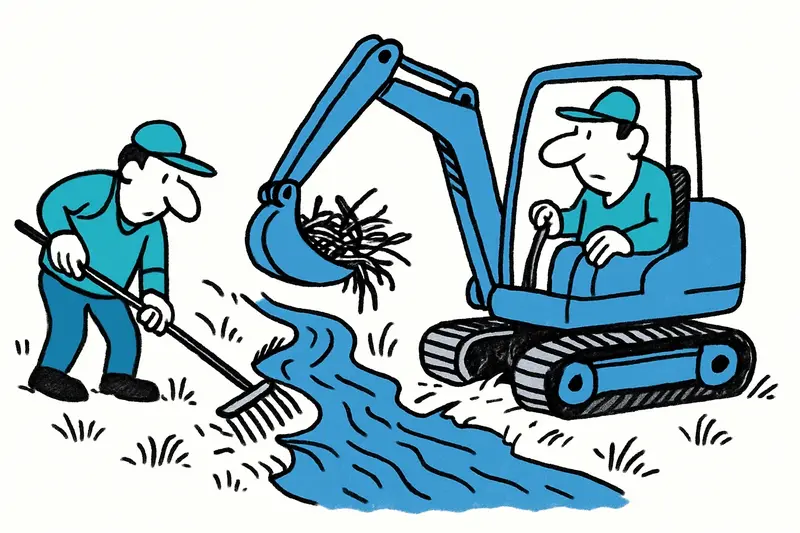
When a short, heavy summer shower leaves Palma's streets looking as if someone turned the washing cycle up, the question quickly arises: who clears it all up again? The answer at the moment is the Balearic government — and it has taken visible action over the past two years, as reported in When the Torrents Are Cleared: Cleaning Up Against Heavy Rain — Is That Enough?. In total just over 310 kilometers of torrent streams were cleaned, about 250 kilometers on Mallorca. On site the chainsaw housing rattles, excavators chew at sediments, and in the evenings there's a smell of wet stone and freshly cut vegetation in the air.
The key question: Is cleaning alone enough?
The clean-up prevents, in the short term, water from finding new paths into residential areas or across roads. But the central question remains: Is this one-off major clean-up sufficient, or is a high short-term effort merely masking a lasting problem? It's reassuring when residents in Sa Pobla say, "It finally feels safer." But many experts and local politicians warn that regular maintenance and a comprehensive strategy are missing. Cleaning once a year is less effective than a multi-year management programme.
Work between nature conservation and safety
Teams worked in the Tramuntana, in valleys around Inca and Llucmajor, and at the well-known bottlenecks where small natural dams tend to form after heavy rain. On site there were not only excavators and chainsaws, but also people with gloves who carefully removed plants to avoid destroying more habitat than necessary. Such decisions matter: overly rigorous clearing can damage riparian vegetation and the insects living there, while too lax an approach increases the risk of blockages.
Money is available — but spent correctly?
This year almost one million euros is available — roughly three times as much as before. More money is an opportunity, but also a temptation: quick wins instead of sustainable planning. The funds allow larger operations, more machinery and personnel; at the same time continuity is often missing. Where local municipal workers used to perform regular maintenance, a one-off regional campaign now dominates. Similar large-scale cleanups, such as the campaign for roadsides, show how resources can be deployed at scale, as reported in 1,600 km of Roadside: The Big Cleanup for Cyclists — Is It Enough?. Without permanent responsibility there is a risk that the streams will be silted up again in a few years.
What is missing from the public debate
In conversations with firefighters and environmental specialists topics come up that rarely make the headlines: Where does the removed sediment end up? Are invasive plant species spread further with it? How are fish and amphibian populations protected when sections are "decored"? And: Is there a risk-based prioritization so that the most sensitive bottlenecks are monitored permanently? Examples of sediment and waste issues after heavy rainfall were documented in S'Arenal, highlighting downstream impacts in Garbage avalanche after flash flood: S'Arenal section closed — who pays the price?.
Concrete steps — proposals instead of criticism alone
A few practical approaches would help turn the effort into lasting success:
1. Multi-year programme with clear responsibilities: Establish fixed responsibilities between municipalities and the Balearic government so maintenance is not project-based but continuous.
2. Ecological guidelines instead of blanket clearing: Assess riparian strips ecologically, maintain sensitive areas by hand and avoid creating sediment plumes.
3. Natural retention areas: Create small flood zones and infiltration basins instead of channeling — that slows water before it reaches places.
4. Local brigades and training: Better involve municipalities, train volunteers and gardeners so regular follow-up maintenance becomes possible.
5. Transparency and a map: A publicly accessible map with priorities and maintenance cycles helps citizens understand what is done when — and where they can report hazards.
Looking ahead to the coming rainy season
In the short term the action reduces the flood risk at known problem spots. In the long term, however, the next few years will decide whether Mallorca achieves a system change — away from isolated major operations toward a maintained, resilient network of watercourses and retention areas; the wider question of reservoir levels and water balance is discussed in Small Rain, Big Impact? Why Mallorca's Water Balance Raises Doubts. If you soon see a narrow, freshly cleared stream, quietly appreciate it: it's invisible but necessary work. Even better would be if that stream didn't need the same attention again in two years' time.
The tone here is not just criticism: it is a call to politicians, municipalities and residents to turn one-off efforts into a lasting safety net — with respect for nature and the experience that rain on Mallorca will come again.
Frequently asked questions
Who is responsible for cleaning the torrents in Mallorca after heavy rain?
Does clearing torrents really help prevent flooding in Mallorca?
When is the best time to clear torrents in Mallorca?
What happens to the sediment and vegetation removed from Mallorca’s torrents?
Which parts of Mallorca are most affected by torrent blockages after rain?
Is torrent cleaning in Mallorca bad for nature?
What would make flood prevention in Mallorca more effective long term?
How much money is Mallorca spending on torrent cleaning this year?
Similar News
Masked Images, Real Panic: When Social Media Aesthetics Alarm Neighbors
Five German content creators filmed on a recently vacated detention site using deceptively realistic props. The result: ...
Why the Striped Breams in Cala Pí Should Be a Wake-up Call
Once again bathers in Cala Pí were surrounded while swimming by small, nippy fish — some wounds bled. Time for clear rul...

Daily from New York: How Palma's Air Traffic Is Growing — and What Must Change
United will increase the Newark–Palma service to daily flights in 2027 (Boeing, 231 seats). Strong tourist numbers clash...

When Love Ends in Shards: Destruction in Son Vida and the Questions That Remain
In Son Vida a relationship dispute escalated: a woman destroyed furniture in a luxury villa, later pressed a panic butto...

Who Bears the Burden? Mallorca Between Tenant Protection and Landlord Fears
Madrid's new housing decrees strengthen tenant rights — but on Mallorca concern is growing: will the law drive small lan...
More to explore
Discover more interesting content

Can Cap de Bou

Townhouse Lleo 72
