
Forced eviction in Santa Catalina: When a 65-year-old slept in her car and showered on the beach — a question of responsibility
The story of Pilar López from Santa Catalina represents a problem affecting many Mallorcans: How can an island with a booming market protect people who have lived here for decades and are now left on the street?
Forced eviction in Santa Catalina: When a 65-year-old slept in her car and showered on the beach — a question of responsibility
Key question: Who bears the responsibility when a sick 65-year-old, after decades on Mallorca, suddenly ends up on the street — and what concrete steps are needed so this doesn't happen again?
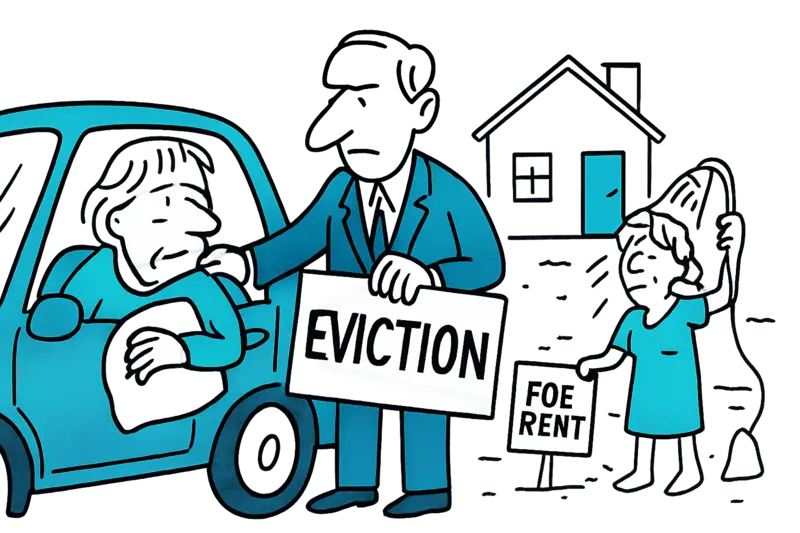
At the last plenary session in Palma it grew quiet when Pilar López told her story: on the island since 1987, more than 40 years working in hospitality, a victim of gender-based violence — and homeless this summer. On June 2 she was forcibly evicted from her apartment in Santa Catalina, apparently after an investment fund bought the property. Offers to leave voluntarily were reportedly made — first €60,000, then €10,000 — but practical alternatives were absent. For two months she sometimes slept in her car and drove to El Arenal to shower. Because of a severe bacterial illness she depends on incontinence products. The city has now promised her accommodation in a hostel in Secar de la Real; her monthly state support is €400 and her potential pension is still pending.
Critical analysis: This is not an isolated case but a symptom. The mechanics are known: purchase by a large investor, short-term pressure, rapid renovation and subsequent marketing as an expensive unit. The result: apartments long rented at socially acceptable rates disappear from the market. People with small pensions, poor health and no lobbying power are left on the street. The administration points to limited resources, social organizations like the Plataforma de Afectados de la Hipoteca (PAH) try to help — but the gap between political will and practical help remains large.
What is missing from the public discourse: people often talk about tourism numbers and bed capacity, but rarely about the micro-destinies in the neighborhoods — all linked to street names. Santa Catalina is more than a trendy neighborhood with a market and tapas bars; it is a residential environment where neighbors like Pilar have lived their lives. There is no transparent overview of which properties are being bought by financial investors, which rental contracts are expiring and what protection periods exist for incumbent tenants. Also little discussed: the medical-social accompaniment in forced evictions — particularly for people with serious illnesses.
A daily scene from Palma: a Wednesday morning on Plaça de Santa Catalina. The market sets up, vendors shout, delivery vans rumble by; a moped leaves a trail of smoke, children head to school. Among them, a woman with a plastic bag eating her breakfast on the go — this is how the city looks when you set the glossy postcard images aside. Pilar could have been one of these voices. Instead the empty apartment, the sound of workmen after her furniture was removed, and in the evening the monotonous hum of air conditioners on a street reinventing itself economically.
Concrete solutions that should be tackled immediately: First, a mandatory reporting requirement for large owners and investment funds: when apartments are bought on a large scale, the municipality must be informed and can assess social consequences. Second, protection periods for long-term tenants: at least six months' notice and a binding rescue mechanism that guarantees alternative, affordable accommodation. Third, an emergency fund for people who are especially vulnerable due to illness — linked to rapid medical-social interventions so no one has to shower in a car. Fourth, reclassify vacant and tourist apartments for social housing: temporary changes of use could allow empty units to serve social housing needs. Fifth, free legal advice and accompaniment during evictions — accompanied by a clear public list of available emergency beds and hostels that are properly funded.
Many of these points are feasible on a small scale: neighborhood teams composed of social workers, the health service and PAH representatives could become active at the first threats of eviction. Financial burden for the municipality? Yes. But the alternatives — emergency accommodation, hospital stays, long-term health consequences — are usually more expensive and devastating on a human level.
Pointed conclusion: The problem is not only a lack of housing but a weakness in planning and regulation. If a woman who spent her life on this island is pushed out of her home within 24 hours and ends up in her car, that is a political finding: we either don't have the instruments or we don't use them. Those who reap the benefits of the investment boom in Palma must not also impose the social costs on the most vulnerable. Pilar remains a warning: we must change the rules now — not wait until the next neighbor disappears between construction noise and luxury facades.
Frequently asked questions
When is Mallorca's best time to visit for weather and fewer crowds?
Is it good to swim in Mallorca year-round?
What should I pack for a trip to Mallorca?
How can I get around Mallorca – is public transport enough or should I rent a car?
What are must-try Mallorcan foods and where to find them?
What family-friendly activities or day trips work well in Mallorca?
What practical safety tips should I know when visiting Mallorca?
How can I plan a balanced Mallorca itinerary that covers beaches, towns, and countryside?
Similar News

Nipping Sea Creatures: Why Bathers in Cala Major and Elsewhere Should Be Cautious
In Cala Major, bathers have reported being nipped by small fish. What is behind it, how can problems be avoided — and wh...

New traffic rules from October 1: What Mallorca visitors and locals need to know
From October 1, 2026, Spain will implement far-reaching changes to traffic regulations. Important for Mallorca: greater ...

More water than last year: Mallorca's reservoirs breathe easier
September rain refilled the Tramuntana's reserves: overall fill around 35 percent, Cúber at 40.42 percent, Gorg Blau at ...

Three Luxury Hotels in Banyalbufar: Lots of Money, Many Questions
A Danish investor plans three exclusive accommodations in Banyalbufar — including the historic Son Valentí. The announce...
2.1 tonnes of cocaine on sailing yacht off Spain's coast – a reality check for the coastguard
A 14-metre yacht was seized with 2.1 tonnes of cocaine. Who monitors the ports, how does the international hunt succeed ...
More to explore
Discover more interesting content

Can Cap de Bou

Townhouse Lleo 72
