

"They want to drive us out": Longstanding residents in Santa Catalina against alleged investor
"They want to drive us out": Longstanding residents in Santa Catalina against alleged investor
A family on Pursiana street has felt pressured for years by sales, renovations and holiday rentals. What lies behind the accusations — and why does the city remain inactive?
"They want to drive us out": Longstanding residents in Santa Catalina against alleged investor
Leading question
How can it be that a family in the heart of Santa Catalina has been filing reports and taking legal action for years and still lives amid increasingly loud holiday rentals and construction work as if the public space had been stolen from them?
Critical analysis
The scene on the Pursiana, a narrow street that runs directly to the lively Santa Catalina market: shouting children, restaurateurs setting up tables, the constant clack of suitcase wheels on a morning. Right there is a house whose residents claim investors bought several units in recent years and converted them into holiday apartments. According to neighbors, a British buyer already removed load-bearing walls without permission in 2015; later a Swedish entrepreneur converted more apartments into maisonettes, added rooftop extensions and turned residential balconies into doors. The Porcel family, who have lived there for generations, report repeated planning violations, disruptive guest traffic and even intimidation from the courtyard, as detailed in «Quieren echarnos»: Vecinos históricos en Santa Catalina contra presunto inversor.
Formally much was handled through reports; a court case was won, but practical consequences remained limited: claims are not paid, rulings are difficult to enforce, and renovation costs have now ruined the affected household's finances. The accusations range from illegal tourist rentals in a multi-family building to structural changes that, according to the family, severely reduce their quality of life.
What is missing in the public discourse
The debate about gentrification in Mallorca often revolves around numbers, hotels and large projects, as seen in Residents protest again against large Christmas market in Palma. Rarely does it address the everyday life of those who cling to their homes amid processes of erosion. There is a lack of clear perspective on the interplay of private real estate speculation, sluggish municipal administration and the gray area around short-term holiday rentals. Also rarely discussed is the gap that emerges when people are legally "in the right" but practically have no means to enforce judgments or collect compensation.
Everyday scene from Mallorca
A Wednesday midday in Santa Catalina: the smell of freshly ground coffee from Calle Joan Miró, suppliers rolling pallets of olive oil and seafood up the streets, young people with laptops outside coworking spaces. In the midst of this bustle, María Porcel sits at her window on the Pursiana and watches tables being set for guests on the newly created terrace opposite. The clinking of glasses mixes with the dull thud of suitcase wheels. A neighbor calls from the street that another couple has arrived "for three nights." For the Porcels this is not a scenario but a daily burden: less peace, less security, and the feeling of being a stranger in their own home.
Concrete proposals
1) Strengthened municipal enforcement: city councils must pool resources to execute final rulings immediately. When a court orders remediation payments, there needs to be an office that, if necessary, carries out the work and recovers the costs.
2) Transparent ownership registers: anyone buying several units in a residential block should disclose whether they intend the units for permanent housing or tourist rental. Such transparency helps neighbors and authorities weigh competing interests.
3) Expand social legal aid: families like the Porcels narrowly miss the threshold for legal aid. Expanded, tiered support in building and tenancy disputes would enable affected people not only to win judgments but also to enforce them.
4) Sanctions against alleged illegal holiday rentals: repeated violations must lead to hefty fines and closures. At the same time, incentives should be created for renting to long-term tenants, for example through tax breaks for owners who lease apartments on a permanent basis.
What could happen immediately
The city can intensify inspections in affected streets like the Pursiana in the short term, link reports together and threaten closures for repeat offenders. At the local level, neighborhood initiatives should be strengthened: a small network of affected residents, legal advisors and the district office can react faster than slow administrative processes.
Pointed conclusion
Santa Catalina remains a lively district, but it risks becoming a playground for capital interests if clear rules are not enforced. The Porcels' story is not an isolated case but a warning signal, echoed by other neighborhood disputes such as Who Acts First? Squatters in Santa Margalida Cause Trouble in Half-Finished Housing Blocks. Without targeted interventions, longtime residents not only lose their peace but often also their financial livelihood. Those who want to preserve Palma's diversity must make the law effective — not only on paper but on the street, on the Pursiana, at María Porcel's window.
Frequently asked questions
Why are longtime residents in Santa Catalina complaining about holiday rentals?
What happens when illegal building work in Mallorca is reported but not enforced?
How does holiday rental pressure affect everyday life in Palma?
What can neighbours do if they suspect tourist rental activity in their Mallorca building?
Is Santa Catalina in Palma still a residential neighbourhood?
What are the signs that a Mallorca apartment building may be used for short-term tourism?
Can Mallorca residents get legal aid in building or tenancy disputes?
What does the Santa Catalina dispute say about gentrification in Mallorca?
Similar News
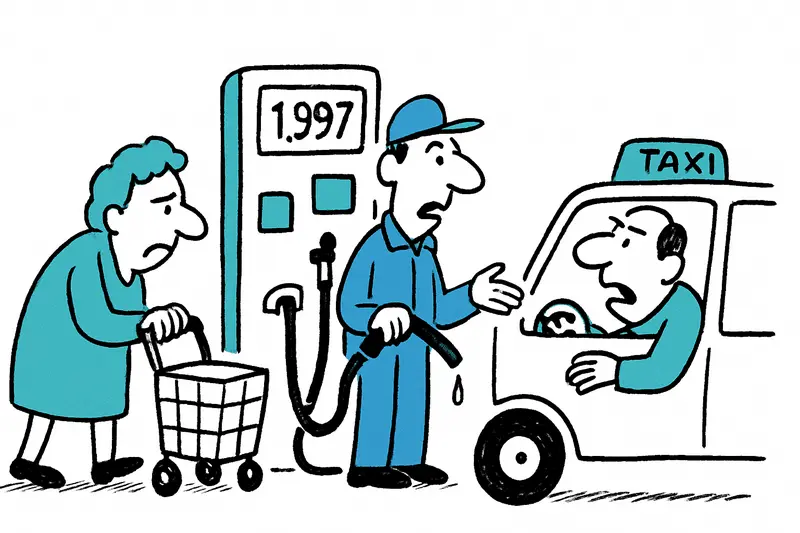
The End of the Cheap Ride? Why Mallorca Is Hit Harder by the Fuel-Price Shock
Gasoline and diesel average close to two euros per liter. What this means for commuters, supply chains and renters in Ma...
Relaxed liquid rules in Munich: What Mallorca travelers will notice
At Munich Airport the 100-milliliter rule will be lifted at all checkpoint lanes — thanks to new CT scanners passengers ...

For 45 Years on Mallorca — and Then This: How a Market Visit in Santa Ponsa Became a Lesson
A woman who has lived on the island for decades lost money and important documents at the Mercat Setmanal in Santa Ponsa...
10 percent surcharge on the beach: How legal and transparent is the extra charge at Playa de Muro?
A German part-time resident noticed days after a restaurant visit in Playa de Muro that the bill included a flat ten per...

Body near the Llevant Market: What this death says about our city
A man was found dead on Sunday afternoon near the Llevant Market. Police say the death appears natural. The scene raises...
More to explore
Discover more interesting content

Can Cap de Bou

Townhouse Lleo 72
