
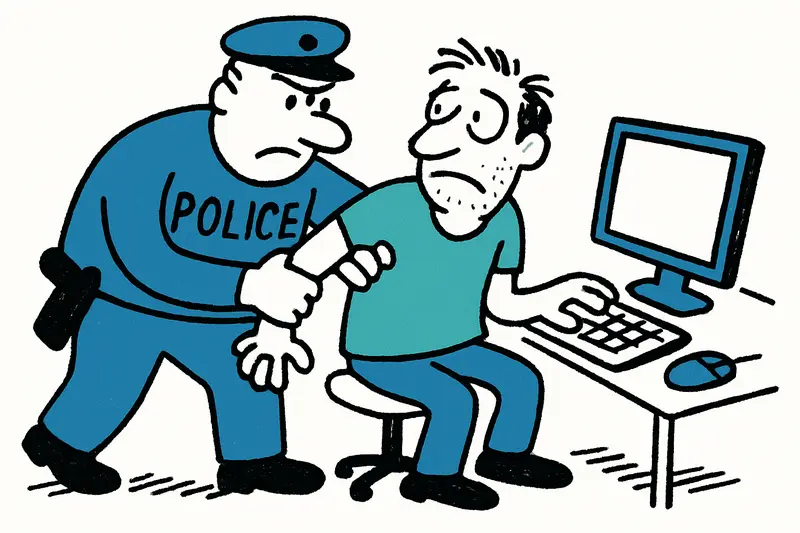
Arrest in Mallorca: German allegedly ran 42 fake shops
Arrest in Mallorca: German allegedly ran 42 fake shops
A 35-year-old from NRW was arrested in Mallorca. He is alleged to have operated over 40 fake online shops and defrauded hundreds of customers. A reality check.
Arrest in Mallorca: German allegedly ran 42 fake shops
How could an alleged fake-shop operator continue to operate on the island for so long?
On Wednesday Spanish investigators acted on Mallorca: a 35-year-old man, originally from the Recklinghausen district (NRW), has since been held in Spanish extradition custody. According to the authorities he is alleged to have operated around 42 online shops between March 2023 and January 2025, through which customers in Germany paid for goods but never received them. Known damages currently amount to at least €323,000, plus seized bitcoins worth around €314,000. Related reporting on island cases can be found in Three arrests in Mallorca: What lies behind the alleged international bank fraud.
Main question: How could an alleged central actor of German-language cybercrime operate increasingly untroubled — and what is missing to dry up such networks more quickly?
Critical analysis: The case file reveals several typical weak points. First: Identities can be comparatively easily concealed in the digital age; investigators say the suspect lived on the island under a false name. Second: The rapid reactivation of criminal marketplaces in the dark web shows that technical infrastructure can be rebuilt quickly. Third: Cryptocurrencies as a payment method complicate tracing the money, especially when funds are laundered through mixers or opaque wallets.
Investigations not only led to the arrest on Mallorca, but also to searches in several German federal states, including apartments in Schleswig-Holstein and North Rhine-Westphalia and at a witness in the Mettmann district. Seized electronic data carriers point to a much larger network: according to investigators, an alleged relaunch of a known criminal platform was active and recently counted more than 22,000 registered users and over 100 sellers. Authorities estimate revenues in the millions; publicly available information suggests roughly €3.6 million. Further island reporting has highlighted other high-profile cases, for example Arrest in Santanyí: How vulnerable is Mallorca's real estate market to fraud?.
What is often missing in public debate: the perspective of the victims and the everyday hurdles of recovering funds. A private buyer who fell victim to a fake shop is often left alone: filing a police report, contacting the bank, and in the end usually only being referred to ongoing investigations. The roles of payment service providers, hosting companies and mailbox renters are also rarely discussed in detail. Likewise out of the spotlight: how long legal steps and extradition procedures take and what burden this places on affected families. Local reporting of individual arrests, such as From the Beach to Handcuffs: Mallorca Holiday Ends with Arrest at Düsseldorf Airport, can help illustrate the cross-border complexity involved.
Everyday scene on Mallorca: residents sip their café con leche in the cafés along Passeig Mallorca while police cars cruise the harbor streets. A neighbor reports that he rarely saw the young man — 'he was rather nocturnal, spent a lot of time on his laptop', says a shopkeeper from the street. Such observations fit a pattern: cybercriminals often move inconspicuously, work alone or in small, well-networked groups and hardly stand out in everyday life.
Concrete solutions: First, cross-border investigative channels must work faster and more standardized — simplified exchange protocols between Spanish and German authorities could shorten response times. Second, better technical capabilities are needed on the islands: more forensic IT teams that can respond quickly to apartment searches. Third, payment service providers and crypto exchanges should cooperate more mandatorily; compulsory reporting channels for suspicious transactions would make the money trail more visible. Fourth: consumer information campaigns — simple checklists on how to recognize fake shops and how to pay safely — could prevent suffering and reduce damage; official advice is available from Europol's guide on online shopping scams.
There is also a need for legal action: tracking cryptocurrencies is labor-intensive. Specialized investigators and closer cooperation with blockchain analysts help here. And: faster access to hosting logs and domain registration data through international agreements would make it easier to shut down fraudulent shops.
Another point: victim support. As long as reports remain unprocessed for months and victims have no clear point of contact, trust in online commerce and in authorities remains damaged. A central platform that bundles procedures, provides assistance and makes the status of investigations transparent would be a practical step.
Punchy conclusion: The arrest in Mallorca is a success — but not proof that the problem is solved. As long as technical means to conceal identities, the rapid rebuilding of criminal marketplaces and the use of cryptocurrencies are not systematically accounted for and addressed, such cases will remain prone to repetition. For Mallorca this means: security authorities and local communities must work more closely together so that the island does not become a convenient base for criminals who live inconspicuously offline and cause great damage online.
What counts now: speedy extradition procedures, in-depth analysis of the seized data and a noticeable improvement in support for defrauded customers. Only then will a momentary headline become lasting security — in front of the cafés on Passeig Mallorca and in the living rooms of the thousands of victims.
Frequently asked questions
What happened in Mallorca in the fake shop case involving a German suspect?
How do fake online shops usually work, and why are they hard to stop?
Why are cryptocurrencies often used in online fraud cases in Mallorca and beyond?
What should I do if I think I ordered from a fake shop while living in Mallorca?
Was the suspect living openly in Mallorca before the arrest?
Why is cross-border cooperation important in Mallorca fraud investigations?
Are shoppers in Mallorca affected by fake shop scams too?
What does the Mallorca arrest mean for the wider fake shop network?
Similar News
Warning to Bathers: Nipping Fish in Cala Major and Other Coves — a Reality Check
In Cala Major and several beaches around Mallorca, bathers report painful “nips”. Who are the animals, why are they gett...

Rental Car Theft in El Arenal: What This Incident Reveals About Our Gaps
A teenager steals a running rental car in El Arenal, flees on foot, climbs over walls and is caught by the Guardia Civil...
Red Rope in Palma's Library: What Helps Against Selfie Tourism — and What's Missing
Palma's city library cordoned off an area with a red rope to keep selfie tourism away from reading and working activitie...
Fort San Carlos: Museum, Harbor Dispute — and a Conflict That Demands Answers
The military museum at Fort San Carlos sits right on Palma's harbor, with unexpectedly quiet rooms filled with cannons a...
Old Town Under Pressure: When a Doorway Becomes a Sleeping and Shower Place
For months a woman has been living with a parasol, a clothes rack and personal belongings next to the social welfare off...
More to explore
Discover more interesting content

Can Cap de Bou

Townhouse Lleo 72
